
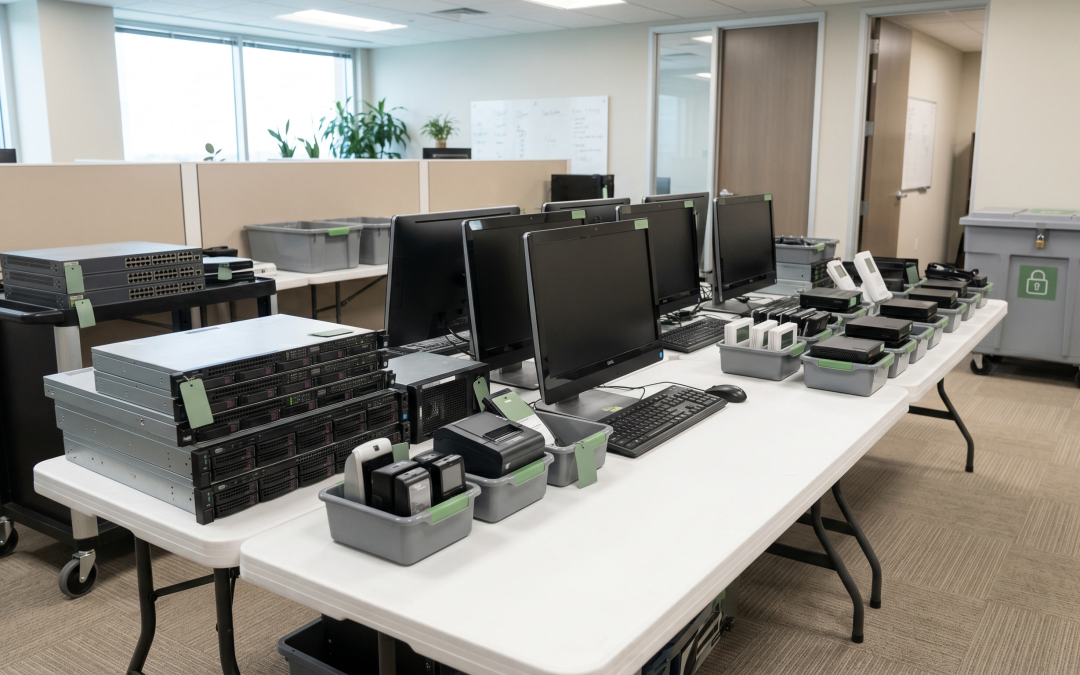
Hospitality groups manage a surprisingly complex IT environment. From property management systems and reservation platforms to guest-facing technology, in-room entertainment, and back-of-house operations, hotels rely on a wide range of electronic equipment. When that equipment reaches end of life, the disposal process must address guest data privacy, multi-property logistics, and the unique operational rhythms of the hospitality industry.
The Hotel IT Landscape
A modern hotel deploys technology across virtually every function. Front desk systems process guest check-ins, payment information, and personal identification documents. Property management systems (PMS) contain comprehensive guest profiles, stay histories, and preferences. Point-of-sale systems in restaurants, bars, and spas handle payment data. In-room technology includes smart TVs, tablets, electronic safes, and IoT devices for room controls.
Back-of-house systems manage housekeeping, maintenance, procurement, HR, and finance. Conference and event technology includes AV equipment, digital signage, and temporary networking infrastructure. Security systems including CCTV, access control, and guest safe systems complete the picture.
For a hospitality group operating multiple properties, multiply this across every hotel in the portfolio. The diversity of equipment types and the sensitivity of guest data make ITAD a meaningful operational consideration.
Guest Data Privacy
Hotels collect and process extensive personal information about their guests, including names, addresses, passport or ID details, payment card information, travel preferences, dietary requirements, and in some cases health-related information. This data is subject to the Privacy Act and, for international hotel groups, potentially to overseas data protection regulations like GDPR.
Every device that has stored or processed guest data requires certified data destruction before disposal. This includes the obvious systems like PMS servers and front desk computers, but also less obvious devices. Guest-facing tablets may cache personal information. In-room entertainment systems may store Wi-Fi login credentials. Even electronic door lock systems maintain access logs that link to guest identities.
Payment card data requires particular attention. POS systems, EFTPOS terminals, and any computer connected to payment processing must be disposed of in compliance with PCI DSS requirements. Hotel groups that fail to properly handle payment-related equipment risk fines from card schemes and potential loss of their ability to accept card payments.
Multi-Property Management
Hospitality groups need to coordinate ITAD across multiple properties that may span different cities, states, or countries. Each property has its own equipment inventory, refresh cycles, and operational constraints.
Establish a group-wide ITAD framework that provides consistent standards and procedures across all properties while allowing for local adaptation. The framework should define minimum data destruction standards, approved ITAD providers (or a process for approving local providers where the group provider cannot service a location), documentation requirements, and reporting formats.
Centralise ITAD coordination through the group IT or procurement function. While individual properties may handle day-to-day staging and collection, the strategic decisions about provider selection, contract negotiation, and compliance monitoring should be managed centrally to ensure consistency and leverage the group’s purchasing power.
Timing Around Occupancy
Hotels have distinct occupancy patterns that affect ITAD scheduling. Peak seasons, major events, and holiday periods are not the time to be decommissioning equipment or having ITAD providers collecting from the property. Schedule major ITAD activities during low-occupancy periods when the disruption to operations and guest experience is minimal.
Hotel refurbishments provide the ideal opportunity for comprehensive ITAD. When a property is closed or partially closed for renovation, all the technology being replaced can be collected efficiently as part of the renovation project. Include ITAD in the renovation scope and budget from the outset.
For ongoing equipment retirement outside of major refurbishments, establish a secure staging area at each property where decommissioned equipment can be held until collection. The staging area should be in a back-of-house location that is secure, climate-controlled, and accessible for the ITAD provider without disrupting guest areas.
In-Room Technology Disposal
In-room technology presents specific challenges. Smart TVs, room tablets, and IoT devices are distributed across every guest room, making collection labour-intensive. When these devices are replaced, the old units need to be collected from each room, often during a room refresh or deep maintenance cycle.
Plan in-room technology collection as a coordinated effort. Work floor by floor or wing by wing to minimise disruption. Ensure collected devices are immediately moved to the secure staging area rather than left in corridors or service areas. Track collection against the room inventory to ensure no devices are missed.
In-room safes are often overlooked in ITAD planning. Electronic safes contain access logs and may have stored guest codes in memory. Include safes in your ITAD scope when they are replaced.
Conference and Event Technology
Hotels with conference and event facilities manage a pool of AV equipment, presentation technology, and temporary networking infrastructure. This equipment is often shared between events and may be handled by multiple staff members, making tracking more challenging.
Maintain a separate inventory for event technology and include it in your ITAD program. When AV equipment, projectors, or presentation systems reach end of life, they should go through the same disposal process as any other IT equipment. Event-related equipment may contain cached presentations, network configurations, or other data from corporate events that guests would reasonably expect to be treated as confidential.
Working with Your ITAD Provider
Choose an ITAD provider that understands the hospitality environment. Hotels have unique requirements including discretion (ITAD activities should not be visible to guests), flexible scheduling around occupancy, experience with the diverse range of equipment found in hotels, and the ability to service properties in different locations.
Build a relationship with a provider who can act as a long-term partner across your portfolio. The provider should understand your group’s technology standards, refresh cycles, and compliance requirements, so that disposition activities are routine rather than requiring extensive briefing for each event.
EWV handles IT asset disposition (ITAD) end-to-end for Victorian businesses — from collection and data destruction through to certified recycling or refurbishment for resale. Get in touch for a tailored ITAD quote.