
Architectural and engineering firms work with large, complex files and rely heavily on high-performance workstations, specialised software, and substantial data storage. When this equipment reaches end of life, the disposition process must protect client project data, intellectual property, and the commercially sensitive design work that defines these practices.
The Specialist Equipment Challenge
Architecture and engineering firms typically invest in high-specification hardware that supports CAD, BIM, rendering, and simulation workloads. Workstations with powerful processors, dedicated graphics cards, and large amounts of RAM are standard. These machines are expensive to purchase and, importantly, tend to retain good resale value due to their premium specifications.
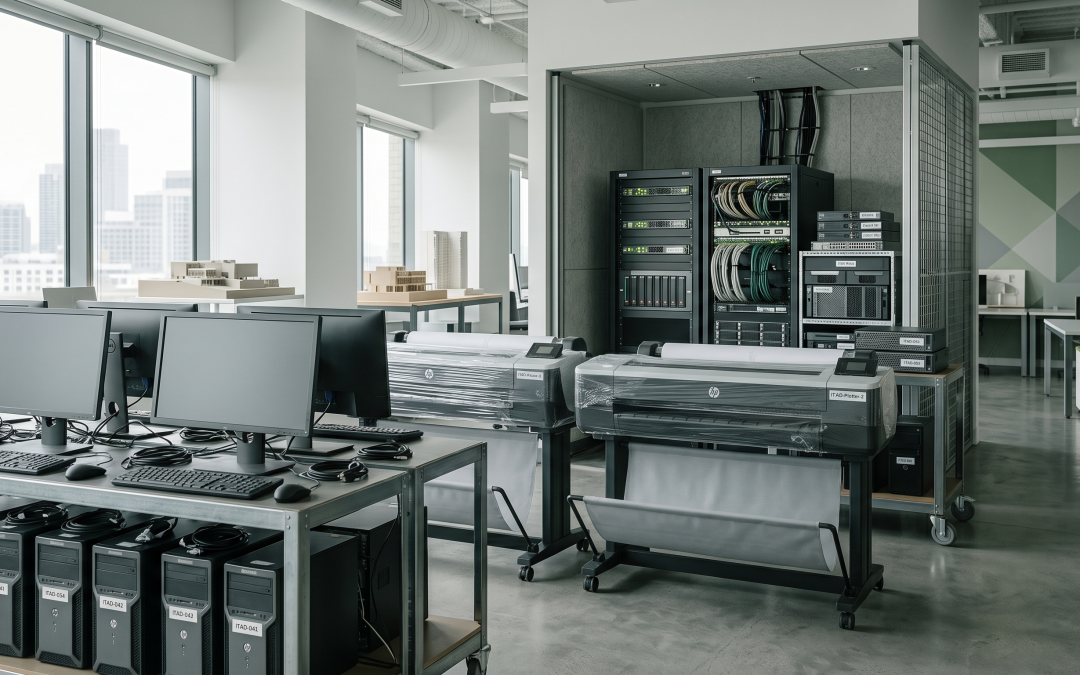
Large-format plotters and printers, 3D printing equipment, laser cutters, and other fabrication technology are also part of the modern design office. These devices may contain embedded storage with cached files that need proper handling at disposal.
Storage systems can be substantial. A single architectural practice managing dozens of active projects generates terabytes of BIM models, renders, and project documentation. When file servers or network-attached storage is replaced, the data volumes requiring secure destruction can be significant.
Client Data and IP Protection
Design firms hold extensive client data including building plans and specifications that may have security implications, infrastructure designs for critical facilities, commercial development plans that are market-sensitive until public, engineering calculations and certifications, and project correspondence containing contractual and financial information.
Much of this data is provided under confidentiality obligations in client agreements. Architectural plans for sensitive facilities like government buildings, data centres, or defence installations may be subject to specific security requirements. Engineering designs for critical infrastructure may fall under the Security of Critical Infrastructure Act.
Ensure that all equipment undergoes certified data destruction appropriate to the sensitivity of the projects it has been used for. For firms working on classified or security-sensitive projects, consult with your clients about their specific destruction requirements.
Value Recovery from Specialist Equipment
The good news for architecture and engineering firms is that their equipment typically has strong resale value. High-specification workstations, professional monitors, and graphics cards are in demand on the secondary market, particularly from other design professionals, video production companies, and gaming enthusiasts.
To maximise value recovery, time your disposals strategically. Workstations that are three to four years old generally command the best balance between being recent enough to attract buyers and old enough to justify replacement. Waiting until equipment is six or seven years old significantly reduces recovery potential.
Work with an ITAD provider who understands the value of specialist equipment. A provider with experience in the professional workstation market will achieve better resale outcomes than a generalist who may not recognise the premium value of components like professional GPUs, ECC memory, and Xeon processors.
Software Licensing
Architecture and engineering firms often run expensive software licences including Autodesk products, Bentley Systems, Trimble, and various specialised analysis tools. Before disposing of equipment, ensure that all software licences are deactivated and accounted for. Some licences are tied to hardware and may need to be formally transferred or retired. Others are subscription-based and simply need to be unlinked from the departing device.
Failing to manage software licences during disposal can result in licence compliance issues. If a disposed device with active software reaches the secondary market and the licence is used by a third party, the original licence holder could face audit findings from the software vendor.
Project Archive Requirements
Design firms have specific record retention obligations. Building plans and engineering certifications may need to be retained for decades, particularly for structures that are still in use. Before disposing of equipment, confirm that all project data has been migrated to current systems and that archival copies meet your retention obligations.
Work with your practice management team to establish clear criteria for when equipment can enter the ITAD pipeline. No device should be disposed of until project data migration and archival requirements have been verified.
EWV handles IT asset disposition (ITAD) end-to-end for Victorian businesses — from collection and data destruction through to certified recycling or refurbishment for resale. Get in touch for a tailored ITAD quote.