
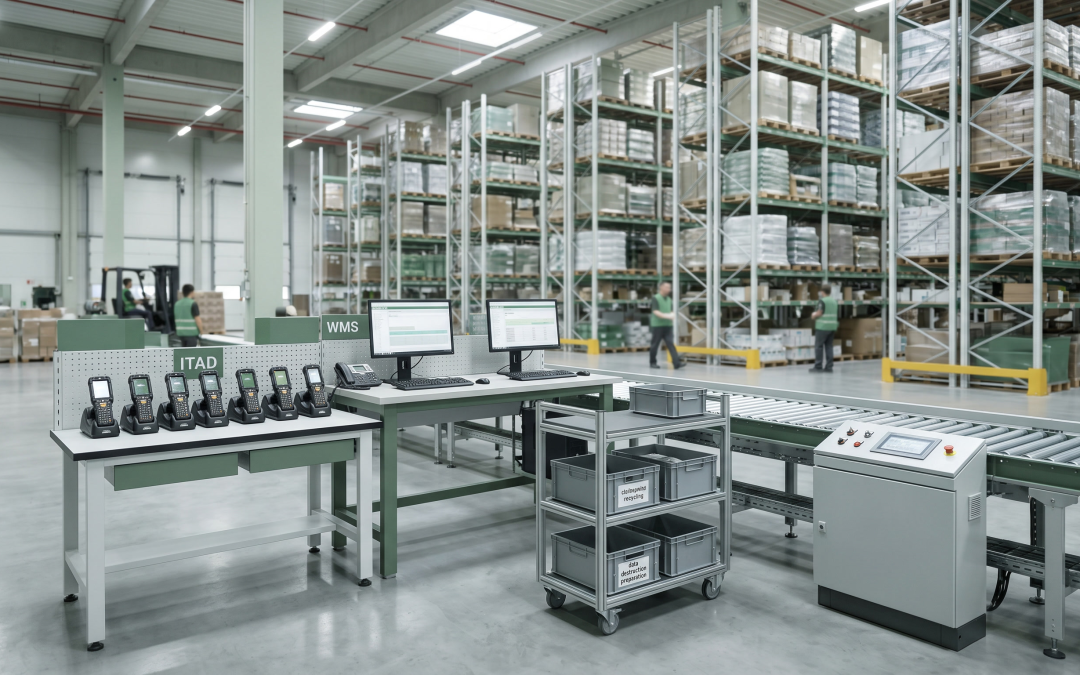
Logistics and warehousing operations rely on a wide range of technology that extends well beyond the office. Warehouse management systems, barcode scanners, RFID readers, fleet tracking devices, and automated sorting equipment all contain data and electronic components that need proper handling at end of life. For an industry built on moving things efficiently, the irony of struggling to move old IT equipment through a proper disposal process is not lost on those managing it.
The Logistics IT Environment
Modern logistics operations are technology-intensive. Warehouse management systems (WMS) run on servers and workstations that track inventory, orders, and shipments. Handheld scanners and mobile devices are used by warehouse staff for picking, packing, and receiving. Automated conveyor systems, sorting equipment, and robotics contain embedded computing. Fleet management systems track vehicle locations, driver behaviour, and delivery status. And the back office runs standard IT equipment for administration, finance, and customer service.
The operational technology in a warehouse or distribution centre can be substantial. A large DC might have hundreds of handheld devices, dozens of automated systems, and a complex networking infrastructure connecting everything together.
Data Considerations
Logistics companies handle data that is more sensitive than many people realise. Customer shipping information includes names, addresses, and contact details. Commercial shipping data reveals supply chain relationships and volumes that competitors would find valuable. Financial data includes invoicing, payment terms, and pricing agreements. Fleet management data contains employee movement patterns and potentially sensitive delivery schedules.
For third-party logistics (3PL) providers, the data sensitivity is heightened because you are handling information belonging to your clients. A data breach from improperly disposed equipment could expose multiple clients’ supply chain data simultaneously, creating significant commercial and legal liability.
Apply certified data destruction to all equipment that has stored or processed business data. This includes WMS servers and workstations, handheld scanners with local storage, fleet management devices, and any device connected to your operational or administrative networks.
Handheld Device Management
Logistics operations typically deploy large fleets of handheld devices, including barcode scanners, RFID readers, and rugged mobile computers. These devices cycle through quickly due to the demanding warehouse environment, and managing their disposition requires a systematic approach.
Establish a clear process for collecting decommissioned handhelds. Warehouse staff should return failed or replaced devices to a designated collection point rather than tossing them in a drawer or bin. Maintain a register of all handheld devices and reconcile it regularly to identify missing units.
Rugged handheld devices from major manufacturers like Zebra, Honeywell, and Datalogic often retain reasonable resale value even after heavy warehouse use. Work with your ITAD provider to recover value from these devices rather than simply recycling them.
Fleet Technology
Fleet management technology including GPS trackers, telematics units, dash cameras, and electronic logging devices (ELDs) all contain data that needs proper handling. GPS trackers reveal movement patterns and regular routes. Dash cameras store video footage. Telematics units record driver behaviour data. All of this information has privacy implications for drivers and commercial sensitivity for the business.
When fleet vehicles are disposed of or fleet technology is upgraded, ensure that all electronic devices are removed and processed through your ITAD program. It is common for vehicles to be sold or traded with fleet technology still installed, potentially exposing operational data to the new owner.
Warehouse Infrastructure
Automated warehouse systems contain embedded computing that is often overlooked in ITAD planning. Conveyor control systems, automated storage and retrieval systems (AS/RS), sorting equipment, and robotics all have processors, memory, and storage that may contain operational data and network configuration information.
When warehouse infrastructure is upgraded or a facility is decommissioned, include the electronic components of automated systems in your ITAD scope. Work with equipment vendors to understand the data handling requirements for their systems and ensure proper destruction or sanitisation before equipment is removed.
Multi-Site and Network Operations
Logistics companies often operate across multiple warehouses, distribution centres, cross-dock facilities, and office locations. Coordinate ITAD activities across all sites with a consistent framework that ensures the same standards are applied everywhere.
Logistics companies have a natural advantage in multi-site ITAD: they already have the transport infrastructure to consolidate equipment from multiple locations. Use your own freight network to move decommissioned equipment from satellite locations to a central point for batch processing, reducing the per-site cost of ITAD collections.
EWV handles IT asset disposition (ITAD) end-to-end for Victorian businesses — from collection and data destruction through to certified recycling or refurbishment for resale. Get in touch for a tailored ITAD quote.