
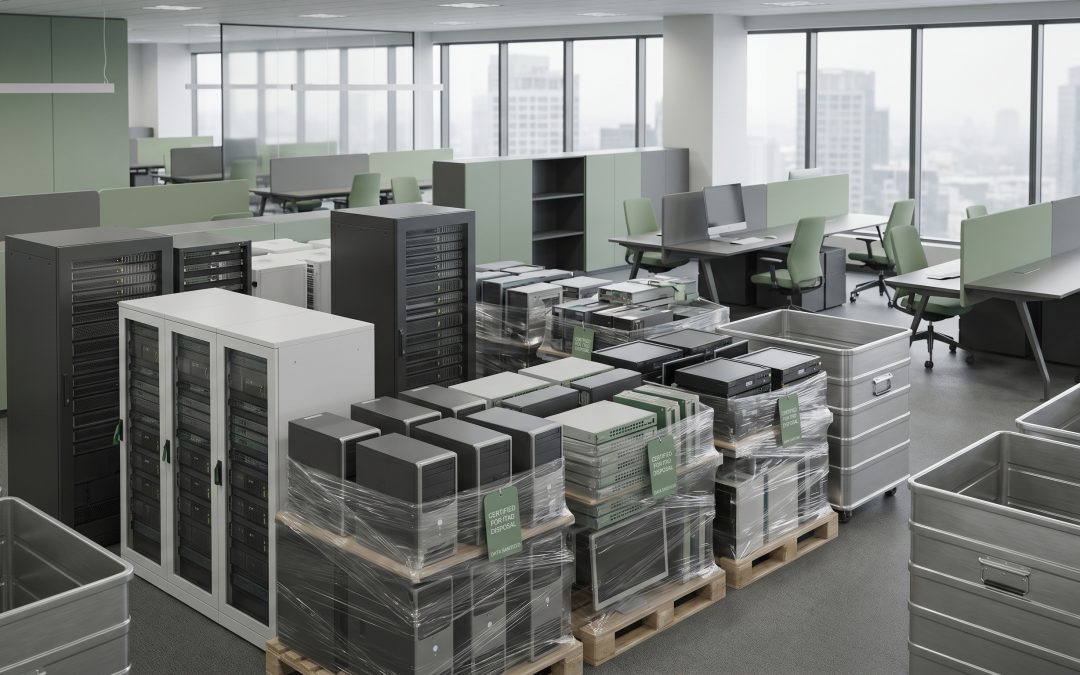
Insurance companies manage vast quantities of sensitive personal and financial data. Policy details, claims histories, health assessments, financial circumstances, and risk profiles create one of the most data-intensive environments in any industry. When IT equipment reaches end of life, the disposition process must reflect the extraordinary sensitivity of insurance data and the regulatory framework that governs it.
Insurance Data Sensitivity
Insurance companies hold some of the most comprehensive personal profiles of any industry. A single customer record might include personal identification details, health and medical histories, financial statements and income details, property and asset information, claims history including accident details and photographs, and risk assessments and underwriting decisions. This data is subject to the Privacy Act and, for health-related information, the enhanced protections that apply to sensitive information. APRA-regulated insurers must also comply with CPS 234 information security requirements.
Equipment from claims processing, underwriting, and actuarial functions should be treated as containing highly sensitive data and processed accordingly with certified data destruction to the highest applicable standards.
APRA Regulatory Requirements
General insurers, life insurers, and private health insurers regulated by APRA must comply with Prudential Standard CPS 234 Information Security. This standard requires insurers to maintain information security capability commensurate with threats, clearly define security roles and responsibilities, protect information assets including through secure disposal, and notify APRA of material information security incidents.
CPS 234 extends to third-party arrangements, including ITAD providers. Your ITAD provider should be assessed and managed through your third-party risk management framework with the same rigour as any other critical vendor. This includes initial due diligence, contractual security requirements, and ongoing monitoring.
Claims and Underwriting Systems
Claims management and underwriting systems are among the most data-rich applications in any insurance company. When these systems are replaced or upgraded, the servers, storage, and workstations that supported them contain comprehensive records spanning years of policyholder interactions. Plan the disposition of this infrastructure carefully, ensuring that data migration to replacement systems is complete and verified before old hardware enters the ITAD pipeline.
Actuarial workstations contain proprietary pricing models, risk algorithms, and market analysis that represent significant intellectual property. These devices should be subject to enhanced destruction standards to protect commercial advantage.
Branch and Assessor Equipment
Insurers with branch networks or field assessor teams face multi-location ITAD challenges. Branch computers, mobile devices used by loss assessors, and tablets used for field inspections all contain policyholder data and need proper disposition. Assessor devices may contain photographs of damaged property, medical reports, and investigation notes that are particularly sensitive.
Establish a clear process for collecting devices from field staff and remote locations. Use your existing logistics infrastructure to consolidate equipment for batch processing. Ensure that mobile devices used by assessors are wiped via MDM before physical collection and then undergo certified destruction through your ITAD provider.
Record Retention
Insurance companies have specific record retention obligations tied to policy periods, claims limitation periods, and regulatory requirements. Some records must be retained for decades. Before disposing of any equipment, verify with your records management and compliance teams that all retention obligations have been satisfied and that data has been migrated to current systems.
EWV handles IT asset disposition (ITAD) end-to-end for Victorian businesses — from collection and data destruction through to certified recycling or refurbishment for resale. Get in touch for a tailored ITAD quote.