
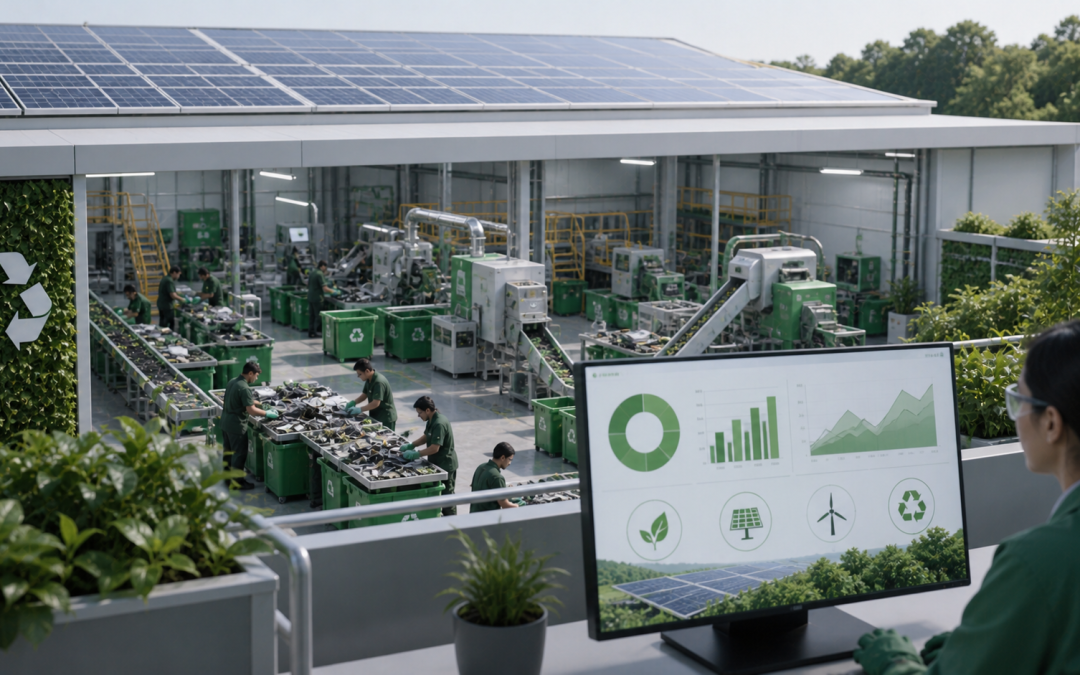
The energy used to process e-waste, including shredding, separation, smelting, and refurbishment, contributes to the carbon footprint of recycling and ITAD operations. As organisations scrutinise the environmental credentials of their entire value chain, the energy sources used by e-waste processing facilities are becoming a relevant consideration. Facilities powered by renewable energy deliver lower-carbon processing, which flows through to better environmental outcomes for the organisations whose equipment they handle.
Energy Use in E-Waste Processing
E-waste processing is moderately energy intensive. Mechanical shredding uses electric motors to drive industrial shredders that can process tonnes of material per hour. Separation technologies, including magnetic separation, eddy current separation, and optical sorting, require electricity for conveyors, sensors, and processing equipment. Smelting and refining of recovered metals requires high temperatures, typically supplied by natural gas or electricity. And facility operations including lighting, ventilation, dust extraction, and office functions add to the energy demand.
A medium-sized e-waste processing facility might consume 500,000 to 2,000,000 kWh of electricity annually, depending on throughput, processing methods, and the proportion of materials that undergo smelting.
The Carbon Impact of Energy Source
The greenhouse gas emissions from processing depend heavily on how the electricity is generated. In Australia, the national average grid emission factor was approximately 0.68 kg CO2e per kWh in recent years, though this varies significantly by state. Victoria’s grid is more carbon-intensive than Tasmania’s hydro-dominated grid or South Australia’s wind-heavy mix.
A processing facility using 1,000,000 kWh annually on the Australian average grid generates approximately 680 tonnes of CO2e from electricity alone. The same facility powered entirely by renewable energy would generate near-zero emissions from its electricity consumption, dramatically reducing the processing carbon footprint.
How Processors Are Adopting Renewables
Leading e-waste processors and ITAD providers are adopting renewable energy through several approaches. On-site solar installations are increasingly common on the large roof areas of processing warehouses and facilities. These installations can offset a significant portion of daytime electricity demand. Power purchase agreements (PPAs) with renewable energy generators provide a long-term supply of renewable electricity, often at competitive prices compared to grid electricity. Renewable energy certificates (RECs) and GreenPower allow facilities to match their grid electricity consumption with equivalent renewable energy generation elsewhere.
Some operators are going further by investing in battery storage to pair with on-site solar, enabling renewable energy use outside peak solar hours, and by electrifying processes that traditionally used gas, such as some smelting operations, to enable full decarbonisation.
Benefits Beyond Carbon
Renewable energy adoption by e-waste processors delivers benefits beyond carbon reduction. Energy cost stability comes from on-site solar and long-term PPAs, which provide more predictable energy costs than grid electricity, insulating processors from energy price volatility that could otherwise be passed through to customers.
Regulatory alignment follows as governments at all levels push for emissions reduction across industries. Processors powered by renewables are better positioned for potential future carbon pricing or emissions regulations.
Customer expectations are evolving as organisations increasingly ask their supply chain partners about energy sources and carbon intensity. Processors using renewables can offer lower-carbon processing as a competitive differentiator.
ESG performance for the processor’s own reporting benefits from renewable energy adoption, which supports their sustainability credentials and positions them as responsible operators in an industry where environmental performance is core to the value proposition.
Implications for Your Carbon Reporting
The energy sources used by your ITAD provider affect your Scope 3 emissions reporting. Under Category 5 (Waste Generated in Operations), the emissions from processing your retired equipment are partially determined by the provider’s electricity sources. If your provider uses renewable energy, the processing emissions attributable to your waste stream are lower.
When reporting, request energy source information from your provider. Ideally, they should be able to tell you the carbon intensity of their processing per tonne or per unit processed. This provider-specific data is more accurate than using national average emission factors and better reflects the actual environmental impact of your disposition activities.
Choosing Lower-Carbon Processing
Including energy source and carbon intensity as evaluation criteria when selecting or reviewing your ITAD provider is a practical step toward reducing your value chain emissions. You do not need to make it the primary selection criterion, as data security, certifications, and service quality remain paramount, but it is a meaningful differentiator among otherwise comparable providers.
As the Australian electricity grid continues to decarbonise, the carbon intensity of all processing will decline over time. However, providers that have proactively adopted renewables are delivering lower-carbon processing now, which benefits your current-year emissions reporting and demonstrates supply chain leadership.
For guidance on how processing emissions fit into your broader carbon accounting, see our guide on CO2e avoidance reporting for ITAD. For the overall picture of measuring your IT disposal environmental impact, our environmental impact measurement guide covers the full range of metrics.
]]>