
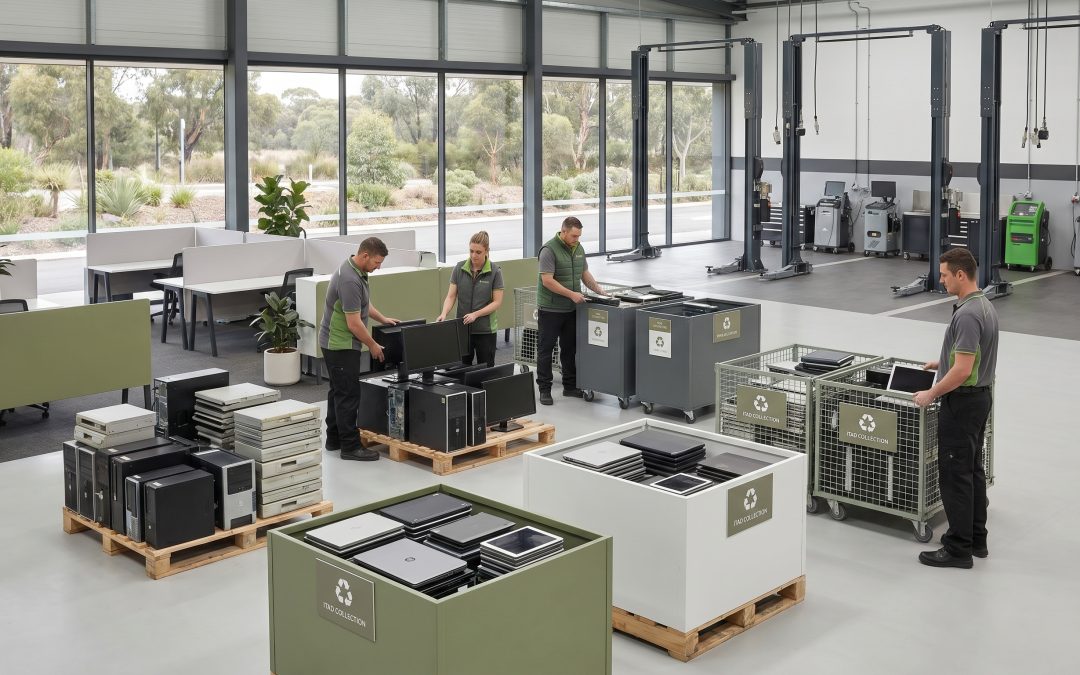
Automotive dealerships and service centres manage IT systems that hold customer financial information, vehicle data, service histories, and increasingly, connected vehicle diagnostics. The combination of finance and insurance (F&I) data, manufacturer systems, and customer relationship management creates ITAD requirements that dealership operators need to address proactively.
Dealership IT Systems
Modern automotive dealerships run a complex suite of technology. Dealer management systems (DMS) integrate sales, service, parts, and financial operations. F&I systems process loan applications, insurance quotes, and payment arrangements containing detailed customer financial information. Manufacturer portal access provides vehicle configuration, ordering, and warranty claim systems. Service department systems manage bookings, work orders, diagnostic data, and service histories. CRM systems track customer interactions, sales pipeline, and marketing campaigns.
Beyond the office, service departments use diagnostic equipment that connects to vehicle computer systems and may store diagnostic data from multiple vehicles. Workshop tablets and mobile devices are used for service documentation and customer communication. CCTV monitors the dealership lot, showroom, and workshop.
Customer Financial Data
The F&I department handles some of the most sensitive data in a dealership. Loan applications include income details, employment information, and credit history. Insurance applications require personal and vehicle information. Payment processing systems handle credit card and bank account details. This data is subject to the Privacy Act and, where credit reporting is involved, the Credit Reporting Privacy Code.
Every device that has processed F&I data requires certified data destruction before disposal. F&I workstations, the printers that produce finance documents, and any mobile devices used in the finance process should all be treated as containing highly sensitive financial information.
Manufacturer Systems and Requirements
Dealerships operate systems provided by or connected to vehicle manufacturers. These systems may be subject to manufacturer data handling requirements that apply to the dealership as a franchisee. Check your franchise agreement for any specific IT disposal requirements imposed by the manufacturer.
When manufacturer systems are upgraded or replaced, coordinate with the manufacturer’s IT team to ensure that data migration and old system decommissioning meet their requirements. Some manufacturers provide specific guidance on how their systems should be disposed of, and non-compliance could affect the franchise relationship.
Diagnostic Equipment
Service department diagnostic equipment connects to vehicle computer systems and may store diagnostic data, fault codes, and vehicle identification numbers from every vehicle serviced. When this equipment is replaced, the stored diagnostic data needs to be properly handled.
Modern diagnostic tools from manufacturers like Bosch, Snap-on, and Autel have significant resale value on the secondary market. Work with your ITAD provider to assess the remarketing potential of diagnostic equipment, but ensure that stored vehicle and customer data is destroyed before any device changes hands.
Multi-Site Dealer Groups
Dealer groups operating multiple dealerships across different brands and locations need consistent ITAD practices across the group. Each dealership may run different DMS platforms, different manufacturer systems, and different diagnostic equipment, but the data destruction and environmental compliance standards should be uniform.
Centralise ITAD coordination at the group level to negotiate better provider terms, ensure consistent standards, and simplify reporting. Individual dealership managers should follow a standardised process for staging and documenting equipment for disposal.
Environmental Compliance
Automotive businesses generate a range of waste types, and electronic waste should be managed alongside other environmental obligations. Under Victoria’s e-waste landfill ban, all electronic equipment from dealership and workshop operations must be recycled through approved channels. This includes not just computers and printers but also electronic components from workshop equipment, diagnostic tools, and dealership signage.
EWV handles IT asset disposition (ITAD) end-to-end for Victorian businesses — from collection and data destruction through to certified recycling or refurbishment for resale. Get in touch for a tailored ITAD quote.