
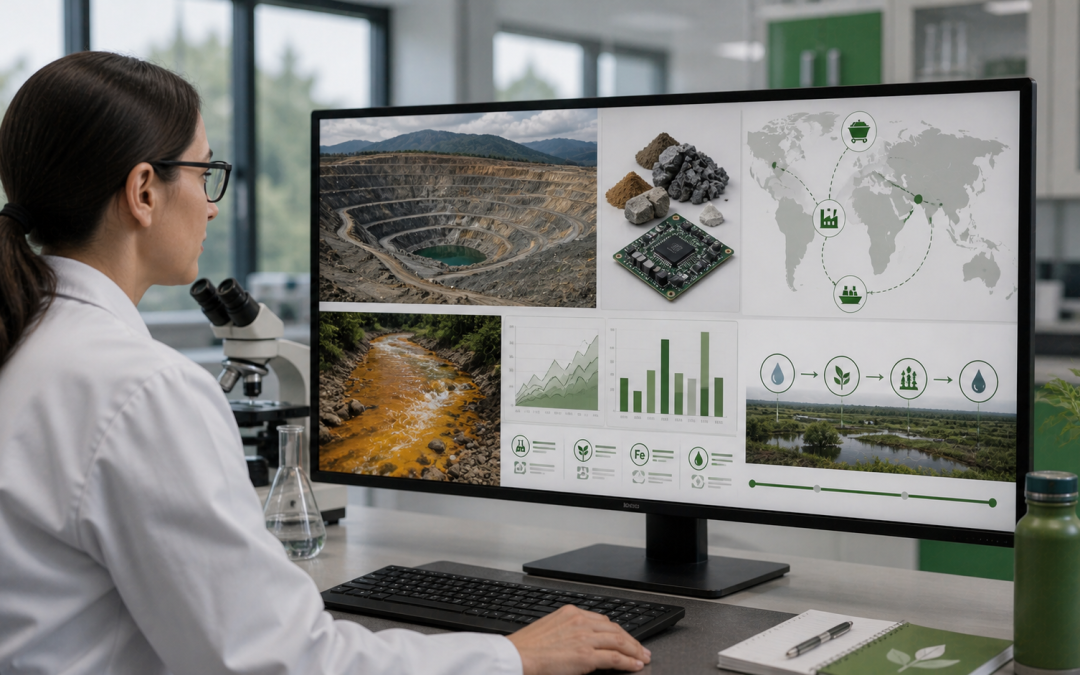
E-waste recycling recovers valuable materials and diverts hazardous waste from landfill, but the recycling processes themselves can generate chemical pollution if not properly managed. Understanding the chemical risks inherent in e-waste processing helps organisations select ITAD providers with appropriate environmental controls and contributes to a more honest assessment of the full environmental picture of IT asset disposition.
Chemicals Used in E-Waste Processing
Formal e-waste recycling uses various chemical processes to separate and recover materials. Hydrometallurgical processes use acids (hydrochloric, sulphuric, nitric) and other chemical solutions to dissolve and separate metals from circuit boards and other components. These processes can recover precious metals like gold, silver, and palladium with high efficiency, but generate chemical waste streams that require treatment.
Pyrometallurgical processes (smelting) use high temperatures to separate metals. While less chemical-intensive than hydrometallurgy, smelting generates gaseous emissions including sulphur dioxide, nitrogen oxides, and particulate matter that must be captured by emission control systems.
Plastic processing may involve chemical treatments for sorting, cleaning, or decontamination, particularly to remove flame retardant additives before recycled plastics can re-enter manufacturing supply chains.
Pollution Risks from Formal Recycling
Even well-managed formal recycling facilities generate some chemical pollution risks. Wastewater from hydrometallurgical processes contains dissolved metals and residual chemicals that must be treated before discharge. Treatment systems include pH adjustment, precipitation, filtration, and sometimes more advanced processes like ion exchange or reverse osmosis. Facilities with inadequate wastewater treatment can release contaminated water into local waterways.
Air emissions from smelting and thermal processing include particulate matter, heavy metal vapours, and combustion gases. Modern facilities use scrubbers, filters, and thermal oxidisers to capture these emissions, but no system achieves 100 percent capture. Residual emissions, while far lower than from informal processing, still require monitoring and management.
Solid waste residues from recycling include sludge from wastewater treatment, filter cake from emission control systems, and non-recyclable fractions of processed material. These residues often contain concentrated heavy metals and chemicals that require disposal in hazardous waste facilities.
Pollution from Informal Recycling
The contrast between formal and informal recycling is stark. In informal operations, which are common in parts of Africa, Asia, and South America, e-waste is processed using crude methods that release chemicals directly into the environment. Acid stripping of circuit boards uses strong acids poured over boards in open containers, with the spent acid dumped on the ground or into waterways. Open burning of cables and plastics releases dioxins, furans, and heavy metal vapours directly into the air. Manual dismantling without containment scatters plastic fragments, metal filings, and chemical residues into the soil.
Studies of informal e-waste processing sites have found soil contamination levels hundreds of times above safe limits, water contamination affecting communities downstream, and elevated levels of toxic chemicals in the blood and tissues of workers and nearby residents.
The Australian Regulatory Framework
In Australia, e-waste processing facilities are regulated under state and territory environmental protection legislation. In Victoria, the Environment Protection Act 2017 and associated regulations set requirements for waste processing facilities, including permissions and licences for waste management activities, obligations to prevent and minimise pollution, requirements for environmental management systems, monitoring and reporting obligations, and penalties for non-compliance.
Victoria’s e-waste landfill ban, in effect since 1 July 2019, ensures that e-waste is directed to processing facilities rather than landfill, but the quality of processing matters for chemical pollution outcomes. Choosing certified facilities with demonstrated environmental management systems is essential.
Reducing Chemical Pollution Through Better Processing
The e-waste recycling industry continues to develop cleaner processing technologies. Improved hydrometallurgical processes use less toxic reagents and achieve higher material recovery rates with lower chemical consumption. Closed-loop water systems reduce wastewater generation by recycling process water within the facility. Advanced air filtration captures a higher proportion of emissions, including fine particles and volatile compounds. And biological processing methods, still largely in research stages, use microorganisms to extract metals from e-waste, potentially offering a lower-chemical-impact alternative to traditional hydrometallurgy.
What Organisations Can Do
As a generator of e-waste, your organisation can minimise its contribution to chemical pollution by choosing ITAD providers with strong environmental certifications and documented pollution control measures, favouring domestic processing where Australian environmental regulations provide oversight, maximising refurbishment and reuse to reduce the volume of material entering chemical-intensive recycling processes, and asking your provider about their downstream processing partners and the environmental controls at those facilities.
For guidance on selecting ITAD providers with strong environmental credentials, see our guide on how to choose an ITAD provider in Australia. For a broader view of the environmental impacts of e-waste processing, our guide on the true environmental cost of electronic waste covers the full picture.
]]>