
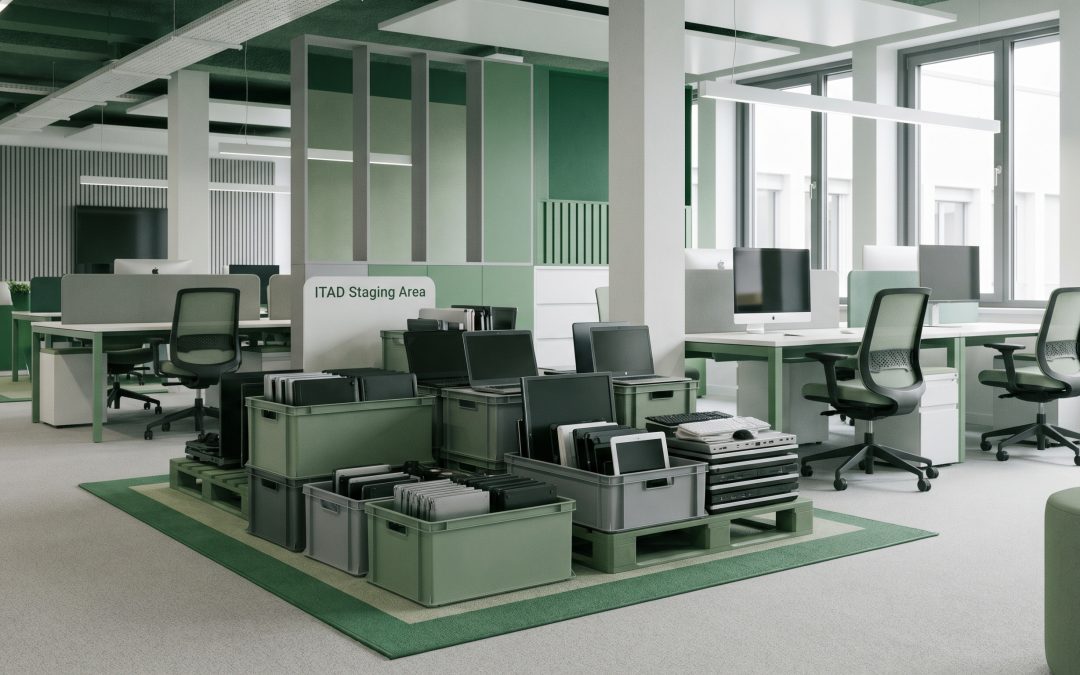
Coworking and shared office spaces present a distinctive ITAD challenge. The technology infrastructure serves multiple tenant businesses simultaneously, shared equipment is used by a rotating cast of members, and the boundary between the space operator’s IT and tenant IT can be blurry. Managing the disposition of technology in this environment requires clarity about ownership, data responsibility, and environmental compliance.
The Shared Space Technology Stack
Coworking operators deploy technology across several layers. Shared infrastructure includes Wi-Fi networks, printing and scanning stations, video conferencing equipment in meeting rooms, and digital signage. Building systems include access control, CCTV, environmental controls, and booking systems. Business centre equipment may include shared computers, presentation technology, and phone systems. And the operator’s own back-office systems manage memberships, billing, and operations.
This infrastructure serves dozens or hundreds of member businesses, each using the shared technology to access their own business data. When shared equipment reaches end of life, it may contain cached data, credentials, and usage information from multiple tenants.
Multi-Tenant Data Considerations
The primary data risk in coworking ITAD is the aggregation of data from multiple businesses on shared equipment. A shared printer may have stored documents from dozens of different companies. A Wi-Fi access point may have cached authentication credentials. Meeting room video conferencing equipment may have call logs and cached meeting data. Shared computers, where they exist, may retain browsing data, downloaded files, and login credentials despite session management tools.
Apply certified data destruction to all shared equipment before disposal. The data on these devices belongs to your member businesses, and you have an obligation under the Privacy Act and your membership agreements to protect it.
Printers and multifunction devices deserve particular attention. These devices typically have internal hard drives that store images of every document printed, copied, or scanned. In a coworking environment, that means confidential business documents from every member who has used the printer.
Tenant Equipment Left Behind
Coworking spaces regularly deal with equipment left behind by members who leave. Dedicated desks may have monitors, keyboards, and personal devices. Private offices may contain servers, printers, and networking equipment. Hot desk users occasionally leave devices behind.
Your membership agreement should address abandoned equipment with clear timelines for claiming items after membership ends and defined procedures for disposing of unclaimed equipment. Apply the same data destruction protocols to abandoned tenant equipment as you would to your own shared infrastructure, as you cannot know what data the devices contain.
Scaling with Multiple Locations
Coworking operators with multiple locations need consistent ITAD practices across all sites. Establish a standard operating procedure that applies to every location, covering how equipment is decommissioned, who authorises disposal, how data destruction is documented, and which ITAD provider is used.
Consolidate equipment from smaller locations at larger sites for batch processing. This reduces per-unit costs and simplifies provider management. Schedule regular collection cycles, such as quarterly, rather than ad-hoc pickups.
Member Communication
Consider communicating your data handling practices to members. Transparency about how you manage shared equipment, including secure disposal when equipment reaches end of life, builds trust and can be a differentiator for security-conscious businesses choosing a coworking space. Include your ITAD practices in your security and privacy documentation.
EWV handles IT asset disposition (ITAD) end-to-end for Victorian businesses — from collection and data destruction through to certified recycling or refurbishment for resale. Get in touch for a tailored ITAD quote.