
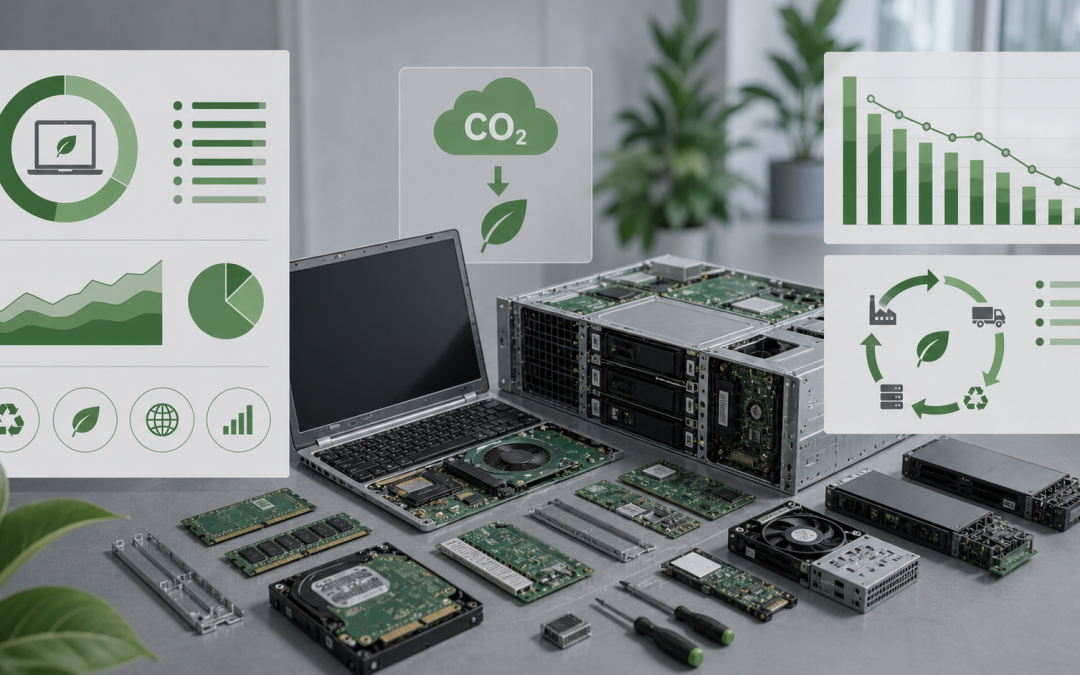
Embodied carbon refers to the total greenhouse gas emissions generated in the production of a product, from raw material extraction through manufacturing and delivery. For IT equipment, embodied carbon represents the carbon debt incurred before a device is even switched on. Understanding embodied carbon is essential for organisations trying to reduce their Scope 3 emissions, because for most IT equipment, manufacturing emissions far exceed the operational emissions generated during the device’s entire working life.
What Contributes to Embodied Carbon
The embodied carbon of IT equipment comes from multiple stages of production. Raw material extraction accounts for the emissions from mining, refining, and processing the dozens of different metals, minerals, and materials in electronic devices. This includes energy used by mining equipment, chemical processing of ores, transportation of raw materials, and the environmental management of mining operations.
Component manufacturing is typically the largest single contributor. Semiconductor fabrication is extraordinarily energy intensive, with advanced chip fabs consuming as much power as small cities. Battery cell production, display manufacturing, and circuit board fabrication all add significant emissions.
Assembly and testing brings components together into finished products. While less energy intensive per step than component manufacturing, the cumulative emissions from assembly lines, quality testing, and factory operations are meaningful.
Packaging and distribution adds the final layer, including materials for packaging and the transportation emissions from shipping products from assembly locations (predominantly in East and Southeast Asia) to markets like Australia.
Embodied Carbon by Device Type
Embodied carbon varies significantly across IT equipment categories. Business laptops typically carry 300 to 400 kg CO2e, with variation depending on screen size, processor power, memory, storage type, and battery capacity. Ultra-thin models with complex manufacturing processes may sit at the higher end. Desktop computers range from 300 to 500 kg CO2e, with workstation-class machines at the upper end due to more powerful components. Monitors carry 200 to 400 kg CO2e depending on size and technology, with larger 4K displays at the higher end.
Rack-mounted servers carry 1,000 to 4,000 kg CO2e depending on configuration, with high-density compute servers with multiple processors, large memory arrays, and extensive storage at the top of the range. Network switches range from 200 to 800 kg CO2e for enterprise-grade equipment. Smartphones carry 50 to 80 kg CO2e, and tablets 80 to 120 kg CO2e.
Factors That Affect Embodied Carbon
Several factors influence the embodied carbon of specific equipment. Manufacturing location matters because the carbon intensity of electricity varies dramatically by region. A device assembled in a factory powered by renewable energy has lower embodied carbon than an identical device made using coal-fired electricity. Component specifications affect embodied carbon directly, as more powerful processors, larger memory, bigger batteries, and higher-resolution displays all require more energy and materials to produce.
Supply chain efficiency varies between manufacturers. Companies that have invested in supply chain optimisation, renewable energy for manufacturing, and efficient logistics tend to produce equipment with lower embodied carbon. And product design choices, including material selection, modularity, and manufacturing process requirements, influence the embodied carbon from the design stage onward.
Reducing Your Organisation’s Embodied Carbon
Organisations can reduce the embodied carbon associated with their IT equipment through several strategies. Extending equipment lifecycles reduces the annualised embodied carbon by spreading the manufacturing emissions over more years of productive use. Moving from a three-year to a five-year laptop refresh cycle reduces annual embodied carbon per device by 40 percent.
Purchasing refurbished equipment avoids the vast majority of embodied carbon because the manufacturing has already occurred. The embodied carbon of a refurbished laptop is essentially the small amount generated during the refurbishment process itself, typically 20 to 50 kg CO2e.
Right-sizing equipment means purchasing devices with specifications matched to actual needs. An employee who primarily uses a web browser and email does not need a workstation-class laptop with a high-end processor and dedicated graphics card. Specifying appropriate devices reduces unnecessary embodied carbon.
Choosing lower-carbon manufacturers rewards companies that have invested in renewable energy, supply chain efficiency, and environmental management. Environmental product declarations and manufacturer sustainability reports provide the data needed to compare options.
Embodied Carbon in Sustainability Reporting
Embodied carbon from IT equipment procurement feeds into your Scope 3 emissions reporting under Category 1 (Purchased Goods and Services) or Category 2 (Capital Goods). As mandatory climate reporting under ASRS expands, organisations need accurate embodied carbon data for their IT purchases.
Sources for embodied carbon data include manufacturer environmental product declarations, lifecycle assessment databases (such as ecoinvent), industry average figures from research publications, and direct requests to your IT suppliers for product-specific carbon footprint data.
For guidance on incorporating embodied carbon into your broader sustainability reporting, see our guide on ESG reporting and e-waste for Australian businesses. For specific guidance on CO2e avoidance from IT disposition, our guide on CO2e avoidance reporting covers the methodology.
]]>