
Choosing between on-site and off-site data destruction is one of the most important decisions in IT asset disposition. Each approach offers different levels of security assurance, cost efficiency, and operational convenience. Understanding the trade-offs helps you select the right method for your organisation’s risk profile and operational needs.
On-Site Data Destruction
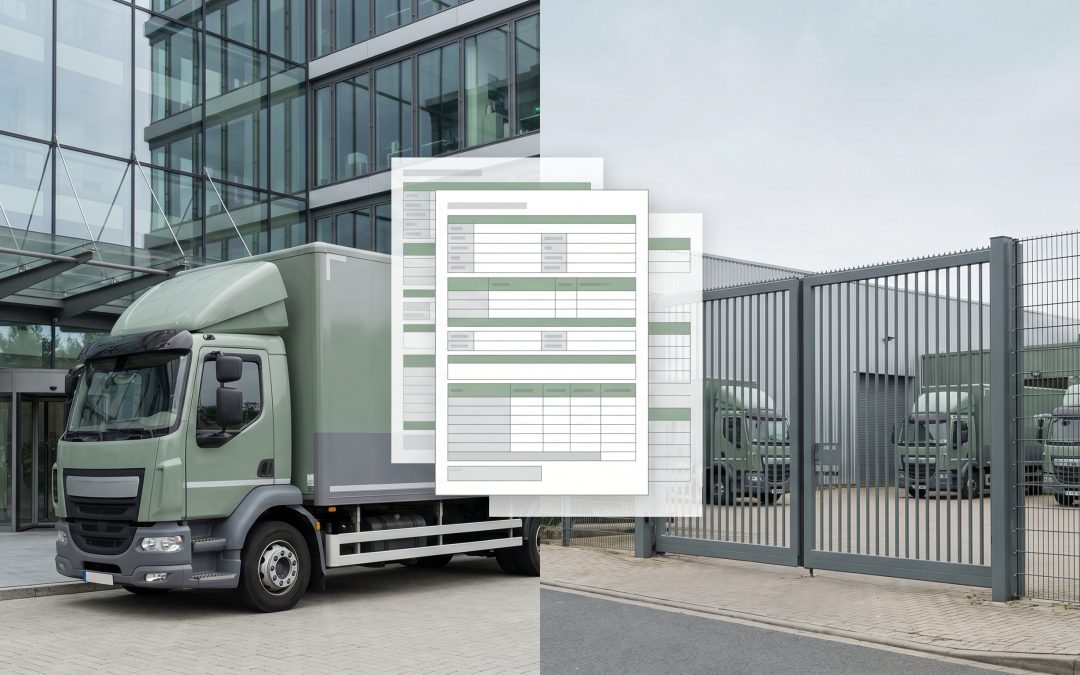
On-site destruction means the data destruction process happens at your premises. A mobile destruction unit, typically a truck equipped with an industrial shredder or degausser, comes to your location. Your team can witness the destruction in real time, and equipment never leaves your control with data intact.
Advantages: Equipment stays on your premises until destruction is confirmed, eliminating transport risk. Staff can witness the destruction process, providing visual confirmation and peace of mind. Chain of custody is simplified because there is no off-site handoff. It is particularly suitable for highly sensitive equipment where any transport risk is unacceptable.
Disadvantages: Mobile destruction units have limited throughput compared to fixed-facility equipment, making large volumes slower to process. The cost per unit is typically higher than off-site because of the mobilisation cost of bringing equipment to your site. Space is needed on-site for the destruction vehicle and staging area. And noise from shredding equipment can be disruptive in office environments.
On-site destruction is best suited for the most sensitive equipment such as executive devices, trading floor equipment, and devices from high-security environments, and for organisations with strict policies against equipment leaving the premises with data intact.
Off-Site Data Destruction
Off-site destruction means equipment is collected from your premises and transported to the ITAD provider’s processing facility for destruction. The provider’s facility has dedicated equipment, trained staff, and established processes for high-volume destruction.
Advantages: Purpose-built facilities can process higher volumes more efficiently. Per-unit costs are typically lower due to economies of scale. The provider can perform both destruction and remarketing from the same facility. And there is no need to accommodate a destruction vehicle on your premises.
Disadvantages: Equipment must be transported off-site with data still intact, creating a window of vulnerability during transport. You rely on the provider’s chain of custody rather than direct oversight. Destruction is not witnessed in real time (though some providers offer video verification). And the time between collection and confirmed destruction is longer than with on-site processing.
Off-site destruction is appropriate for standard enterprise equipment where the transport risk can be managed through proper chain of custody procedures, and for organisations processing volumes that would be impractical to destroy on-site.
Risk Mitigation for Off-Site
If you choose off-site destruction, several measures reduce the transport risk. Use sealed, tamper-evident containers or cages for equipment in transit. Require dedicated transport rather than shared loads with other clients’ equipment. Insist on GPS tracking of the transport vehicle. Verify driver identity and authorisation at collection. Obtain a detailed collection manifest signed by both parties. And require the provider to confirm receipt at their facility and report any discrepancies immediately.
Cost Comparison
On-site destruction typically costs 30 to 100 percent more per unit than off-site, primarily due to the mobilisation cost of bringing equipment to your location. However, the cost difference narrows with larger volumes because the mobilisation cost is spread across more units. For very large on-site events, the per-unit cost can approach off-site rates.
The total cost comparison should also consider the value recovery implications. On-site physical destruction renders equipment unsaleable. Off-site processing may allow for software-based sanitisation and remarketing of suitable equipment, potentially generating revenue that offsets the processing cost.
The Hybrid Approach
Many organisations use a hybrid approach: on-site destruction for their most sensitive equipment and off-site processing for standard devices. This targets the highest security where it matters most while keeping costs manageable for the broader fleet. A typical hybrid might involve on-site shredding for devices from executive suites, legal, HR, and finance, while standard employee laptops and desktops go off-site for sanitisation and remarketing.
EWV provides NIST 800-88 certified data destruction for Victorian businesses, covering software-based erasure and physical destruction with full chain-of-custody documentation. Request a quote to discuss your requirements.