
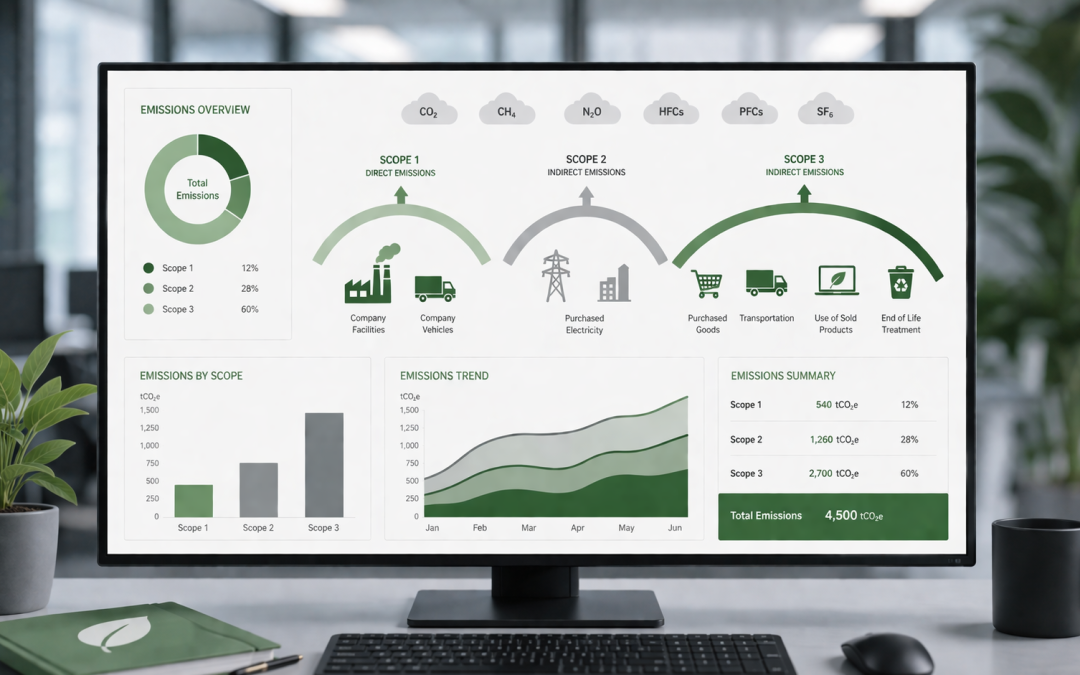
The Greenhouse Gas Protocol divides emissions into three scopes, and understanding how each scope applies to the IT equipment lifecycle helps organisations identify where their biggest carbon impacts sit, what they can control directly, and where they need to engage with their supply chain. For most organisations, IT equipment is primarily a Scope 3 story, but all three scopes have relevance depending on how your IT infrastructure is structured.
Scope 1: Direct Emissions
Scope 1 covers direct greenhouse gas emissions from sources owned or controlled by your organisation. For most office-based organisations, IT equipment generates minimal Scope 1 emissions because the devices themselves do not burn fuel or directly release greenhouse gases during normal operation.
However, Scope 1 IT-related emissions can arise from on-site diesel generators used to power IT infrastructure (particularly data centres), company-owned vehicles used to transport IT equipment between sites, refrigerant leaks from data centre cooling systems (some refrigerants are potent greenhouse gases), and on-site data destruction using fuel-powered equipment.
For organisations with on-premises data centres, the Scope 1 emissions from backup generators and cooling systems can be meaningful. Data centres that rely on diesel generators for backup power generate Scope 1 emissions proportional to generator runtime, and refrigerant losses from cooling systems contribute Scope 1 emissions based on the quantity and type of refrigerant released.
Scope 2: Indirect Energy Emissions
Scope 2 covers indirect emissions from purchased electricity, steam, heating, and cooling. This is where the IT use phase makes its primary contribution. Every computer, monitor, server, and piece of networking equipment in your organisation consumes electricity throughout its operational life, and the emissions associated with generating that electricity are your Scope 2 IT footprint.
The magnitude of Scope 2 IT emissions depends on the number and type of devices, their power consumption profiles, how many hours per day they operate, and the carbon intensity of your electricity supply.
For office environments, IT equipment typically accounts for 15 to 30 percent of total electricity consumption. For organisations with on-premises data centres, the proportion can be much higher, with the data centre alone potentially representing 30 to 50 percent of total building energy use when cooling is included.
Reducing Scope 2 IT emissions involves purchasing energy-efficient equipment, implementing power management settings, right-sizing infrastructure (avoiding over-provisioned servers and storage), migrating to cloud services where the provider uses renewable energy, and purchasing renewable energy for your own operations.
Scope 3: Value Chain Emissions
Scope 3 covers all other indirect emissions in your value chain, both upstream and downstream. This is where the vast majority of IT lifecycle emissions sit, and it is where IT asset management decisions have the most impact.
Category 1 (Purchased Goods and Services) includes the embodied carbon of all IT equipment your organisation purchases. This covers raw material extraction, component manufacturing, assembly, and transportation to your premises. For office-intensive businesses, IT procurement can be one of the largest single contributors to Category 1 emissions.
Category 2 (Capital Goods) may include significant IT equipment purchases that are capitalised rather than expensed. The distinction between Category 1 and Category 2 depends on your accounting treatment, but the emissions calculation is the same.
Category 4 (Upstream Transportation and Distribution) includes any transportation of IT equipment that is not already captured in the purchase price, such as internal distribution from a central warehouse to multiple office locations.
Category 5 (Waste Generated in Operations) includes the emissions from collecting, transporting, and processing your retired IT equipment. This is where your ITAD provider’s activities fall.
Category 11 (Use of Sold Products) is relevant if your organisation sells or leases IT equipment. The energy consumed by those products during their useful life generates Scope 3 emissions for the seller.
Where to Focus Your Efforts
For most organisations, the IT lifecycle Scope 3 emissions from procurement (Category 1) dwarf both the Scope 2 usage emissions and the Scope 3 processing emissions at end of life. This means the most impactful carbon reduction strategies focus on reducing procurement volumes by extending equipment lifecycles, choosing lower-carbon equipment (checking manufacturer embodied carbon data), purchasing refurbished equipment where appropriate, and maximising refurbishment and remarketing at end of life to displace new manufacturing.
Operational energy efficiency (Scope 2) still matters and is directly within your control, but it delivers smaller carbon savings per device than lifecycle and procurement decisions.
Reporting Across Scopes
A complete picture of your IT carbon footprint requires reporting across all relevant scopes. Under Australia’s ASRS mandatory reporting and frameworks like ISSB and TCFD, Scope 3 reporting is increasingly required, not just recommended.
Presenting your IT emissions by scope helps stakeholders understand where the impacts sit and where your reduction efforts will be most effective. For comprehensive guidance on ESG reporting for IT and e-waste, see our ESG reporting guide for Australian businesses.
]]>