
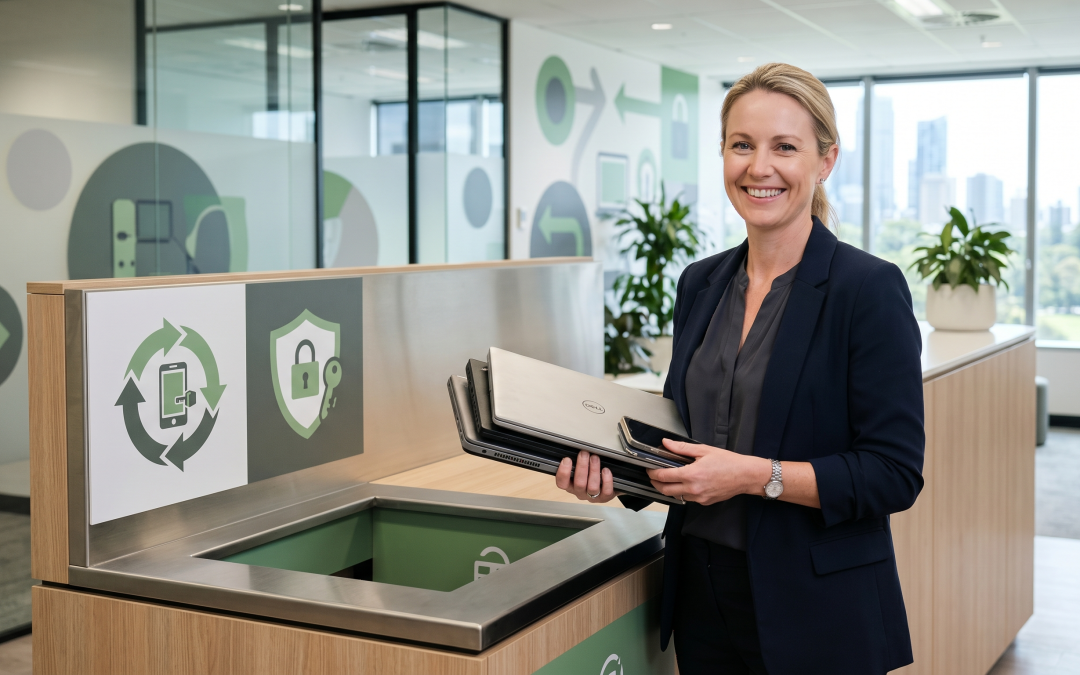
Small business owners wear many hats, and IT asset disposition is rarely at the top of the priority list. But every small business accumulates old computers, phones, printers, and other electronic equipment over time. Knowing how to handle this equipment properly protects your business from data breaches, keeps you on the right side of environmental regulations, and can even put some money back in your pocket.
Why Small Business ITAD Matters
Small businesses often think data breaches only happen to large organisations. The reality is that small businesses are frequent targets precisely because they tend to have weaker security practices. And one of the most overlooked vulnerabilities is old IT equipment that still contains business data.
Your old computer likely contains customer records, financial data, supplier information, employee details, tax records, business plans, and email correspondence. If that computer ends up in the wrong hands without being properly wiped, you could face a data breach that triggers notification obligations under the Privacy Act and damages your reputation with customers.
In Victoria, you also cannot legally send electronic waste to landfill. The e-waste ban has been in effect since 1 July 2019, and it applies to businesses of all sizes. Simply throwing old equipment in the skip is not just irresponsible; it is illegal.
What Equipment Needs Proper Disposal
Anything with a plug or a battery is considered e-waste and needs to go through proper recycling channels. For small businesses, the most common items include desktop computers and monitors, laptops and tablets, smartphones, printers and scanners, networking equipment like routers and switches, external hard drives and USB drives, and point-of-sale terminals and EFTPOS machines.
Do not forget the less obvious items. The old router in the cupboard contains your network passwords. The multifunction printer has an internal hard drive that stores images of everything you have ever printed, copied, or scanned. EFTPOS terminals may contain transaction data. All of these need proper handling.
Your Options for Disposal
Small businesses have several options for disposing of IT equipment, ranging from free to fee-based depending on the level of service you need.
Council e-waste collection. Most Victorian councils offer free e-waste drop-off at their transfer stations or through periodic collection events. This is a good option for equipment that has no resale value and does not contain sensitive data. However, council collections typically do not include certified data destruction, so you need to handle that separately before dropping off equipment.
Retailer take-back programs. Some electronics retailers accept old equipment for recycling when you purchase new equipment. Like council collections, these programs typically do not include data destruction services.
Professional ITAD providers. For businesses that need certified data destruction and want to recover value from their equipment, a professional ITAD provider is the best option. They handle everything from collection to data destruction to remarketing or recycling, and provide documentation that proves your compliance.
IT support provider. If you use an IT support company or managed service provider, ask whether they offer ITAD services or can recommend a provider. Many IT support companies have arrangements with ITAD specialists and can coordinate disposal as part of their service.
Data Destruction on a Small Business Budget
Professional data destruction does not have to be expensive. For small volumes of equipment, many ITAD providers offer cost-effective options including drop-off services where you bring equipment to their facility (cheaper than on-site collection), batch processing where you accumulate devices and process them together, and combined services where data destruction costs are offset by value recovery from equipment remarketing.
For very small volumes, one or two devices, you can use reputable data destruction software to wipe devices yourself. Look for software that follows NIST 800-88 guidelines and provides a verification report. However, for anything beyond a handful of devices, or for any equipment containing highly sensitive data, professional destruction is strongly recommended.
Whatever approach you choose, keep records. A certificate of data destruction or a screenshot of your software’s verification report is your proof that you handled the data responsibly. File it with your business records and keep it for at least seven years.
Getting Value from Old Equipment
Small business equipment often has more value than owners expect. A three-year-old business laptop in good condition can still fetch $150 to $400 on the secondary market. Even if individual items are not worth much, a batch of equipment processed together can generate a meaningful return.
To maximise value recovery, do not wait too long. Equipment depreciates rapidly, so disposing of it promptly gets you better returns. Keep equipment in good condition during its working life, since cosmetic damage significantly reduces resale value. Include all accessories like chargers, docking stations, and cables, as complete units sell for more. And work with an ITAD provider who has strong remarketing channels, rather than trying to sell equipment yourself on marketplace platforms.
The proceeds from equipment remarketing can offset or even exceed the cost of professional data destruction and disposal. Many small businesses find that a well-managed disposition process is actually cost-neutral or generates a small profit.
Simple Steps to Get Started
If you have been putting off dealing with old IT equipment, here is a simple action plan. First, gather all old and unused equipment from around your office. Check desks, cupboards, storage rooms, and ask staff if they have any old devices at home that belong to the business.
Second, make a list of everything, including the type of device, approximate age, and condition. This helps you and any provider you engage understand what you are dealing with.
Third, contact a professional ITAD provider for a quote. Many offer free assessments for small businesses. They will tell you what your equipment is worth, what the disposal costs will be, and what documentation you will receive.
Fourth, schedule the collection or drop-off and get it done. The longer you wait, the less your equipment is worth and the greater the data security risk.
EWV handles IT asset disposition (ITAD) end-to-end for Victorian businesses — from collection and data destruction through to certified recycling or refurbishment for resale. Get in touch for a tailored ITAD quote.