
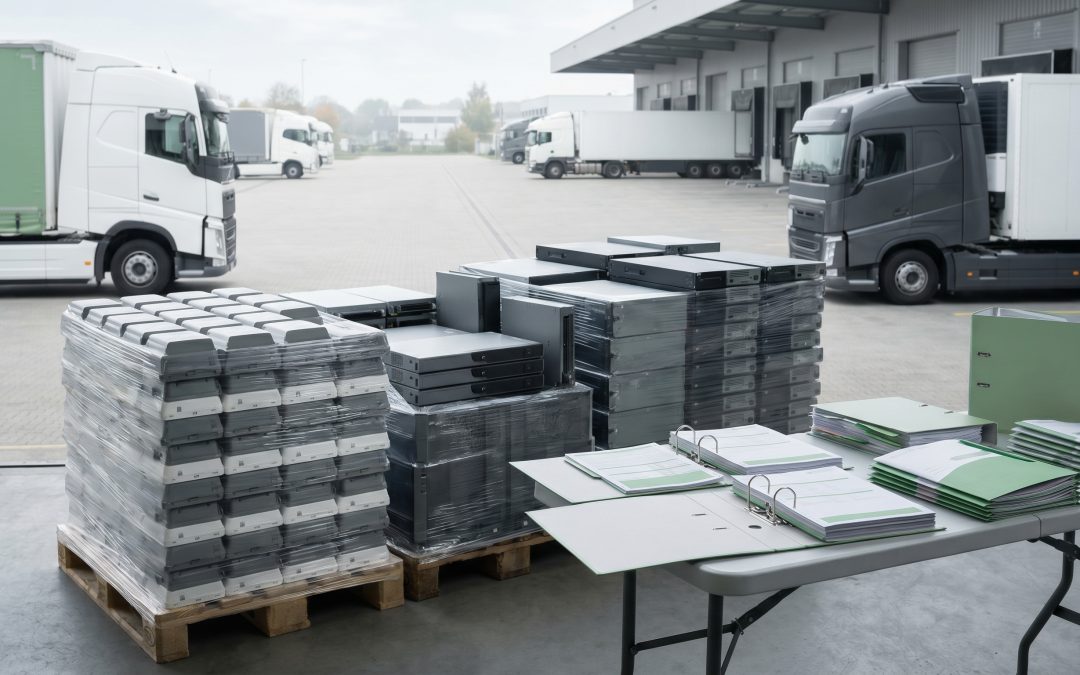
Transport and freight companies operate technology across offices, depots, vehicles, and increasingly, warehousing operations. From fleet management systems and driver devices to logistics platforms and customer tracking portals, the IT footprint of a modern transport operation extends well beyond the office. Managing the disposition of this distributed technology requires a structured approach that covers every location and device type.
The Transport Technology Footprint
Transport companies deploy technology across multiple environments. Office systems run dispatch, routing, customer management, and financial operations. Depot technology includes weighbridge systems, yard management, and security. In-vehicle technology includes GPS tracking, telematics, electronic work diaries (EWDs), dash cameras, and driver tablets. Warehouse technology in integrated logistics operations includes WMS, scanners, and automated systems.
The diversity of deployment locations, from air-conditioned offices to truck cabs and outdoor depots, means equipment arrives at end of life in varying conditions. In-vehicle and depot equipment typically shows more wear than office equipment.
Driver and Vehicle Data
Transport technology generates significant volumes of data with privacy and commercial sensitivity implications. GPS tracking records reveal driver locations, routes, and stop patterns. Telematics data captures driving behaviour including speed, braking, and hours of service. Dash cameras record video footage of drivers and road conditions. Electronic work diaries contain detailed records of driver work and rest hours, which have regulatory significance under the Heavy Vehicle National Law.
This data has privacy implications for drivers under the Privacy Act and workplace surveillance legislation. It also has commercial sensitivity, as route data and delivery patterns reveal supply chain relationships and operational capacity.
Apply certified data destruction to all in-vehicle devices before disposal. This includes GPS units, telematics modules, dash cameras (which typically have SD cards or internal storage), EWD devices, and any tablets or mobile devices used by drivers.
Vehicle Disposal and Technology Removal
When transport vehicles are sold, traded, or scrapped, all aftermarket technology must be removed and processed through your ITAD program. It is common for vehicles to be sold with GPS trackers, telematics units, and cameras still installed, potentially exposing operational data to the new owner or a competitor.
Establish a vehicle decommissioning checklist that includes the removal of all electronic devices. Make this a mandatory step in the vehicle disposal process, whether the vehicle is being sold at auction, traded to a dealer, or scrapped. Assign responsibility for technology removal to a specific role, whether that is fleet management, IT, or the workshop team.
Multi-Depot Operations
Transport companies typically operate from multiple depots across a state or nationally. Each depot has office equipment, depot infrastructure technology, and a fleet of vehicles with installed technology. Coordinating ITAD across all these locations requires a centralised framework with local execution.
Use your existing freight network to move decommissioned equipment from regional depots to a central location for batch processing. Transport companies have a natural advantage here, as you already have the vehicles and routes to consolidate equipment efficiently. Assign a collection point at each depot where decommissioned equipment is staged, and schedule regular pickups as part of your normal inter-depot freight movements.
Compliance and Chain of Responsibility
The transport industry operates under Chain of Responsibility (CoR) legislation that makes all parties in the supply chain accountable for safety outcomes. While CoR primarily addresses safety issues like fatigue management and load restraint, the data on transport IT systems, such as EWD records, speed data, and maintenance logs, may be relevant to CoR compliance and investigation.
Ensure that data retention requirements under CoR legislation are satisfied before equipment is disposed of. EWD records, for example, must be retained for specified periods. Coordinate with your compliance team to confirm that all regulatory retention requirements are met before devices enter the ITAD pipeline.
Environmental Considerations
Transport companies face growing scrutiny of their environmental practices, and responsible e-waste management supports the industry’s sustainability credentials. Under Victoria’s e-waste landfill ban, all electronic equipment from transport operations must be recycled through approved channels. Track and report your e-waste volumes as part of your environmental management and sustainability reporting.
EWV handles IT asset disposition (ITAD) end-to-end for Victorian businesses — from collection and data destruction through to certified recycling or refurbishment for resale. Get in touch for a tailored ITAD quote.