
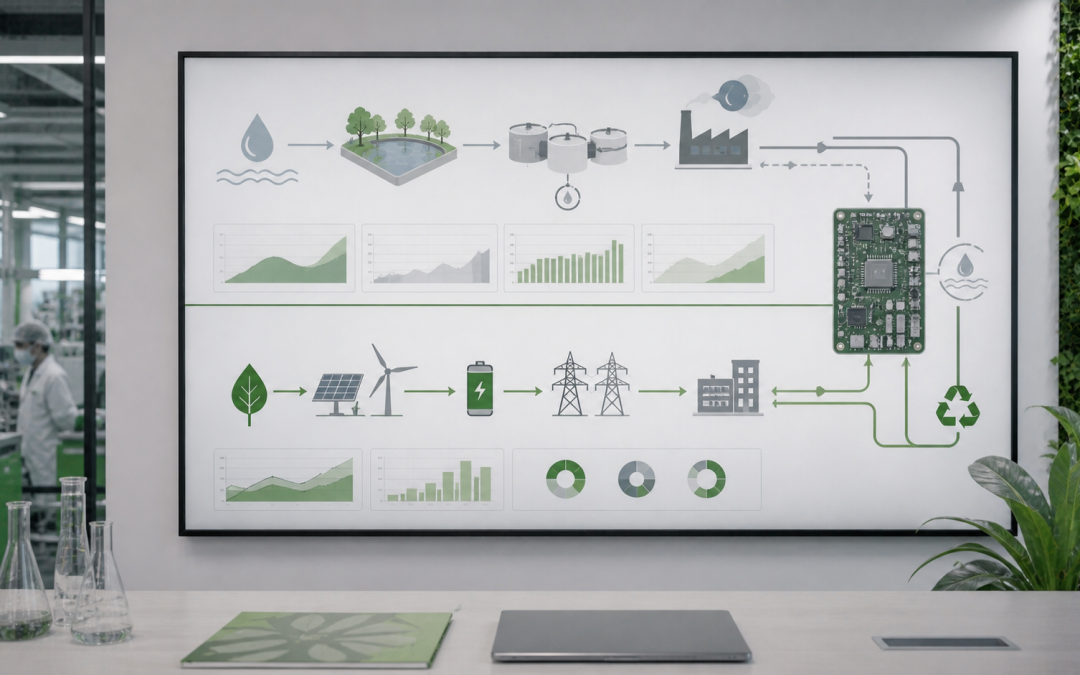
Water and energy are deeply interconnected in IT equipment production. Manufacturing electronics requires enormous quantities of both, and the relationship between them creates compounding environmental impacts. Understanding this water-energy nexus helps organisations appreciate the full environmental cost of IT procurement and strengthens the case for lifecycle extension, refurbishment, and circular approaches that reduce demand for new manufacturing.
What the Water-Energy Nexus Means
The water-energy nexus describes the bidirectional relationship between water use and energy consumption. Producing energy requires water (for cooling power plants, processing fuels, and generating hydroelectricity). And producing, treating, and distributing water requires energy (for pumping, purification, heating, and desalination). In IT equipment production, both sides of this nexus are significant.
Water for Energy in Manufacturing
The energy consumed in electronics manufacturing comes primarily from electricity, and electricity generation is one of the world’s largest industrial water users. Thermal power plants (coal, gas, and nuclear) use water for cooling, consuming or evaporating large volumes in the process. A coal-fired power plant might use 1.5 to 2.0 litres of water per kilowatt-hour generated.
Semiconductor fabrication, the most energy-intensive stage of electronics manufacturing, is heavily concentrated in regions that depend on thermal electricity generation. Taiwan, South Korea, and parts of China, which together manufacture the majority of the world’s semiconductors, use significant thermal generation in their electricity mix. This means the electricity consumed by chip fabs carries a substantial indirect water footprint from power generation.
Energy for Water in Manufacturing
On the other side of the nexus, the ultra-pure water used in semiconductor fabrication requires significant energy to produce. The purification process involves multiple stages of filtration, deionisation, UV treatment, and degasification, each consuming electricity. Producing ultra-pure water typically requires 3 to 10 kWh per thousand litres, depending on the source water quality and the purity level required.
Additionally, wastewater from manufacturing must be treated before discharge, which requires further energy for chemical treatment, biological processes, and sludge management. Some fabs generate large volumes of chemical-laden wastewater that requires energy-intensive advanced treatment.
Climate Change and the Nexus
Climate change adds another dimension to the water-energy nexus in electronics manufacturing. Rising temperatures reduce the efficiency of thermal power generation (warmer cooling water is less effective), increase water demand for cooling at both power plants and manufacturing facilities, increase the risk of water scarcity in key manufacturing regions, and may increase the energy required for water treatment as source water quality degrades.
Several major semiconductor manufacturing regions are already experiencing water stress. Taiwan faced severe droughts in 2021 that forced chip manufacturers to reduce water consumption, with some fabs trucking in water to maintain production. As climate change intensifies, these disruptions are likely to become more frequent, creating supply chain risks for organisations dependent on new IT equipment.
Mining and the Nexus
The water-energy nexus also applies to the mining stage of the IT supply chain. Mining operations are often located in water-scarce regions where energy and water compete for limited resources. Lithium extraction in the Atacama Desert uses enormous quantities of water in one of the driest places on earth. Copper mining in Chile’s Atacama region faces increasing competition between mining water demand and community needs. And rare earth processing is both water and energy intensive, with the chemical processing of ores consuming significant quantities of both.
As ore grades decline and mines go deeper, both water and energy requirements per unit of extracted material increase, amplifying the nexus impact over time.
Implications for IT Lifecycle Decisions
The water-energy nexus reinforces the environmental case for reducing demand for new IT equipment. Every device not manufactured avoids both the direct water and energy consumption of production and the nexus effects where each amplifies the other. Extending equipment lifecycles by even one year reduces the annualised water-energy nexus impact by a meaningful fraction. Purchasing refurbished equipment avoids the vast majority of the manufacturing water-energy footprint. And improving recycling rates reduces the mining water-energy footprint by substituting recycled materials for virgin extraction.
For organisations reporting on their environmental impact, considering the water-energy nexus provides a more complete picture than reporting on either resource in isolation. For guidance on how to measure and report these impacts, see our guide on measuring the environmental impact of IT disposal. For a broader view of the environmental costs of electronics, our guide on the true environmental cost of electronic waste covers the full lifecycle.
]]>EWV helps Victorian businesses manage e-waste and IT asset disposal compliantly and sustainably — including collection, certified data destruction, and recycling. Contact us for a free quote.