
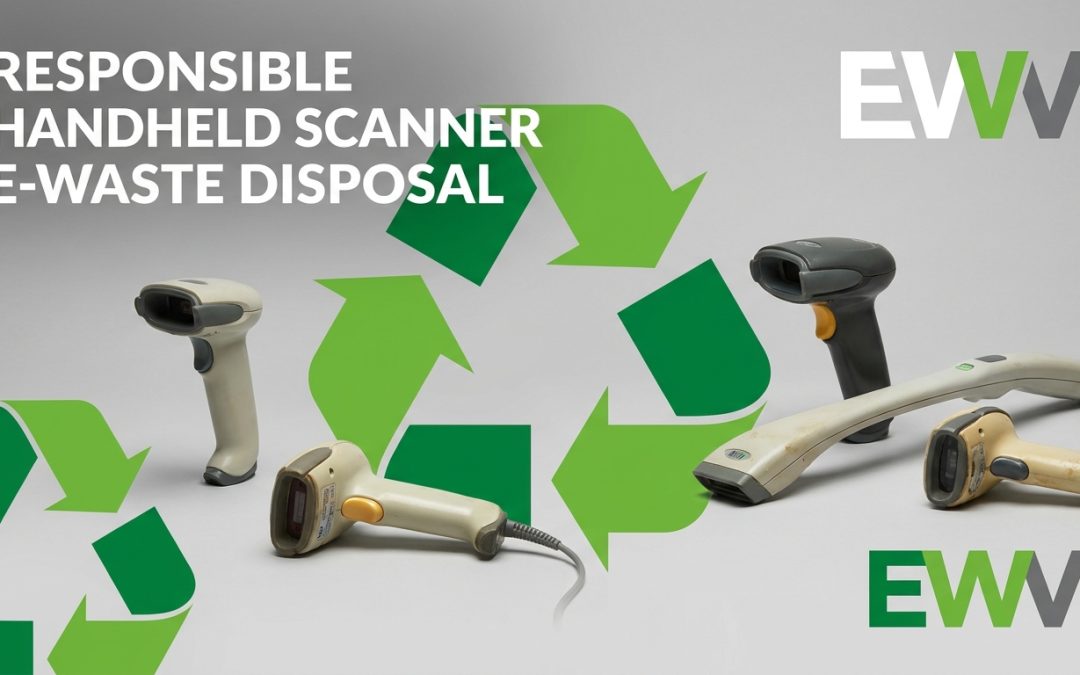
Barcode scanners are ubiquitous in retail, warehousing, healthcare, and logistics. They range from simple handheld laser scanners to sophisticated mobile computing devices with built-in scanning capabilities. When these devices reach end of life, they need proper recycling like any other electronic equipment.
Types of Barcode Scanners
Basic handheld scanners (wired USB or serial) are the simplest type. They contain a laser or LED light source, a photodiode or CCD sensor, a small circuit board, and a plastic housing. These devices store virtually no data and are straightforward to recycle.
Wireless handheld scanners add a rechargeable lithium battery and a Bluetooth or proprietary wireless radio. The battery is the main recycling concern. Some models store a small buffer of scanned data locally.
Mobile computers with integrated scanners (Zebra MC series, Honeywell Dolphin/CK series) are essentially rugged smartphones or tablets with built-in barcode scanning. These devices contain processors, RAM, flash storage, Wi-Fi, Bluetooth, cellular modems, cameras, and rechargeable batteries. They run Android or Windows Mobile operating systems and store significant amounts of data including application data, Wi-Fi credentials, VPN configurations, and inventory records.
Fixed-mount and presentation scanners (the type built into retail checkout counters) contain laser or imaging assemblies, circuit boards, and sometimes network connectivity. These are typically hardwired and do not store significant data.
Data Considerations
Basic and wireless handheld scanners typically store minimal data. Some wireless models buffer scanned barcodes before transmitting them to the host system. A factory reset (usually achieved by scanning a specific reset barcode from the configuration guide) clears any stored data.
Mobile computing devices require thorough data destruction. These devices may store inventory database access credentials, warehouse management system configurations, customer order data cached locally, Wi-Fi and VPN credentials for your network, device management (MDM) configurations, and application data including potentially sensitive business information.
Perform a factory reset through the device settings (Android: Settings, System, Reset; Windows: Settings, System, Reset this device). For enterprise deployments, use your MDM platform to remotely wipe the device before physical disposal. If the device has an SD card, remove it and handle it separately.
Recycling Options
Resale is often the best first option for enterprise barcode scanning equipment. Zebra, Honeywell, and Datalogic mobile computers retain good resale value because of their high new cost and the ongoing demand from businesses that do not need the latest model. An ITAD provider specialising in enterprise mobility equipment can often recover meaningful value from retired scanning fleets.
Professional e-waste recyclers accept all types of barcode scanners and mobile computers.
Council e-waste drop-off points accept these devices at transfer stations.
Manufacturer programs: Zebra operates a trade-in program for enterprise devices. Honeywell and other manufacturers may have similar options. Check with your vendor or reseller.
Batteries in Barcode Equipment
Wireless scanners and mobile computers contain rechargeable lithium-ion batteries, often custom battery packs designed for the specific device. These batteries should be recycled through appropriate channels.
Enterprise mobile computers often use hot-swappable battery packs, which means the organisation may have multiple spare batteries per device. Account for all batteries during disposal, including spares stored in charging cradles, desk drawers, and supply rooms.
Battery charging cradles and multi-bay chargers are also e-waste items that should be recycled, as they contain circuit boards, power supplies, and charging electronics.
Fleet Disposal for Businesses
Organisations that use barcode scanning equipment typically operate fleets of dozens to thousands of devices. Disposing of a scanning fleet requires the same systematic approach as any IT hardware refresh. Inventory all devices including serial numbers and asset tags. Include spare batteries, charging cradles, holsters, and accessories. Wipe all devices through your MDM platform before physical collection. Use an ITAD provider experienced with enterprise mobility equipment. Obtain certificates of data destruction for every device with storage.
The combination of resale value and data destruction requirements makes professional ITAD the clear choice for enterprise barcode equipment disposal. The value recovered from resaleable devices often offsets or exceeds the cost of the service.
For guidance on choosing the right disposal partner, see our guide to choosing an ITAD provider in Australia.
EWV helps Victorian businesses manage e-waste and IT asset disposal compliantly and sustainably — including collection, certified data destruction, and recycling. Contact us for a free quote.