
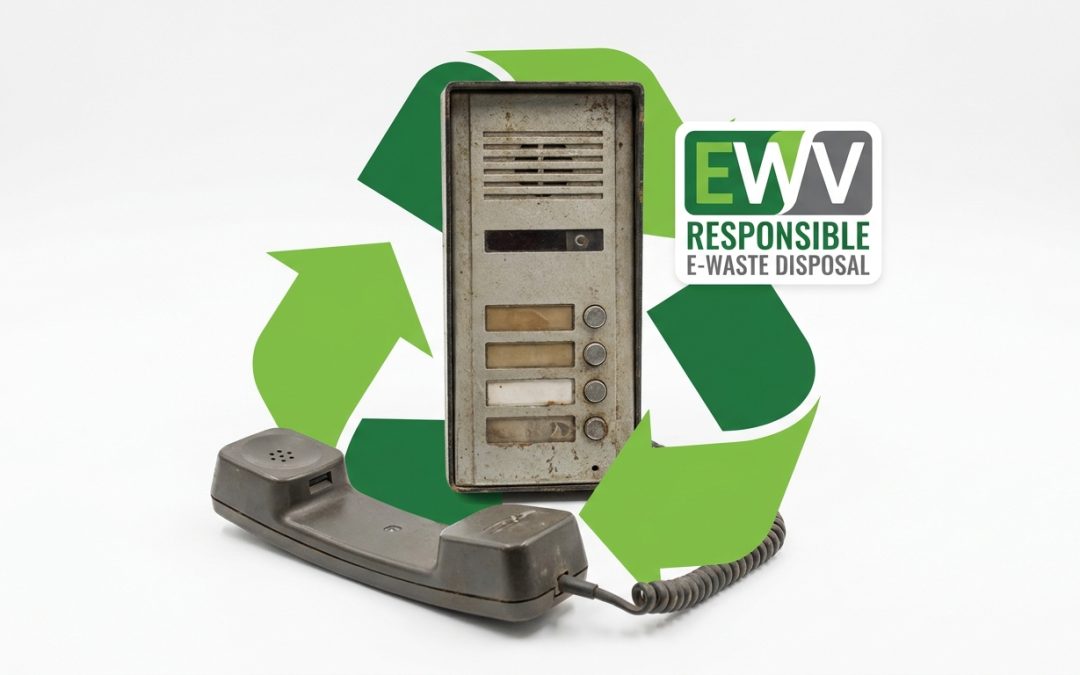
Intercom systems are one of those building fixtures that people rarely think about until they are being replaced during a renovation or building upgrade. From basic audio intercoms in apartment buildings to sophisticated video intercom systems in commercial offices, these devices contain electronics that need proper recycling when they reach end of life.
Types of Intercom Systems
Audio-only intercoms are the simplest type, found in apartment buildings, schools, and offices. They contain a speaker, microphone, amplifier circuit, call buttons, and wiring connections. Older models may be entirely analogue with minimal electronics, while newer ones include digital processing.
Video intercoms add a camera, display screen, and more sophisticated electronics. Modern video intercoms from brands like Aiphone, Hikvision, and DoorBird are essentially networked computing devices with cameras, touchscreens, and IP connectivity. Some connect to smartphone apps and cloud services.
IP-based intercom systems (increasingly common in commercial buildings) run on the building’s data network and may integrate with access control, CCTV, and building management systems. These devices store network credentials, access logs, user directories, and video recordings.
Wireless/smart intercoms (Ring Intercom, various smart doorbell systems) are cloud-connected devices that combine video, audio, Wi-Fi, and sometimes facial recognition or access control features.
Data Considerations
The data stored on intercom systems varies dramatically by type. Basic audio intercoms store virtually no data and can be recycled without data security concerns.
However, modern video and IP intercoms can store resident or tenant directories with names and unit numbers, access codes and PIN numbers, video recordings of visitors, call logs showing who visited and when, Wi-Fi and network credentials, smartphone app pairing data, and facial recognition databases (in advanced systems).
Before disposing of any networked or smart intercom system, perform a factory reset and deregister the device from any cloud platforms or management systems.
Recycling Intercom Equipment
Intercom systems contain standard electronic materials: circuit boards, speakers with magnets, microphones, displays (in video models), cameras (in video models), power supplies, and plastic or metal housings. Wall-mounted units are often housed in brushed stainless steel or aluminium faceplates that have good scrap metal value.
The main recycling challenge with intercoms is that they are building-fixed equipment that requires an electrician or technician to remove. During removal, separate the electronic units from the mounting brackets and wiring for easier recycling.
Council e-waste drop-off points accept intercom units at transfer stations.
Professional e-waste recyclers accept intercom equipment as part of general electronics streams.
Building wiring: The cabling behind intercom systems (typically low-voltage multi-core cable or Cat5e/Cat6 for IP systems) contains copper that is worth recycling. If the wiring is being replaced during a building upgrade, collect the old cable and include it in your e-waste recycling.
Apartment Building and Strata Considerations
In apartment buildings and strata complexes, the intercom system is typically common property managed by the body corporate or owners’ corporation. Disposal of the old system during an upgrade should be handled by the body corporate’s appointed contractor, and the cost is typically covered by the strata fund.
When upgrading apartment intercom systems, the body corporate should ensure that the contractor properly decommissions the old system, including clearing any stored resident data and video recordings, and recycling the hardware rather than sending it to landfill.
For more on responsible disposal of building technology systems, see our complete guide to e-waste recycling in Australia.
EWV helps Victorian businesses manage e-waste and IT asset disposal compliantly and sustainably — including collection, certified data destruction, and recycling. Contact us for a free quote.