
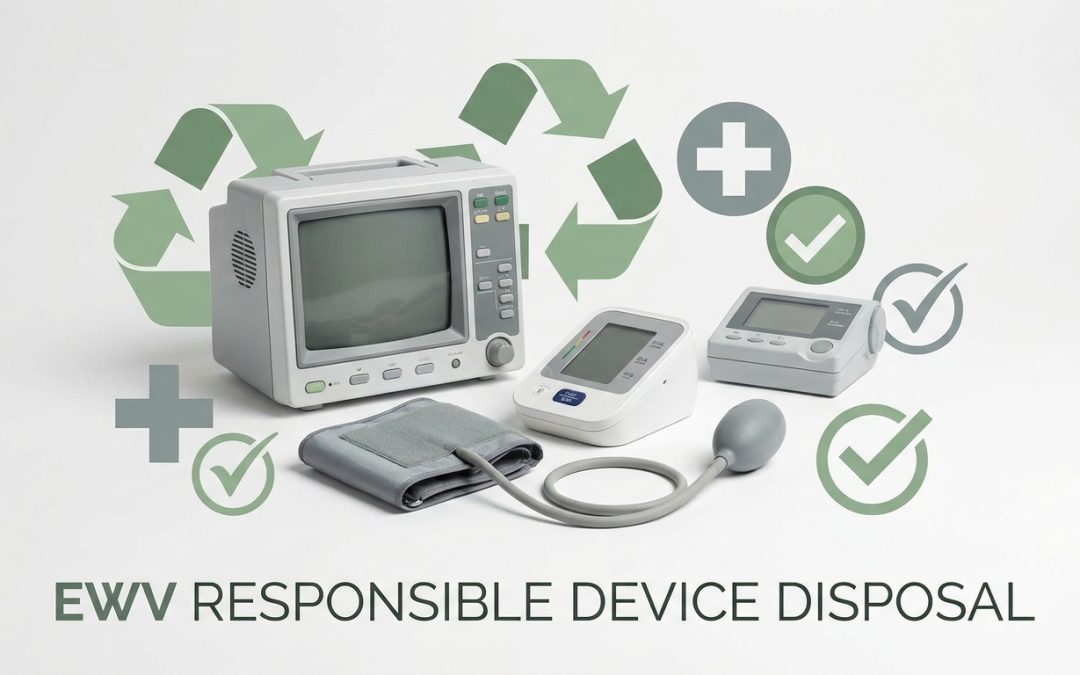
Medical devices and equipment occupy a unique space in the e-waste landscape. They are subject to stringent data privacy regulations, potential biohazard contamination, and specific disposal requirements that go beyond standard electronics recycling. Whether you are a hospital decommissioning imaging equipment, a GP practice replacing diagnostic devices, or a home user with expired medical electronics, proper disposal requires careful planning.
Categories of Medical E-Waste
Clinical diagnostic equipment includes blood pressure monitors, pulse oximeters, ECG machines, ultrasound devices, pathology analysers, and point-of-care testing devices. These range from simple consumer devices to sophisticated clinical instruments.
Imaging equipment covers X-ray machines, CT scanners, MRI machines, and dental imaging units. These are large, expensive, and often contain regulated materials (lead shielding, radioactive sources in some older devices).
Patient monitoring systems include bedside monitors, telemetry devices, infusion pumps, and ventilators. These are networked devices that store patient data and clinical configurations.
Consumer health devices cover CPAP/BiPAP machines, home blood glucose monitors, continuous glucose monitors (CGMs), home blood pressure monitors, and personal emergency response devices. These are the most commonly disposed medical devices and the ones most likely to end up in household waste incorrectly.
The Patient Data Challenge
Medical devices frequently store protected health information (PHI), which is classified as sensitive personal information under Australian privacy law and attracts the highest level of protection. Data stored on medical devices can include patient names, dates of birth, and medical record numbers, clinical measurements and test results, imaging files (X-rays, ultrasounds, scans), treatment histories and medication records, clinician notes and assessments, and device usage logs tied to individual patients.
Under the Health Records Act and the Privacy Act, health service providers must take reasonable steps to destroy health information on devices being decommissioned. The penalties for health data breaches are severe, and the reputational damage to healthcare providers can be devastating.
Every medical device with storage or network connectivity should undergo certified data destruction before disposal. This applies to hard drives in imaging workstations, internal storage in patient monitors, SD cards in portable diagnostic devices, and any removable media associated with the equipment.
Biohazard Considerations
Medical equipment may have been in contact with bodily fluids, tissue samples, or infectious materials. This creates a biohazard dimension that standard e-waste recyclers are not equipped to handle.
Equipment that has had direct patient contact (blood glucose meters, surgical instruments with electronic components, contaminated monitoring devices) should be decontaminated before entering the e-waste recycling stream. Follow your facility’s infection control procedures for decontamination, or use a clinical waste service that can handle contaminated electronics.
Equipment that has not had direct patient contact (computers, monitors, printers used in clinical settings) does not require special biohazard handling and can go through standard e-waste recycling after data destruction.
Large Medical Equipment
Major medical equipment like CT scanners, MRI machines, and X-ray systems requires specialist decommissioning. These devices may contain radioactive sources (in some older CT and gamma camera systems), lead shielding (X-ray equipment), cryogenic cooling systems (MRI superconducting magnets), high-voltage components, and substantial quantities of copper, aluminium, and specialty metals.
Decommissioning of large medical equipment should be handled by specialist medical equipment disposal companies or the equipment manufacturer. These companies have the expertise to safely handle regulated materials, remove hazardous components, and recover valuable materials from the equipment.
Some large medical equipment has significant resale value in developing markets. Medical equipment brokers specialise in refurbishing and re-exporting equipment that is still functional but has been superseded by newer technology in the original facility.
Consumer Medical Devices
For consumer medical devices disposed of at home, the process is simpler but still important.
CPAP/BiPAP machines: Clear any stored sleep data and user profiles. Remove the SD card if present and wipe or destroy it. The machine itself can be recycled through e-waste channels. Masks, tubing, and filters go in general waste (not recyclable due to potential contamination).
Blood glucose monitors: These small devices contain a circuit board, display, and battery. Clear any stored readings and user data. Dispose of used test strips and lancets through a sharps and clinical waste program, not general waste. The monitor itself can go through e-waste recycling.
Blood pressure monitors: Clear stored readings and recycle through e-waste channels. If it has a rechargeable battery, ensure it goes through e-waste rather than general waste.
Hearing aids: These tiny devices contain circuit boards, microphones, speakers, and zinc-air or rechargeable batteries. Many audiologists and hearing aid retailers accept old hearing aids for recycling or refurbishment. Some charitable organisations collect hearing aids for redistribution in developing countries.
Where to Recycle Medical Equipment
Specialist medical equipment disposal companies handle large clinical equipment, including data destruction, decontamination, and materials recycling.
Professional ITAD providers can handle medical IT equipment (computers, monitors, networking) with the data destruction certification that healthcare organisations require.
Council e-waste drop-off points accept consumer medical electronics (blood pressure monitors, CPAP machines, hearing aids) at transfer stations.
Pharmacies often accept medical devices and batteries for proper disposal, particularly sharps containers and small medical electronics.
For comprehensive guidance on data destruction obligations in healthcare settings, see our complete guide to data destruction for Australian businesses.
EWV helps Victorian businesses manage e-waste and IT asset disposal compliantly and sustainably — including collection, certified data destruction, and recycling. Contact us for a free quote.