
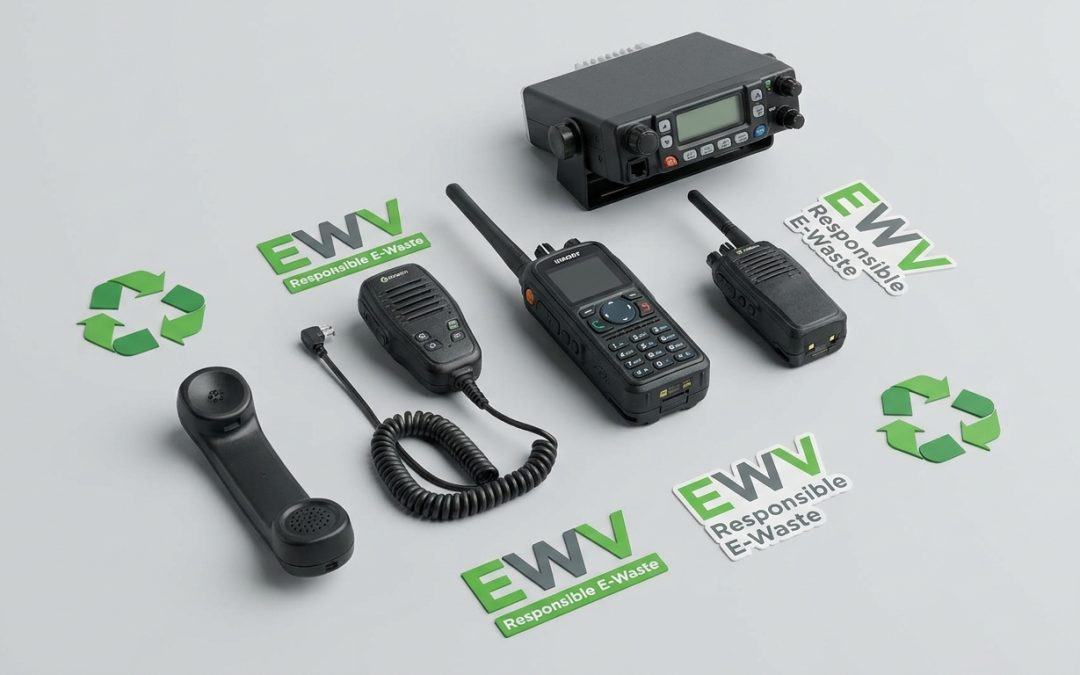
Two-way radios and professional communication equipment are workhorses in construction, security, hospitality, events, mining, and emergency services. Unlike consumer electronics that get replaced every few years, professional radios often serve for a decade or more before they are retired. When they finally reach end of life, they need proper recycling like any other electronic device.
Types of Communication Equipment
Handheld two-way radios (walkie-talkies) range from cheap consumer models to professional-grade units from Motorola, Hytera, Icom, and Kenwood. Professional radios contain robust circuit boards, antennas, speakers, microphones, and rechargeable lithium-ion or nickel-metal hydride battery packs.
Mobile radios are vehicle-mounted units with higher power output. They contain larger circuit boards, power amplifiers, and heavy-duty connectors. They draw power from the vehicle’s electrical system rather than internal batteries.
Base stations and repeaters are fixed installations that extend radio network coverage. These contain transmitters, receivers, power supplies, antennas, and sometimes network connectivity for linking to wider systems. They may be rack-mounted or housed in weatherproof enclosures for outdoor installation.
Pagers are still used in some healthcare and hospitality settings. These small devices contain circuit boards, displays, and batteries.
Satellite phones and communicators (Iridium, Thuraya, Garmin inReach) contain sophisticated radio technology, processors, and batteries.
Data and Security Considerations
Professional two-way radios and communication systems can store more data than most people realise. Depending on the model, stored data may include programmed frequencies and channel configurations (which could reveal your organisation’s communication structure), encryption keys (for encrypted radio systems), contact lists and talk group assignments, GPS tracking data (in GPS-equipped models), text messages (in digital radio systems that support messaging), and network credentials (for systems that connect to IP networks).
Most professional radios can be factory reset using the manufacturer’s programming software (Motorola CPS/CPS+, Hytera CPS, Kenwood KPG, etc.). This clears programmed channels, encryption keys, and other configuration data. Consumer walkie-talkies typically do not store significant data and can be recycled without special data handling.
Battery Handling
Professional radio battery packs are one of the most important components to handle correctly during disposal. These batteries are often large capacity lithium-ion or nickel-metal hydride packs that store significant energy.
Remove the battery pack from the radio before recycling. Recycle the battery through a battery recycling program and the radio body through e-waste channels. If you have a fleet of radios being retired, you may have dozens of battery packs plus spares, and they may also have multi-unit charging racks that need disposal.
Charging cradles and multi-unit chargers contain circuit boards, power supplies, and charging contacts. These are e-waste items that should be recycled through proper channels.
Recycling Options
Resale is often the best first option for professional radios. Quality two-way radios from Motorola, Hytera, and Kenwood hold their value well, especially digital models that are still compatible with current standards (DMR, P25, NXDN). A radio dealer or specialist reseller can often recover meaningful value from retired fleet radios.
Donation is worth considering for radios that still work but are being replaced by newer models. Community organisations, volunteer groups, bushfire brigades, and sporting event organisers can sometimes use donated radios. Clear all programmed data before donating.
Professional e-waste recyclers accept communication equipment through their standard streams.
Council e-waste drop-off points accept handheld radios and small communication devices at transfer stations.
Antennas and Infrastructure
Radio systems involve infrastructure beyond the radios themselves. Antennas (whip antennas, base station antennas, repeater antennas) are typically aluminium or stainless steel and can be recycled through scrap metal channels. Coaxial cable connecting antennas to radios and base stations contains copper that is worth recycling. Antenna mounting hardware is usually steel or aluminium.
Base station and repeater installations may include battery backup systems (lead-acid or lithium) that need separate recycling through battery programs, and weatherproof enclosures containing insulation and desiccants.
For more on recycling cabling and infrastructure components, see our guide to recycling cables and wiring.
EWV helps Victorian businesses manage e-waste and IT asset disposal compliantly and sustainably — including collection, certified data destruction, and recycling. Contact us for a free quote.