
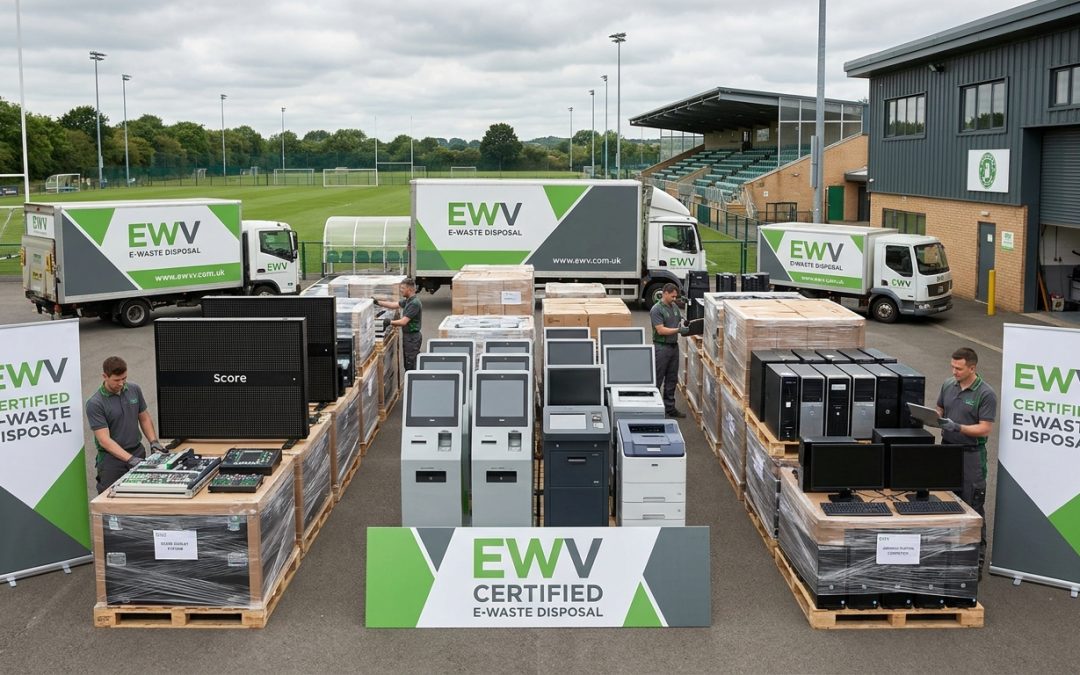
The Growing Tech Footprint in Australian Sports
From grassroots community clubs to state-level associations, Australian sports organisations have embraced technology to manage everything from player registrations to live scoring, venue operations to member communications. The days of paper sign-up sheets and handwritten scorecards are largely behind us, replaced by laptops, tablets, electronic scoreboards, timing systems, and digital communication platforms that generate e-waste when they eventually need replacing.
The technology footprint of a sports club depends on its size and level of competition, but even a small community club will typically have at least a few computers for administration, a point-of-sale system for the canteen or bar, networking equipment, and perhaps electronic scoring or timing equipment. Larger clubs and associations add member management servers, venue management systems, broadcast and streaming equipment, access control hardware, and sophisticated performance analysis technology.
What makes sports clubs different from many other organisations is the volunteer-driven nature of their management. Technology purchasing and disposal decisions are often made by volunteers who have limited time, no IT background, and no formal processes for managing equipment end of life. This means e-waste tends to accumulate until someone decides to deal with it, often years after equipment has stopped being useful.
What E-Waste Looks Like in Sports
The electronic equipment used across sports organisations falls into several categories. Administration and office equipment is the most straightforward: computers, printers, phones, and networking gear used to run the business side of the club. This equipment handles member databases, financial records, and communications.
Venue technology is a significant category for clubs with their own facilities. Point-of-sale systems for food and beverage operations, EFTPOS terminals, security cameras, access control systems, LED signage, and building management systems all contain electronic components. Clubs that operate gaming rooms may also have gaming machines and associated monitoring equipment that require specialist disposal procedures.
- Office computers, laptops, and printers
- Point-of-sale and EFTPOS systems (bar, canteen, pro shop)
- Electronic scoreboards and timing systems
- Security cameras and access control hardware
- LED signage and digital advertising boards
- PA systems and venue audio equipment
- Streaming and broadcast equipment
- Performance analysis hardware (GPS trackers, video systems)
- Networking and Wi-Fi equipment
- Gaming room equipment where applicable
Sport-specific technology is increasingly common. GPS player tracking units used in team sports like AFL, rugby, and soccer collect performance data during training and matches. Electronic timing systems in swimming, athletics, and cycling contain computing components. Video analysis systems capture and store footage for coaching purposes. Even seemingly simple items like electronic starting guns and wireless communication systems for referees contain components that qualify as e-waste.
Data Security for Sports Clubs
Sports clubs and associations store more sensitive personal data than many volunteer committees realise. Member registration databases contain names, addresses, dates of birth, emergency contacts, and often medical information (pre-existing conditions, allergies, medication). For junior members, this includes detailed information about children including parents’ and guardians’ personal details.
Working with Children Check details for coaches, volunteers, and officials are stored on club systems. Financial records include member payment details, direct debit arrangements, and potentially credit card information processed through POS systems. Employment records for any paid staff contain tax file numbers, superannuation details, and bank account information.
Clubs operating social functions and licensed venues handle CCTV footage, incident reports, and patron identification records (particularly for gaming venues). Associations at state and national levels manage even larger datasets including national registration databases, tribunal records, and anti-doping information.
The Privacy Act 1988 applies to organisations with annual revenue over $3 million, which includes many larger sporting clubs and most state and national associations. Even smaller clubs should treat member data with care as a matter of good practice and member trust. Our guide to data breach prevention explains the risks of inadequate disposal.
The Volunteer Challenge
The volunteer-driven governance of most sports clubs creates specific challenges for e-waste management. Committee members change regularly, meaning that institutional knowledge about what equipment exists, where it is, and what data it contains can be lost between committee transitions. A new treasurer may inherit a cupboard full of old computers from three predecessors ago, with no documentation about what is on them or why they were kept.
Volunteers are also time-poor, and e-waste disposal competes with everything else on the to-do list. Getting the ground ready for Saturday’s game will always take priority over sorting out old computers. The result is that e-waste disposal gets deferred repeatedly until it becomes a larger, more daunting task.
The solution is to build simple e-waste practices into the club’s standard operating procedures so they happen as part of routine operations rather than requiring someone to champion them as a separate project. Include equipment disposal in the handover checklist when committee roles change. Add it to the annual general meeting agenda as a standing item. Make it someone’s responsibility, even if it is just one aspect of a broader role.
Scoreboard and Timing System Disposal
Electronic scoreboards, timing systems, and other sport-specific technology require the same disposal treatment as any other e-waste, but they are often overlooked because they do not look like typical IT equipment. A large LED scoreboard is essentially a computer-controlled display system. An electronic timing system contains processing units, sensors, and display components. These items cannot go to landfill in Victoria and need to be recycled through appropriate channels.
Older scoreboards and timing systems may be large and heavy, requiring specialist collection rather than standard pickup. When planning scoreboard replacements or facility upgrades, include the removal and disposal of old equipment in the project scope and budget. The installer of new equipment may be able to remove old units, but disposal is a separate requirement that should be explicitly addressed.
Practical Steps for Sports Clubs
Sports clubs can manage their e-waste responsibly without complicated processes or big budgets. Here is a practical approach:
Create a simple equipment register that lists all electronic equipment the club owns, where it is located, and approximately when it was acquired. This can be a basic spreadsheet maintained by the secretary or treasurer. Update it when equipment is purchased, moved, or retired.
Designate a collection point for retired equipment. Rather than letting old devices scatter across offices, canteens, and storage sheds, have one location where end-of-life equipment goes. Label it clearly so everyone knows what it is for.
Arrange disposal annually at minimum. Many councils offer free e-waste drop-off, or the club can coordinate with a recycling provider. For clubs with POS systems, member databases, or other equipment containing personal data, ensure data destruction is included in the disposal process. Our guide on choosing an ITAD provider can help with selection.
Victorian clubs should be aware that the e-waste landfill ban applies to all electronic equipment, including venue and sport-specific technology. For the full regulatory picture, see our overview of e-waste laws and regulations across Australia.
Sport brings communities together, and the organisations that make it happen have an opportunity to demonstrate environmental responsibility alongside their commitment to community wellbeing. Handling e-waste properly is a small but meaningful part of that responsibility.
EWV helps Victorian businesses manage e-waste and IT asset disposal compliantly and sustainably — including collection, certified data destruction, and recycling. Contact us for a free quote.