
The Growing Lithium Battery Problem
Lithium-ion batteries power the modern world. They are in our smartphones, laptops, tablets, wireless headphones, smartwatches, power tools, e-bikes, electric scooters, electric vehicles, portable speakers, and countless other devices. As useful as these batteries are during their working life, they become one of the most dangerous items in the waste stream when they reach end of life or are improperly handled. The fire and safety risks posed by lithium batteries in e-waste are not theoretical concerns. They are causing real incidents, real damage, and real injuries in Australia and around the world.
The volume of lithium batteries entering the waste stream is growing exponentially. Every year, Australians purchase millions of products containing lithium-ion batteries, and every one of those batteries will eventually need disposal. The average Australian household now contains dozens of lithium battery-powered devices. When multiplied across the population, the scale of the disposal challenge becomes clear.
Understanding the specific dangers of lithium batteries in e-waste, and how to handle them safely, is essential for anyone involved in waste management, from households to businesses to waste facility operators.
How Lithium Battery Fires Start
Lithium-ion batteries store a significant amount of energy in a small space. This is what makes them so useful, but it is also what makes them dangerous when damaged. The key risk is a process called thermal runaway, which occurs when a battery cell’s internal temperature rises uncontrollably, leading to a self-sustaining chemical reaction that generates extreme heat, toxic gases, and potentially flames or explosions.
Thermal runaway can be triggered by several factors that commonly occur during waste handling:
- Physical damage: crushing, puncturing, or impact during collection, compaction, or sorting
- Short circuits: when battery terminals contact metal objects or other batteries
- Overheating: exposure to high temperatures in vehicles, bins, or processing facilities
- Manufacturing defects: internal defects that may not be apparent externally
- Age and degradation: older batteries with degraded separators are more susceptible to failure
- Water exposure: water can cause short circuits in damaged cells
Once thermal runaway begins in one cell, it can spread to adjacent cells in a cascading reaction that is extremely difficult to stop. Lithium battery fires burn at very high temperatures, can reignite hours or even days after appearing to be extinguished, and produce toxic fumes including hydrogen fluoride. Conventional firefighting methods are less effective against these fires than against ordinary combustible material fires.
The Scale of the Problem in Australia
Lithium battery fires in waste facilities and collection vehicles are a growing and well-documented problem in Australia. Fire and Rescue services across the country respond to hundreds of waste-related battery fires each year, and the frequency is increasing in line with the growing volume of lithium batteries in the waste stream.
Several categories of incidents occur regularly. Garbage truck fires occur when lithium batteries in general waste are crushed by the truck’s compaction mechanism. The punctured battery initiates thermal runaway, and the surrounding waste provides fuel. Truck drivers may need to dump their load on the street to prevent the vehicle from being destroyed.
Waste facility fires occur when batteries enter processing equipment like shredders, conveyors, or sorting machinery. A single lithium battery in a waste stream can ignite a fire that shuts down the entire facility and causes millions of dollars in damage. Several Australian waste facilities have experienced significant fires attributed to lithium batteries.
Household bin fires occur when lithium batteries are placed in household bins, particularly recycling bins where they can be crushed against hard objects. These fires can damage bins, collection vehicles, and neighbouring property.
Why Lithium Batteries End Up in General Waste
Despite the risks, a significant proportion of lithium batteries still end up in general waste and recycling bins rather than being properly disposed of through battery collection programs. Several factors contribute to this.
Consumer awareness remains a challenge. Many people do not realise that the batteries in their devices pose a fire risk in waste streams. Small devices like wireless earbuds, disposable vapes, and old phone cables with built-in batteries are easy to toss in the bin without thinking about the battery inside.
Convenience plays a role. Battery collection points may not be as accessible as general waste bins. Separating batteries from devices takes effort, and for devices where the battery is not user-removable (which is increasingly common), disposal of the whole device through a battery-safe channel is necessary.
Embedded batteries in products that do not obviously look like they contain a battery are a particular problem. Many consumers do not realise that items like greeting cards with sound chips, light-up shoes, disposable vapes, and even some packaging contain lithium batteries that need separate disposal.
Safe Handling of Lithium Batteries
Whether you are a household disposing of old devices or a business managing IT equipment, following safe handling practices for lithium batteries is essential.
Never put lithium batteries in general waste or recycling bins. This is the single most important rule. Even if the device appears to be dead, the battery may retain enough charge to cause a fire if damaged during waste processing.
Tape the terminals of loose batteries with non-conductive tape before transporting them for recycling. This prevents accidental short circuits from contact with other batteries or metal objects. Place taped batteries in a non-conductive container for transport.
- Never place in general waste, recycling, or kerbside bins
- Tape terminals of loose batteries with electrical or masking tape
- Store separately from other waste, away from heat sources and flammable materials
- Do not stack or compress batteries
- Take to a designated battery collection point (council, retailer, or B-cycle drop-off)
- If a battery is swollen, leaking, or damaged, handle with extra care and transport in a non-flammable container
Damaged or swollen batteries require extra caution. A battery that is physically swollen, punctured, or leaking is in a compromised state and presents a higher risk of thermal runaway. Do not attempt to charge or use a swollen battery. Store it in a well-ventilated area away from flammable materials and take it to a collection point as soon as practical. If a battery is hot, smoking, or showing signs of distress, move away from it, ventilate the area, and call emergency services if necessary.
Battery Collection and Recycling Options
Several options exist for safely disposing of lithium batteries in Australia. B-cycle (the Battery Stewardship Scheme) operates collection points at participating retailers, council facilities, and other locations. Many electronics retailers accept batteries for recycling. Council e-waste drop-off points typically accept batteries, often with dedicated battery collection containers.
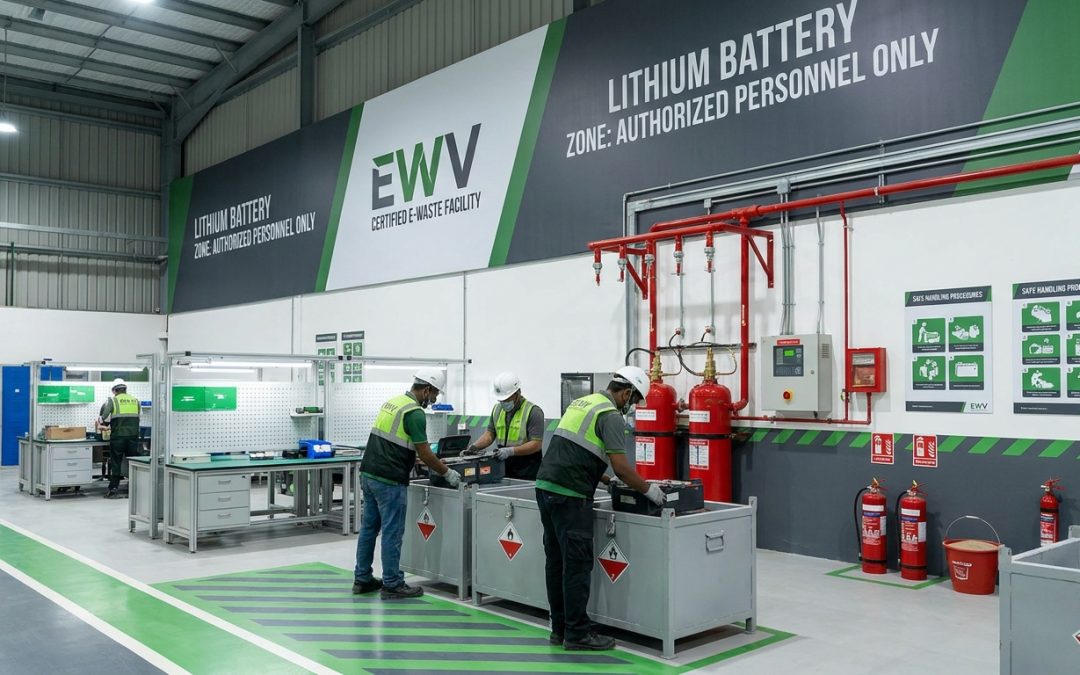
For businesses generating batteries in volume, whether from IT equipment, power tools, or other sources, arranging dedicated battery collection through a waste management provider ensures safe handling and compliance. Businesses should store batteries awaiting collection in fireproof or fire-resistant containers, away from other combustible materials, and in a well-ventilated location.
The recycling of lithium batteries is a growing industry that recovers valuable materials including lithium, cobalt, nickel, and copper. As battery volumes increase, the economics of recycling are improving, and new processing technologies are being developed to increase recovery rates and reduce costs.
Implications for E-Waste Management
The lithium battery fire risk has implications for how all e-waste is handled, not just loose batteries. Many electronic devices have non-removable lithium batteries that are integrated into the device. Smartphones, tablets, laptops, wireless earbuds, smartwatches, and many other devices contain batteries that cannot be easily separated by the user.
This means that the device itself must be treated as a battery risk during disposal. E-waste containing embedded lithium batteries should not be compacted, crushed, or subjected to conditions that could damage the battery. It should be kept separate from general waste and processed through e-waste recycling channels where the batteries can be safely identified and removed.
For businesses managing IT asset disposal, working with an ITAD provider who has proper battery handling procedures is important. The provider should have protocols for identifying devices with embedded batteries, storing them safely, and routing them to appropriate processing. See our guide on choosing an ITAD provider for evaluation criteria.
For the broader context of hazardous materials in electronics, see our article on the true environmental cost of electronic waste.
EWV helps Victorian businesses manage e-waste and IT asset disposal compliantly and sustainably — including collection, certified data destruction, and recycling. Contact us for a free quote.