
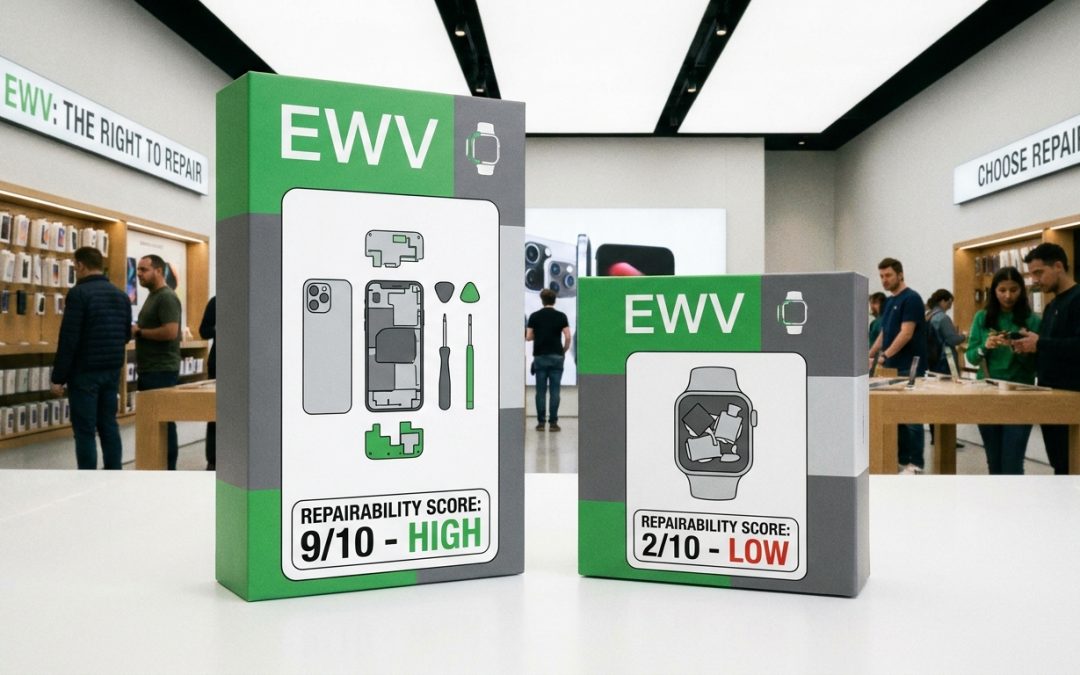
What Is a Repairability Score?
If you’ve bought a new smartphone or laptop in France recently, you may have noticed a small score out of 10 displayed alongside the product. This is the repairability index, a rating system designed to tell consumers how easy (or difficult) a device will be to repair. France introduced the world’s first mandatory repairability scoring system in January 2021, and the concept is now spreading across Europe and influencing policy discussions globally, including in Australia.
The idea is simple: just as energy efficiency ratings help consumers choose appliances that use less power, repairability scores help them choose products that won’t become expensive paperweights the moment something goes wrong. For businesses making bulk IT purchasing decisions, these scores carry even greater significance because they directly affect total cost of ownership and asset lifespan.
How Repairability Scores Are Calculated
France’s repairability index evaluates products across five criteria, each weighted equally at 20% of the total score:
Documentation availability looks at whether the manufacturer provides repair manuals, technical documents, and wiring diagrams to both professional repairers and consumers. Products score higher when comprehensive repair guides are freely available.
Disassembly and reassembly evaluates how easy it is to take the device apart and put it back together. This considers the types of fasteners used (screws versus glue), the number of steps required, and whether special tools are needed. Devices held together entirely by adhesive score poorly here.
Spare parts availability assesses whether replacement components are available, how long the manufacturer commits to supplying them, and how quickly they can be delivered. A commitment to providing spare parts for seven or more years scores highest.
Spare parts pricing compares the cost of replacement parts to the overall product price. If replacing a cracked screen costs 80% of the device’s purchase price, repair becomes economically irrational and the score reflects that.
Product-specific criteria vary by device category. For smartphones, this might include software update availability. For laptops, it could cover RAM and storage upgradeability.
Why Repairability Matters for E-Waste
The connection between repairability and electronic waste is direct. Devices that cannot be economically repaired become waste sooner. When a laptop’s battery is glued in and costs $400 to replace professionally, most people buy a new laptop instead. That’s a functional device heading to the waste stream years before it needed to.
Research from the European Environmental Bureau suggests that extending the average lifespan of smartphones by just one year across the EU would save the equivalent carbon emissions of taking a million cars off the road annually. The numbers for laptops and other business IT equipment are similarly compelling.
For businesses managing fleets of IT equipment, repairability directly affects the IT asset lifecycle. Equipment that can be repaired and maintained stays in productive use longer, delays capital expenditure on replacements, and reduces the volume of e-waste generated. It’s both an environmental and financial consideration.
The Australian Context
Australia doesn’t currently have a mandatory repairability scoring system, but the conversation is well underway. The Productivity Commission’s 2021 report on the Right to Repair examined repairability labelling as one of several policy options. Consumer advocacy groups including CHOICE have been pushing for Australian adoption of repairability ratings.
Even without mandatory scores, Australian businesses can use the French repairability index and iFixit’s independent teardown scores as procurement tools. Several major manufacturers now publish repairability information for their products globally, not just in markets where it’s legally required.
Key manufacturers’ approaches vary significantly. Some have embraced repairability as a competitive advantage, designing products with modular components and publishing detailed repair manuals. Others continue to use design choices that make repair difficult or impossible, such as soldered RAM, glued batteries, and proprietary fasteners.
What Businesses Should Look For
When making IT procurement decisions, repairability should be a weighted factor alongside performance, price, and warranty terms. Here are the practical elements to evaluate:
Battery replacement is the single most common repair for laptops and smartphones. Check whether the battery is user-replaceable, requires professional service, or is effectively permanent due to adhesive mounting. This one factor significantly affects how long the device remains useful.
RAM and storage upgradeability matters for extending laptop lifespans. A machine with soldered 8GB RAM cannot be upgraded when software demands increase, forcing premature replacement. Devices with socketed RAM and standard SSD slots can be upgraded at a fraction of the replacement cost.
Screen replacement cost and availability is another critical factor, particularly for devices used in field or education environments where screen damage is common. Some manufacturers charge more for a screen replacement than the device is worth after two years of depreciation.
Software support duration increasingly determines device lifespan. A physically functional device that no longer receives security updates may need to be retired for compliance reasons. Check the manufacturer’s commitment to providing OS and security updates.
The Bigger Picture: Design for Longevity
Repairability scores are part of a broader shift toward valuing product longevity over disposability. The circular economy model depends on products being designed to last, designed to be repaired, and designed to be recycled when they finally do reach end of life.
For the electronics industry, this represents a fundamental tension. The traditional business model rewards frequent replacement cycles. Repairability scoring and right-to-repair legislation are regulatory interventions aimed at correcting this market failure, where the environmental costs of premature disposal aren’t reflected in product pricing.
As these frameworks mature and spread globally, businesses that factor repairability into their procurement decisions today will find themselves ahead of the curve, with longer-lasting IT assets, lower total cost of ownership, and better sustainability metrics to report on.
EWV helps Victorian businesses manage e-waste and IT asset disposal compliantly and sustainably — including collection, certified data destruction, and recycling. Contact us for a free quote.