
Understanding Take-Back Programs
Take-back programs are arrangements where manufacturers, retailers, or third parties accept used electronic equipment from customers for recycling, refurbishment, or responsible disposal. They represent one of the most visible mechanisms through which the electronics industry addresses end-of-life product management. For businesses managing IT equipment fleets, take-back programs can be a convenient disposal option, but they come with important considerations around data security, cost, and what actually happens to the returned equipment.
These programs range from simple drop-off arrangements at retail stores to sophisticated corporate programs that include logistics, data wiping, asset valuation, and detailed reporting. Understanding the differences is important for making informed decisions about how to handle your organisation’s retired IT assets.
Types of Take-Back Programs
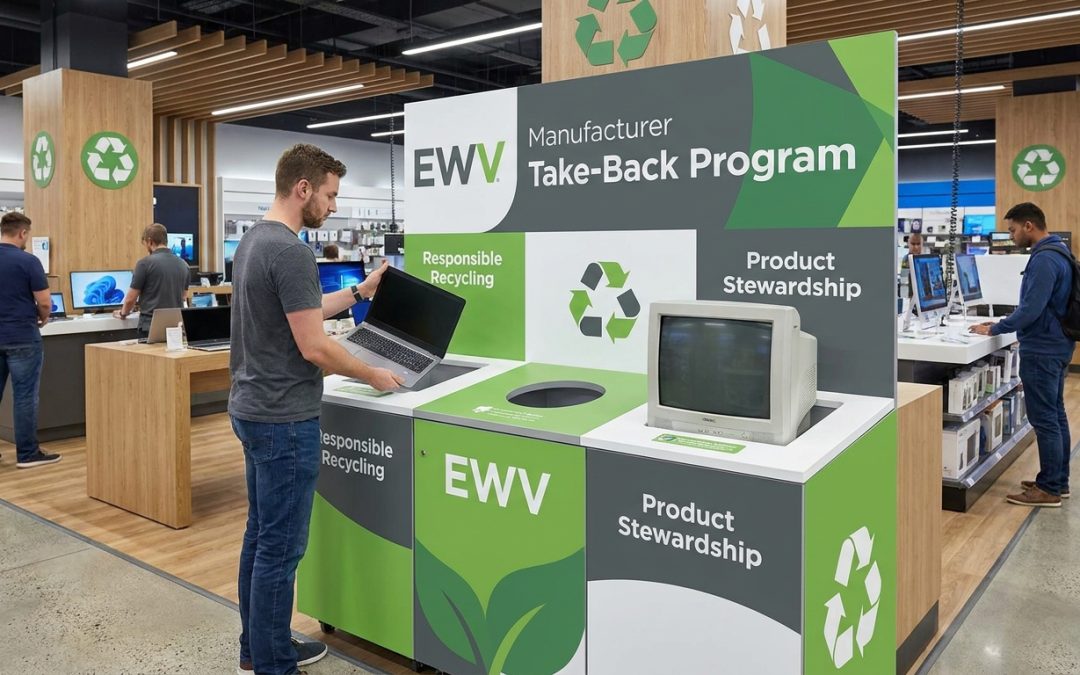
Manufacturer take-back programs are operated directly by the companies that made the equipment. Most major IT manufacturers, including Dell, HP, Lenovo, and Apple, offer some form of take-back service. These programs vary significantly in scope and terms. Some accept only the manufacturer’s own branded products, while others accept any brand. Some are free, while others charge fees for certain equipment types or volumes.
The primary advantage of manufacturer programs is convenience and brand accountability. The manufacturer has a reputational interest in ensuring their returned products are handled responsibly. However, these programs may not offer the most competitive returns on equipment that still holds residual value, and their data destruction processes may not meet the stringent requirements of highly regulated industries.
Retailer trade-in programs offered by electronics retailers typically focus on devices with resale value, particularly smartphones, tablets, and recent-model laptops. These programs offer credit toward new purchases rather than cash, which can create lock-in to a particular retailer. They’re generally designed for consumer and small business volumes rather than enterprise IT fleets.
Industry and government-funded programs operate under extended producer responsibility frameworks or government initiatives. In Australia, the National Television and Computer Recycling Scheme funds free collection services for households and small businesses for covered product categories. These programs focus on responsible recycling rather than value recovery.
What Happens to Equipment in Take-Back Programs
Understanding the downstream processing is critical, particularly for businesses with data security obligations. Equipment collected through take-back programs typically follows one of several paths:
Resale and refurbishment is the preferred outcome for equipment that still has functional and market value. Devices are tested, repaired if necessary, data-wiped, and sold into secondary markets. This generates revenue that can offset program costs and is the most environmentally beneficial outcome because it extends the product’s useful life.
Materials recovery applies to equipment that’s too old, damaged, or outdated for resale. Devices are disassembled and processed to recover valuable materials including copper, aluminium, gold, palladium, and engineering plastics. The economics of materials recovery depend on commodity prices and the efficiency of the processing operation.
Responsible disposal is the last resort for materials that cannot be economically recycled, including certain plastics, mixed material components, and hazardous substances that require specialist treatment. Reputable programs ensure these materials are handled in compliance with environmental regulations rather than being dumped or exported to countries with lower standards.
Data Security Concerns with Take-Back Programs
For businesses, the biggest risk with generic take-back programs is inadequate data destruction. Consumer-oriented take-back programs may not provide the level of data sanitisation that business equipment requires. When you hand over a laptop that once connected to your corporate network, held customer data, or contained intellectual property, you need assurance that the data has been irreversibly destroyed.
Key questions to ask any take-back program before using it for business equipment:
What data destruction standard do they follow? Look for alignment with NIST 800-88 or equivalent recognised standards. Generic “factory reset” is not sufficient for business data.
Do they provide certificates of data destruction for each device, including serial numbers and details of the sanitisation method used? Without this documentation, you have no audit trail proving data was properly handled.
What happens to devices that cannot be wiped, such as those with failed storage drives? Physical destruction should be the fallback, with documented chain of custody throughout the process.
Is the data destruction performed before or after transport? Equipment that travels to a processing facility with data intact creates risk during transit. On-site destruction or encryption before transport mitigates this.
Evaluating Take-Back Programs for Your Business
Not all take-back programs are created equal, and the right choice depends on your organisation’s specific needs. Consider these factors:
Volume and frequency. If you’re retiring a handful of devices occasionally, a manufacturer take-back program or retail trade-in might suffice. If you’re managing regular fleet refreshes involving dozens or hundreds of devices, you need a program or service that can handle volume efficiently with consistent processes.
Compliance requirements. Organisations in regulated industries, including finance, healthcare, legal, and government, typically need certified data destruction with full audit trails. Most consumer take-back programs don’t provide this level of documentation.
Value recovery expectations. If your equipment is relatively recent and well-maintained, a take-back program that just recycles everything leaves money on the table. Professional ITAD services assess each asset individually and maximise value recovery through appropriate channels.
Environmental transparency. Ask for data on recycling rates, downstream processor certifications, and whether any material is exported for processing. Reputable programs can provide detailed environmental reporting on what happens to collected equipment.
Making the Right Choice
Take-back programs play a valuable role in the electronics ecosystem, particularly for consumer electronics and small business disposal needs. They make responsible disposal accessible and convenient, which increases the volume of e-waste that gets properly handled rather than ending up in landfill or general waste.
For businesses with larger volumes, compliance obligations, or valuable equipment, take-back programs are often a starting point rather than a complete solution. The choice of disposal partner should reflect your organisation’s specific risk profile, regulatory environment, and sustainability objectives. Whether you use a manufacturer take-back program, a government-funded scheme, or a professional ITAD provider, the key is making an informed decision based on what actually happens to your equipment after you hand it over.
EWV helps Victorian businesses manage e-waste and IT asset disposal compliantly and sustainably — including collection, certified data destruction, and recycling. Contact us for a free quote.