
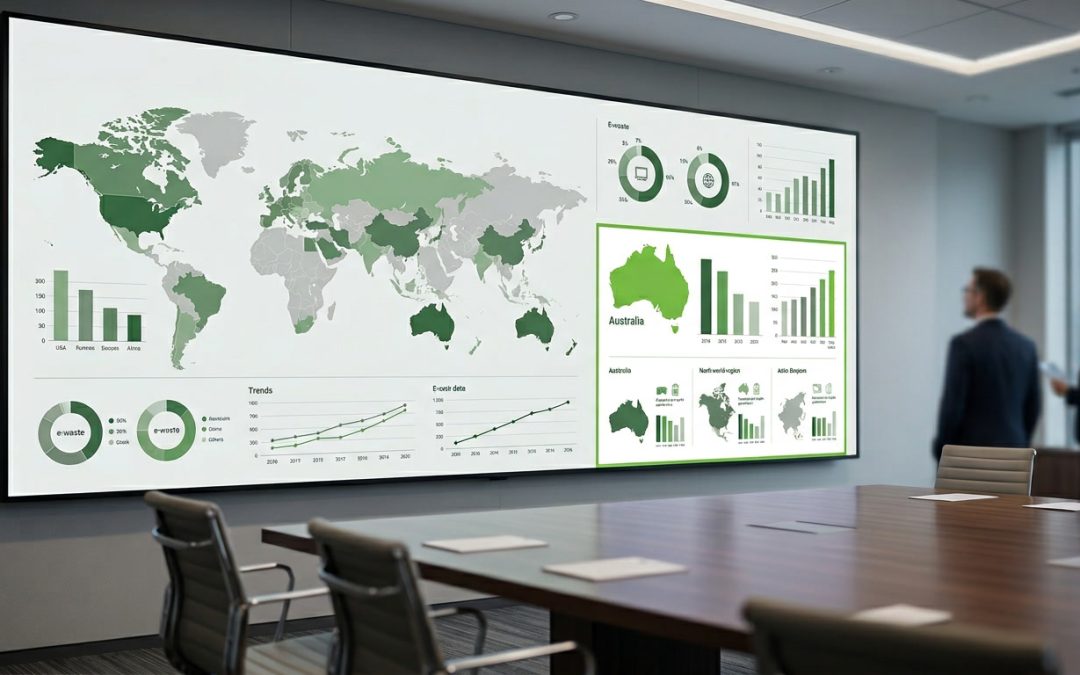
The Global E-Waste Picture
Electronic waste is the fastest-growing waste stream in the world, and the numbers are staggering. According to the Global E-waste Monitor 2024, the world generated 62 million tonnes of e-waste in 2022, a figure projected to reach 82 million tonnes by 2030. To put that in perspective, 62 million tonnes is roughly the weight of 350 cruise ships, or enough to fill a line of 40-tonne trucks bumper-to-bumper stretching around the equator.
What makes these statistics particularly alarming isn’t just the volume, but the rate of growth. Global e-waste generation has increased by approximately 50% since 2010, driven by shorter device lifespans, growing global electronics consumption, and limited progress on recycling infrastructure. Only about 22.3% of e-waste generated globally is formally collected and recycled. The remaining 77.7% is landfilled, incinerated, informally processed, or simply unaccounted for.
Where Australia Stands
Australia is a significant contributor to global e-waste on a per-capita basis. Australians generate approximately 21-22 kg of e-waste per person per year, placing the country among the highest per-capita e-waste generators globally. This is roughly four times the global average of approximately 7.3 kg per person.
The high per-capita figure reflects several factors. Australia has high technology adoption rates, with Australians among the world’s most enthusiastic consumers of electronics. Strong purchasing power means devices are replaced frequently. And the distance from manufacturing centres means that repair costs (including parts shipping) can be higher, encouraging replacement over repair.
In total volume, Australia generates approximately 500,000-600,000 tonnes of e-waste annually. While this is a small fraction of global volume (China alone generates over 10 million tonnes), it represents a significant management challenge for the country’s waste processing infrastructure.
Norway: ~26 kg | Switzerland: ~25 kg | UK: ~24 kg | Australia: ~22 kg | Netherlands: ~22 kg | USA: ~21 kg | Germany: ~20 kg | Japan: ~18 kg | Global average: ~7.3 kg
The Collection Gap
Australia’s formal e-waste collection rate sits at approximately 10-15% of total e-waste generated, well below the EU average of around 40% and significantly below leading countries like Switzerland (over 70%) and Norway (over 65%). This means that the vast majority of e-waste generated in Australia either sits in storage (the “drawer effect”), enters general waste streams, or is handled through informal channels.
Several factors contribute to Australia’s relatively low collection rate. The country’s vast geography makes collection logistics more challenging and expensive than in compact European nations. Collection infrastructure, while improving, remains insufficient in many regional areas. Consumer awareness of e-waste disposal options is growing but still limited, with many households and small businesses unsure of where to take retired electronics.
Victoria has taken the lead among Australian states with its e-waste landfill ban, which has driven significant improvement in collection rates within the state. Other states are at various stages of considering or implementing similar measures.
What’s Driving the Growth
Understanding why e-waste volumes keep growing helps explain the scale of the challenge:
Device proliferation. The average Australian household now contains more electronic devices than ever before. Beyond the traditional categories of computers, phones, and TVs, the Internet of Things has added smart home devices, wearables, connected appliances, and sensors. Each of these devices eventually becomes waste.
Shortening replacement cycles. Despite hardware lasting longer physically, software demands and consumer expectations drive faster replacement. The average smartphone replacement cycle in Australia is approximately 2-3 years, with some users upgrading annually. Laptop replacement cycles for consumers average 3-4 years.
Expanding global access to technology. In developing regions, growing middle classes are purchasing electronics at accelerating rates. While this is positive for economic development and digital inclusion, it adds enormously to the future e-waste stream. Much of this growth is in regions with minimal formal recycling infrastructure.
Emerging product categories. Electric vehicle batteries, solar panels, wind turbine components, and large-scale battery storage systems are creating new e-waste categories that didn’t exist at significant scale a decade ago. These categories involve large, complex items that require specialised processing.
The Recycling Infrastructure Challenge
Globally, recycling infrastructure has not kept pace with e-waste growth. The formal collection rate of 22.3% means that nearly 48 million tonnes of e-waste is not being properly managed each year. This represents both an environmental crisis and an economic loss, as the raw materials in uncollected e-waste are valued at tens of billions of dollars annually.
The infrastructure gap is particularly acute in Africa, Southeast Asia, and parts of South America, where rapid growth in electronics consumption is outpacing the development of formal recycling systems. Much of the e-waste in these regions is processed through informal operations, often involving open burning and acid leaching that create severe health and environmental impacts.
Even in countries with established recycling infrastructure, including Australia, capacity and coverage remain works in progress. Investment in processing technology, collection networks, and downstream markets for recovered materials all need to accelerate to close the gap between what’s generated and what’s properly handled.
What the Statistics Tell Us
The global e-waste statistics paint a picture of a challenge that’s growing faster than our response to it. For Australia specifically, the high per-capita generation rate combined with relatively low collection rates highlights significant room for improvement in how we manage end-of-life electronics.
For businesses, these statistics underscore the importance of proper IT asset disposition. Commercial e-waste represents a significant portion of the total volume, and business decisions about procurement, asset lifespan, and disposal directly affect where Australia sits in the global rankings. Choosing to extend equipment lifespans, procure refurbished where appropriate, and use certified recycling services are all actions that move the needle.
The trajectory is clear: without significant changes in how electronics are designed, consumed, and managed at end of life, global e-waste volumes will continue to outpace our capacity to handle them responsibly. Australia has the wealth, infrastructure, and regulatory frameworks to be a leader in this space. Whether we step into that role is a matter of commitment and investment.
EWV helps Victorian businesses manage e-waste and IT asset disposal compliantly and sustainably — including collection, certified data destruction, and recycling. Contact us for a free quote.