
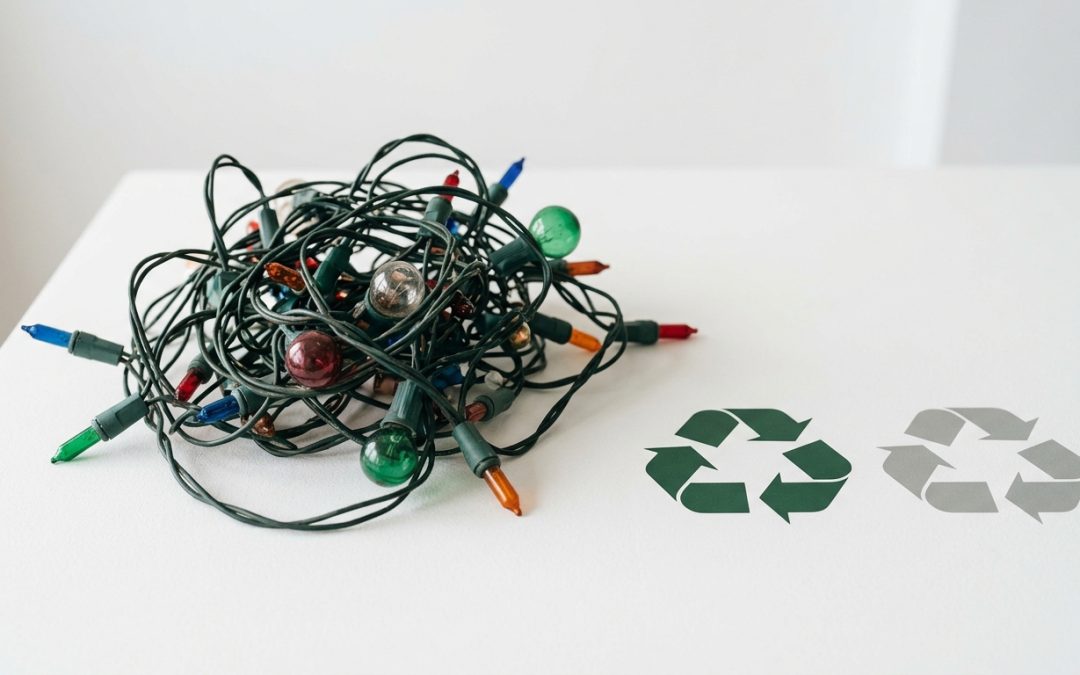
When the Lights Go Out for Good
Every January, Australians face the same question: what do you do with that tangled ball of Christmas lights that stopped working halfway through December? Or the set that’s been getting dimmer every year? Or the old incandescent strings you replaced with LEDs? Christmas lights are a surprisingly tricky item in the waste stream, and most people have no idea how to dispose of them properly.
Christmas lights are e-waste. They contain copper wire, plastic insulation, small electronic components (in LED versions), and sometimes glass bulbs. In Victoria, they fall under the e-waste landfill ban and shouldn’t go in your general waste bin. Even outside Victoria, there are good reasons to recycle them rather than binning them.
Why Christmas Lights Cause Problems in the Bin
Beyond the environmental and legal reasons to keep lights out of the bin, there’s a practical problem: light strings wreck recycling equipment. If they end up in your yellow-lid recycling bin (which they shouldn’t), the long cables wrap around the rotating drums and conveyor systems at Materials Recovery Facilities, causing jams, shutdowns, and expensive repairs.
Cables and string lights are consistently listed among the top contamination problems at Australian recycling facilities. A single string of lights can shut down a sorting line for 30 minutes or more while a technician cuts it free from the machinery. Please don’t put them in any bin.
How to Recycle Christmas Lights
Council transfer stations and resource recovery centres. Most councils in Victoria accept Christmas lights as part of their general e-waste collection. Bundle or bag the lights to prevent tangling with other items and drop them at your local facility.
Council hard waste collections. You can include old Christmas lights with your next hard waste collection booking. Place them in a bag or box to keep them contained.
E-waste collection events. Seasonal e-waste events often see a spike in Christmas light disposal in January and February. Check your council’s schedule for upcoming events.
Scrap metal recyclers. Some scrap metal dealers accept Christmas lights because of their copper content. The copper wire inside the insulation has value, and larger scrap yards may accept bundled lights. Call ahead to confirm.
What Makes Them Recyclable
Christmas lights contain several recoverable materials. Copper wire is the most valuable component, running through the entire length of the string. The plastic insulation (typically PVC or LLDPE) can be separated and recycled. Glass bulbs from traditional incandescent sets can be processed through glass recycling streams. LED sets contain small circuit boards and semiconductor components that go through electronics recycling.
At a recycling facility, the lights are typically fed through a granulator that chops them into small pieces, after which the copper is separated from the plastic using density separation or electromagnetic methods. The recovery process is straightforward once the lights reach the right facility.
Before You Recycle: Are They Really Dead?
Before recycling working-condition lights, consider whether they still have life in them. Common issues with Christmas lights often have simple fixes:
A single dark section on an incandescent string usually means one burnt-out bulb. Most sets come with spare bulbs, and replacements are inexpensive. Check each bulb in the dark section until you find the culprit.
The entire string is dead. Check the fuse in the plug first. Most Christmas light plugs contain a small fuse that can blow. Replacement fuses are available at hardware stores and are easily swapped.
LED strings flickering or showing colour problems may have a connection issue rather than a fundamental failure. Check the connections between string sections and ensure the controller (if present) is functioning.
If the lights genuinely can’t be fixed, recycling is the right call. If they still work but you’ve upgraded to a newer set, consider giving them away through community groups, social media marketplace listings, or charity shops. Working lights have more value as reusable items than as recycled materials.
Buying Lights That Last
LED Christmas lights last significantly longer than traditional incandescent sets, typically 25,000-50,000 hours compared to 1,000-2,000 hours. Investing in quality LED sets reduces both the frequency of replacement and the volume of lights entering the waste stream. Look for lights rated for outdoor use (even if you’re using them indoors) as these tend to have more durable construction and weather-resistant connections.
Store lights properly after each season, ideally wound around a piece of cardboard or a dedicated light storage reel rather than tossed in a box. Proper storage prevents the tangling and wire stress that causes premature failure.
Christmas lights are a small but meaningful part of the e-waste picture. Getting them to the right recycling channel keeps copper and other materials in the circular economy, prevents contamination at recycling facilities, and keeps hazardous materials out of landfill. A quick trip to the transfer station in January is a small effort for the right outcome.
EWV helps Victorian businesses manage e-waste and IT asset disposal compliantly and sustainably — including collection, certified data destruction, and recycling. Contact us for a free quote.