
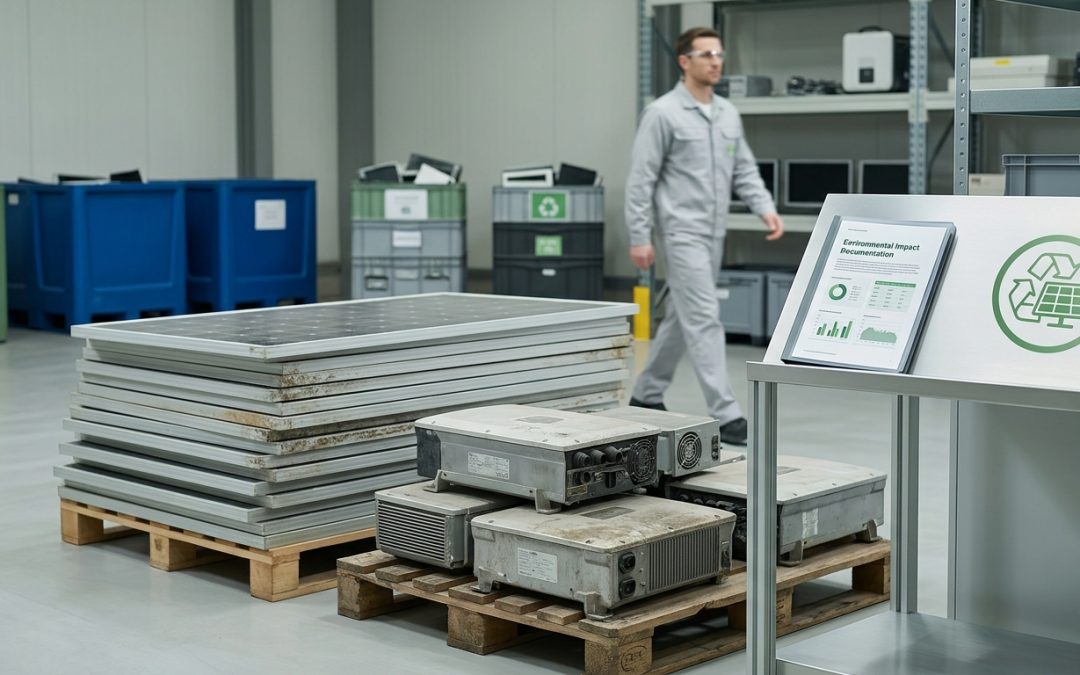
The Coming Solar Panel Waste Wave
Australia has one of the highest rates of rooftop solar adoption in the world, with over 3.5 million installations across the country. The first major wave of residential solar panels, installed during the solar boom of 2010-2015, is approaching the end of its typical 25-year warrantied lifespan. Within the next decade, hundreds of thousands of tonnes of solar panels and associated equipment will need responsible disposal. If you’re already replacing panels due to damage, upgrading, or renovation, here’s what you need to know.
What’s in a Solar Panel
Understanding what solar panels contain explains why they need specialist handling:
Glass makes up the majority of a panel’s weight, approximately 75%. This is typically tempered glass that can be recycled.
Aluminium frames account for roughly 10% by weight and are readily recyclable with high recovery value.
Silicon cells are the active photovoltaic element, containing silicon, silver, copper, and other materials. The silver and copper have significant recovery value.
Encapsulant (EVA or similar polymer) bonds the cells to the glass and back sheet. This is the material that makes separation and recycling challenging.
Back sheet and wiring contain plastics, copper, and small amounts of tin solder.
Some older panels contain small amounts of lead in the solder connecting cells, and thin-film panels may contain cadmium telluride, which requires careful handling due to cadmium’s toxicity.
How to Dispose of Solar Panels
Contact your installer or a solar specialist. If you’re replacing panels as part of an upgrade, the company performing the installation should handle removal and disposal of the old panels. Ask specifically what happens to them and ensure they’re going to a recycler rather than landfill.
Specialist solar panel recyclers. A growing number of companies in Australia specifically process end-of-life solar panels. These operations use mechanical and thermal processes to separate the glass, aluminium, silicon, and metals for recovery. The industry is still developing but expanding as panel volumes increase.
Council facilities. Some council transfer stations accept solar panels, though this varies by location and many are still developing their approach to this relatively new waste stream. Check with your council before transporting panels to a transfer station.
Product stewardship schemes. Australia is developing a product stewardship approach for solar panels. The industry is working toward a scheme similar to the National Television and Computer Recycling Scheme that would fund collection and recycling infrastructure. This is still being finalised, but when operational, it will provide structured disposal pathways funded by panel manufacturers and importers.
Disposing of Solar Inverters
Solar inverters, which convert the DC electricity from panels to AC for home use, have a shorter lifespan than panels (typically 10-15 years) and are standard e-waste. They contain circuit boards, capacitors, transformers, cooling fans, and metal housings.
Inverters should be handled as e-waste through the same channels you’d use for other electronics. Council e-waste collection points, commercial e-waste recyclers, and specialist recycling services all accept inverters. Some solar inverter brands offer take-back programs for their products.
Safety warning: Solar inverters can retain dangerous electrical charge in their capacitors even when disconnected from both the panels and the grid. Do not attempt to disassemble an inverter. A qualified electrician should disconnect it from your system, and it should be transported intact to a recycling facility.
Battery Storage Systems
If your solar installation includes a battery storage system (like Tesla Powerwall, sonnen, or similar), end-of-life battery disposal is a separate consideration. These systems typically use lithium-ion battery chemistry and represent significant hazardous waste if improperly handled.
Home battery systems should be removed by a qualified electrician and disposed of through specialist battery recycling channels. The battery manufacturer may offer a take-back program. Do not attempt to remove or transport large battery systems yourself, as they carry risk of electrical shock and, if damaged, fire.
What Recyclers Do with Solar Panels
The recycling process for solar panels typically involves several stages. Aluminium frames are mechanically removed and sent to aluminium recycling. The junction box and wiring are detached for copper recovery. The laminated panel (glass-EVA-cells-back sheet sandwich) then undergoes thermal processing to burn off the encapsulant and separate the glass from the silicon cells. The glass is recycled, and the silicon cells are processed to recover silver, copper, and silicon.
Current recycling processes recover approximately 85-95% of panel materials by weight, with the glass and aluminium being the easiest to recover. Silicon cell recovery is more complex and the technology for extracting high-purity silicon from recycled panels is still improving.
Planning Ahead
If you have a solar installation that’s approaching 15-20 years old, it’s worth planning for replacement rather than waiting for sudden failure. Panel efficiency degrades gradually (typically 0.5-1% per year), so older panels may be significantly underperforming compared to modern equivalents. Proactive replacement allows you to research disposal options, coordinate with installers, and take advantage of potential trade-in or recycling programs as they develop.
The solar panel waste challenge is a consequence of Australia’s commendable adoption of renewable energy. Managing it responsibly, through proper recycling rather than landfilling, ensures that the environmental benefits of solar energy aren’t undermined by the environmental costs of panel disposal. As recycling infrastructure matures and product stewardship schemes come online, the pathways for responsible disposal will become clearer and more accessible.
EWV helps Victorian businesses manage e-waste and IT asset disposal compliantly and sustainably — including collection, certified data destruction, and recycling. Contact us for a free quote.