
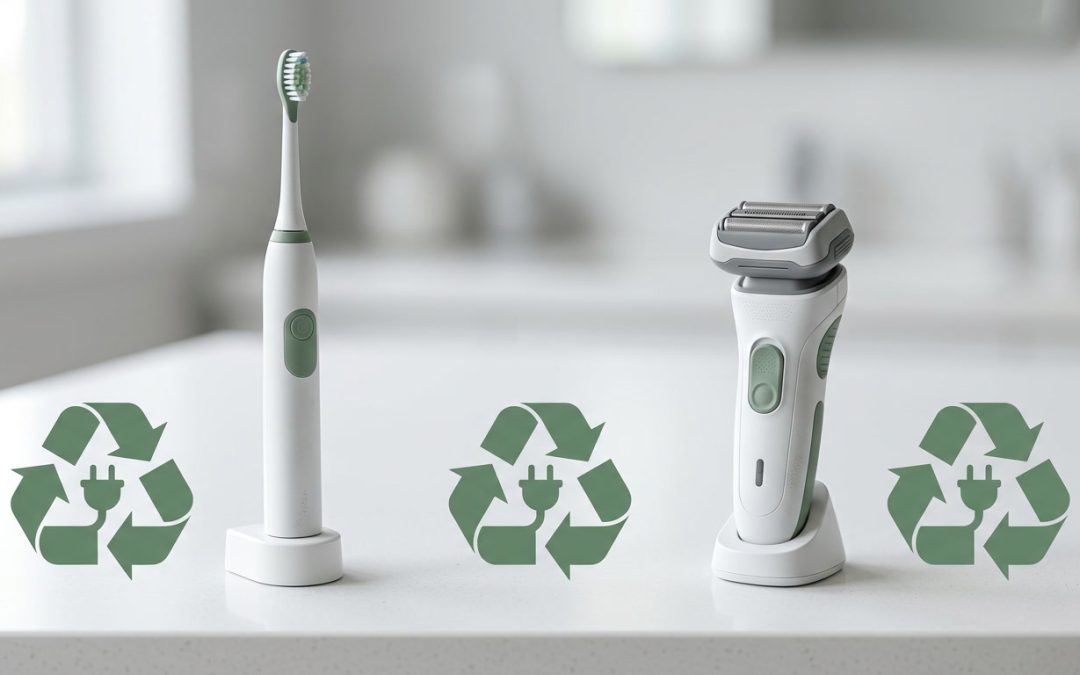
Small Devices, Big Disposal Questions
Electric toothbrushes and electric shavers are two of the most commonly mishandled items in the e-waste stream. They’re small, they feel disposable, and when they stop working, the easiest thing seems to be throwing them in the bin. But these bathroom staples are genuine e-waste containing rechargeable batteries, circuit boards, and motors that don’t belong in landfill and shouldn’t go in your general waste or recycling bins.
What’s Inside These Devices
Electric toothbrushes typically contain a sealed rechargeable battery (usually nickel-metal hydride or lithium-ion), a small electric motor, a circuit board that manages charging and power delivery, and a waterproof plastic casing. The sealed design that makes them water-resistant also makes them difficult to disassemble, which is why they need specialist recycling rather than household processing.
Electric shavers contain similar components: rechargeable batteries, motors, circuit boards, and metal cutting heads. Some higher-end models also include LCD displays, charging stations with electronics, and sometimes cleaning stations with additional electronic components.
The key concern with both devices is the rechargeable battery. These batteries can cause fires if damaged during waste processing, and they contain materials (lithium, nickel, cobalt) that should be recovered through proper recycling rather than lost to landfill.
How to Dispose of Them
E-waste collection points. Take them to your local council transfer station or resource recovery centre. These items are accepted as standard e-waste alongside larger electronics. They’re small enough to accumulate in a collection box at home and drop off in batches.
Retailer drop-off. Some electronics retailers accept small e-waste items. Officeworks, for example, has collection points for small electronics.
Council hard waste or e-waste events. Include them with other e-waste during council collection events or hard waste pickups.
The charging base or station should be disposed of as e-waste too. Don’t forget about the charging cradle, which contains a transformer and electronics even though it seems like a simple accessory.
What About Replacement Brush Heads and Shaver Foils?
Brush heads for electric toothbrushes are made of plastic bristles, a plastic body, and sometimes a small metal shaft. They don’t contain batteries or electronics and technically aren’t e-waste. However, they’re made from mixed materials (different plastic types, nylon bristles, metal pin) that make them difficult to recycle through conventional plastic recycling. Most end up in general waste.
Some manufacturers and specialist recyclers accept brush heads for recycling. TerraCycle has operated brush head recycling programs in some markets. Check whether a collection program exists in your area.
Shaver foils and cutter blocks are metal and can potentially be recycled through scrap metal channels, though their small size makes this impractical for individual items. Accumulate them and include with other small metal e-waste items when you make a drop-off trip.
Extending Their Life
Before disposing, consider whether the device truly needs replacing:
Battery degradation is the most common failure mode for both electric toothbrushes and shavers. While most consumer models have sealed, non-replaceable batteries, some enthusiasts successfully replace batteries in these devices. YouTube tutorials exist for many popular models. If you’re comfortable with basic electronics, a replacement battery (available online for a few dollars) can extend the device’s life by several years.
For shavers, cutting performance issues are often caused by worn foils or cutter blocks rather than motor or battery failure. Replacing these consumable parts is far cheaper and less wasteful than replacing the entire shaver.
Cleaning and maintenance extends the life of both device types. Rinse thoroughly after use, allow to dry properly, and follow manufacturer maintenance recommendations.
The Bigger Pattern
Electric toothbrushes and shavers represent a broader category of personal care electronics that’s growing rapidly: electric flossers, facial cleansing brushes, hair removal devices, LED face masks, and other beauty tech. All of these devices contain batteries and electronics, and all need proper e-waste disposal at end of life.
The best approach is to maintain a small e-waste collection container in your bathroom or hallway where these items can accumulate alongside other small e-waste (dead batteries, broken earbuds, old phone chargers). When the container is full, take it to your nearest e-waste drop-off point. It’s a small habit that keeps these problematic items out of the general waste stream where they don’t belong.
EWV helps Victorian businesses manage e-waste and IT asset disposal compliantly and sustainably — including collection, certified data destruction, and recycling. Contact us for a free quote.