
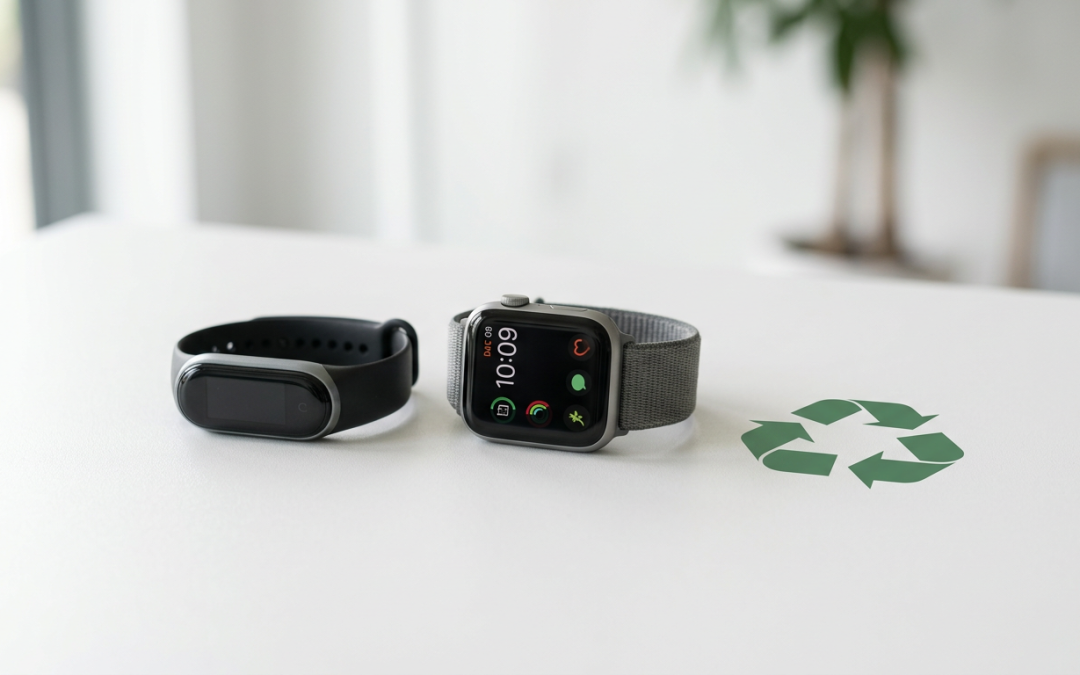
When Your Fitness Tracker Has Run Its Last Lap
Fitness trackers have become one of the most commonly replaced personal electronics. With new models launching annually and battery life degrading over 2-3 years, millions of trackers are retired each year in Australia alone. Whether your old Fitbit, Garmin, or Samsung band has a dead battery, a cracked screen, or has simply been superseded by a newer model, it needs proper handling before you move on.
Clear Your Data First
Fitness trackers store surprisingly personal information. Activity patterns, heart rate data, sleep schedules, GPS-tracked exercise routes (which reveal where you live, work, and exercise), and in some cases menstrual cycle data, stress levels, and blood oxygen readings. Before your tracker leaves your hands, wipe this data.
Most fitness trackers have a factory reset option in their settings menu. For Fitbit devices, go to Settings > About > Factory Reset. For Garmin devices, go to Settings > System > Reset. For Samsung bands, go to Settings > General > Reset. The exact path varies by model, so check the manufacturer’s support site if you can’t find it.
Also remove the device from your account. Open the companion app on your phone and remove or unpair the tracker. This breaks the connection between the device and your health data stored in the cloud, and allows the next user (if selling or donating) to pair it with their own account.
If It Still Works: Sell or Give Away
Working fitness trackers, even older models, have a surprisingly active second-hand market. Many people want a basic fitness tracker but don’t want to pay full price for a new one. If your device is functional, consider selling it before recycling:
Facebook Marketplace and Gumtree are good platforms for local sales. Include clear photos, mention the battery health honestly, and include the charger. Older Fitbit and Garmin models in working condition typically sell for $20-80 depending on model and condition.
Give it to a friend or family member. Someone who’s curious about tracking their steps or sleep but doesn’t want to invest in a new device would likely appreciate your old one. It’s a great way to introduce someone to fitness tracking.
Donate it. Some community health programs and aged care facilities use basic fitness trackers for activity monitoring. A working tracker in good condition might be welcomed by organisations running health programs for vulnerable populations.
If It’s Dead: Recycle Properly
Non-functional fitness trackers are e-waste. They contain a lithium-ion battery, a small circuit board with sensors, a display (OLED or LCD), and a plastic or silicone band with a metal or plastic housing. All of these materials should be recycled rather than landfilled.
Take it to an e-waste collection point. Council transfer stations, Officeworks drop-off bins, and e-waste collection events all accept small electronics like fitness trackers. The device is small enough to toss in a home e-waste collection box and drop off with your next batch.
Remove the band if possible. Silicone watch bands aren’t readily recyclable and often go to general waste. The electronic unit itself is the important part to get to e-waste recycling. If the band clips off easily, separate the two.
Manufacturer take-back. Some brands accept old devices for recycling. Fitbit (now Google) and Garmin have both operated recycling programs. Check the manufacturer’s website for current options.
The Proprietary Charger Problem
One of the most frustrating aspects of fitness trackers is the proprietary charging cables. Almost every brand and model uses its own unique charger, which means when the tracker is retired, the charger becomes useless. Don’t throw the charger in the bin. Include it when you recycle or sell the tracker, as it contains copper wiring and electronic components that should be recycled.
If you’re selling the tracker, always include the charger. A tracker without its charger is worth significantly less because replacements are hard to find for older models and frustrating to source.
Swollen Battery Warning
Fitness trackers, like all lithium-battery devices, can develop swollen batteries over time. Signs include the back of the device popping open, the screen lifting from the housing, or visible bulging. If your tracker shows these signs:
Do not charge it. Charging a swollen battery increases the risk of thermal runaway. Do not puncture or crush it. Place it in a non-flammable container (a ceramic dish or metal tin) and take it to a battery recycling point promptly. If the device is actively producing heat, smoke, or an unusual smell, move it to a non-flammable surface away from combustible materials and ventilate the area.
Fitness trackers are small but they’re real electronics with real recycling needs. Whether yours has a second life ahead as a hand-me-down or has reached the end of the road, taking a few minutes to handle it properly keeps batteries out of landfill and valuable materials in the circular economy.
EWV helps Victorian businesses manage e-waste and IT asset disposal compliantly and sustainably — including collection, certified data destruction, and recycling. Contact us for a free quote.