
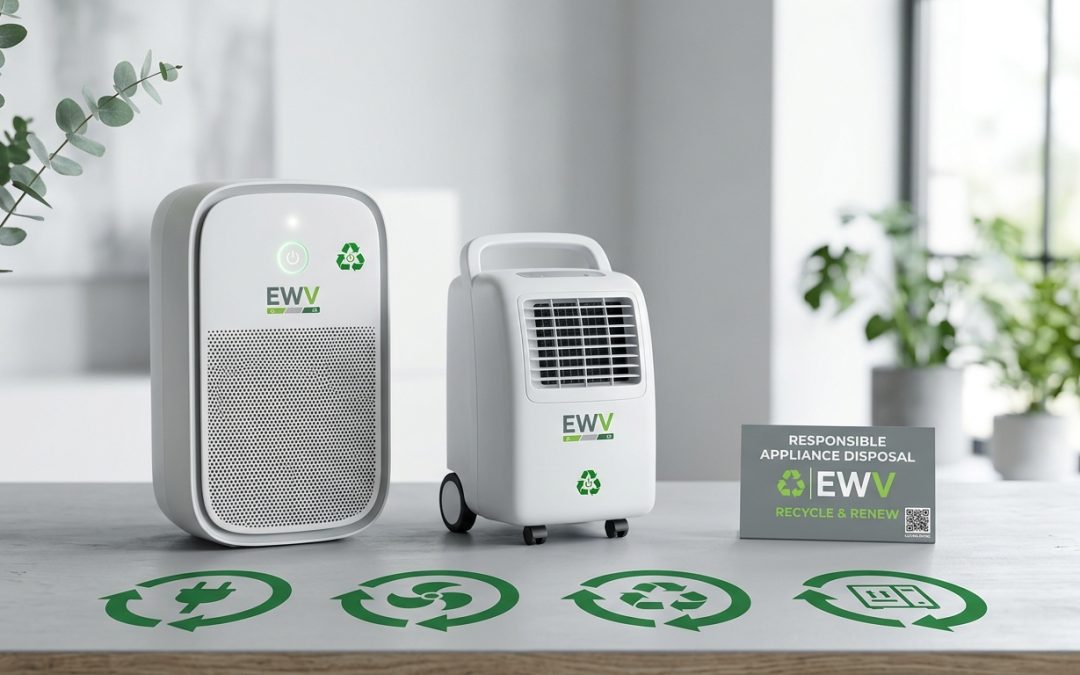
Climate Devices: A Growing E-Waste Category
Air purifiers, dehumidifiers, humidifiers, portable air conditioners, evaporative coolers, and portable heaters have become increasingly common in Australian homes, particularly as bushfire smoke events and extreme weather have made indoor climate management a priority. When these devices reach end of life, they’re all classified as e-waste and need proper disposal. Some, particularly devices containing refrigerant gases, require specialist handling.
Air Purifiers
Air purifiers contain fans, motors, electronic control boards, power supplies, and plastic housings. They’re straightforward e-waste and can be recycled through standard e-waste collection channels.
Before recycling: Remove the HEPA or activated carbon filter. Used filters are not e-waste and typically go in general waste (they’re made of filter media, cardboard frames, and sometimes plastic). Some manufacturers offer filter recycling programs, so check before binning the filter.
If the unit uses UV-C light: Some air purifiers include UV-C germicidal lamps, which may contain a small amount of mercury. These should be handled as e-waste (which they already are as part of the purifier), and the UV lamp should not be broken during transport.
Smart air purifiers with WiFi connectivity should have their account removed and be factory reset before disposal, similar to any connected device.
Dehumidifiers
Dehumidifiers come in two main types, and the distinction matters for disposal:
Compressor dehumidifiers use a refrigeration cycle similar to an air conditioner and contain refrigerant gas. This refrigerant must be recovered by a licensed technician before the unit is recycled. Releasing refrigerant into the atmosphere is illegal under the Ozone Protection and Synthetic Greenhouse Gas Management Act 1989, and many common refrigerants are potent greenhouse gases.
Council transfer stations typically accept compressor dehumidifiers, and the refrigerant is recovered as part of their processing. If arranging commercial collection, ensure the provider handles refrigerant recovery.
Desiccant dehumidifiers use a heat-regenerated desiccant wheel rather than refrigerant. These don’t contain controlled gases and are simpler to recycle as standard e-waste.
Portable Air Conditioners
Portable air conditioners always contain refrigerant and must be handled accordingly. They also tend to be heavy (20-40 kg) and bulky, making transport to a recycling facility a logistical challenge.
Council hard waste collection is often the most practical option. Most councils accept portable air conditioners in their hard waste programs and handle refrigerant recovery as part of their processing chain.
Council transfer stations accept them, though you may need help loading and unloading due to weight.
Commercial e-waste services with appropriate licensing can handle collection and refrigerant recovery for businesses or individuals with multiple units.
Evaporative Coolers
Portable evaporative coolers (the ones that use water evaporation rather than refrigerant) are simpler e-waste items. They contain fans, pumps, control electronics, and plastic or metal housings but no refrigerant. They can be recycled through standard e-waste channels.
Empty the water tank before transport and allow the unit to dry out if possible. Residual water adds weight and can create a mess during transport.
Portable Heaters
Electric fan heaters, panel heaters, oil-filled column heaters, and infrared heaters are all e-waste. They contain heating elements, thermostats, electronic controls, and motors (in fan heaters). Oil-filled heaters also contain thermal oil that should be recovered rather than released during recycling.
Council transfer stations and hard waste collections accept portable heaters. For oil-filled column heaters, check whether your council has specific requirements, as the oil content may need special handling.
Humidifiers
Ultrasonic and evaporative humidifiers are standard e-waste containing motors, electronic controls, and water tanks. Empty all water, allow to dry, and recycle through e-waste collection points. Remove any disposable filters or wicks and bin them separately (general waste).
General Tips for All Climate Devices
Clean before recycling if practical. Removing built-up dust and debris makes handling easier and safer for recycling staff.
Remove filters and consumables. HEPA filters, carbon filters, water filters, and other consumable elements should be removed and disposed of separately (usually general waste unless a specific recycling program exists).
Include power cords and accessories. The power cable, remote controls, and any included accessories are all e-waste and should be recycled with the main unit.
Check for reuse potential. If the device works and is less than 5-7 years old, selling or donating it is a better environmental outcome than recycling. Climate devices in working condition are popular on second-hand marketplaces, particularly in the lead-up to summer or winter seasons.
Climate control devices are a growing part of the e-waste landscape as Australians invest in managing indoor comfort. Getting them to the right recycling channels, particularly those containing refrigerant, ensures they’re processed safely and their materials are recovered.
EWV helps Victorian businesses manage e-waste and IT asset disposal compliantly and sustainably — including collection, certified data destruction, and recycling. Contact us for a free quote.