
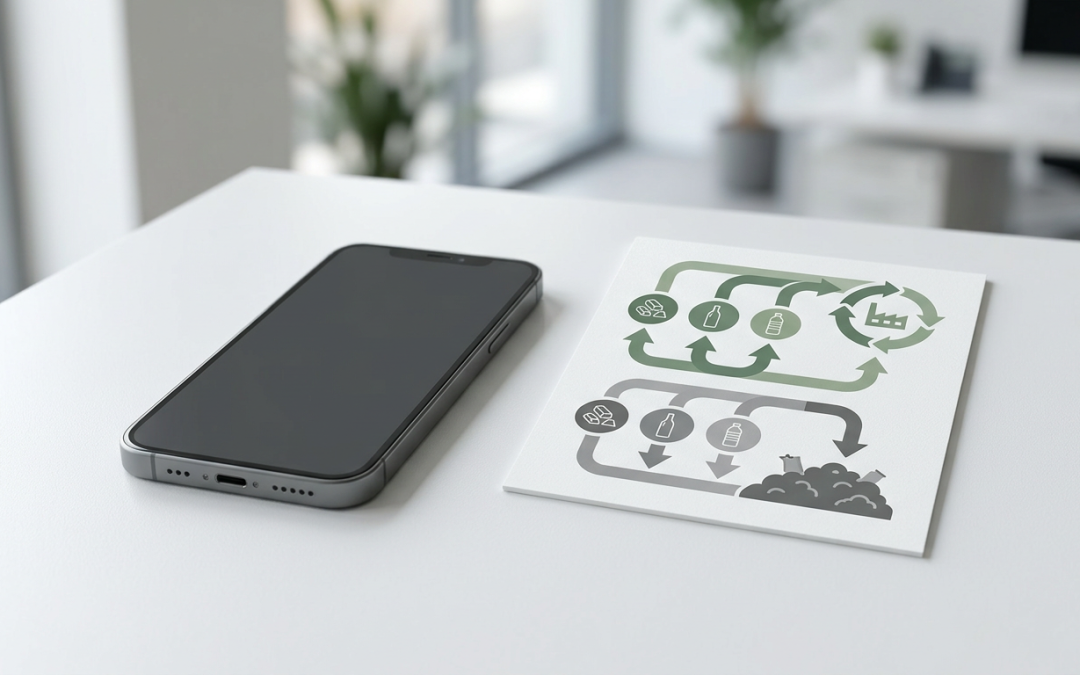
What Happens When a Phone Goes to Landfill
Every year, millions of mobile phones reach the end of their useful life in Australia. Some get recycled, some get passed on to a new user, but a staggering number simply end up in drawers, bins, or landfill. An estimated 25 million old mobile phones are sitting unused in Australian homes right now, and many more have already been tossed in the general rubbish.
When a phone goes to landfill instead of being recycled, it’s not just a missed opportunity. It triggers a chain of environmental consequences that starts at the tip and extends all the way back to the mines where the materials originally came from.
The Toxic Cocktail Inside Your Phone
A smartphone is a remarkably complex piece of engineering, packed with dozens of different materials in a compact package. Many of these materials are hazardous when they break down in an uncontrolled environment like a landfill.
The battery contains lithium and cobalt, both of which can leach into groundwater if the battery casing degrades. The circuit board contains lead solder in older models, along with brominated flame retardants that are persistent organic pollutants. The screen may contain mercury compounds used in backlighting, particularly in older LCD screens. Even the casing may contain antimony and beryllium compounds.
In a landfill, these materials don’t stay contained. As waste compacts and rainwater percolates through, heavy metals and chemical compounds gradually leach into the soil and groundwater. This process, called leachate generation, is one of the primary environmental risks associated with landfilling e-waste.
- Lithium and cobalt (battery) – toxic to aquatic life, can contaminate water
- Lead (solder on circuit boards) – neurotoxin, particularly dangerous for children
- Mercury (some display components) – bioaccumulates in food chains
- Brominated flame retardants (plastic components) – persistent environmental pollutants
- Cadmium (some older batteries and components) – carcinogenic, damages kidneys
Lost Resources That Took Enormous Energy to Extract
The environmental cost of not recycling a phone goes beyond what happens at the landfill. Every phone that isn’t recycled means the materials for the next phone must come entirely from virgin mining. And mining is one of the most environmentally intensive activities on the planet.
A single smartphone contains small amounts of over 60 different elements, including gold, silver, platinum, palladium, copper, tin, and rare earth elements like neodymium and dysprosium. While the quantity of each material in one phone is tiny, the cumulative numbers are enormous. There is more gold in a tonne of mobile phones (around 300 grams) than in a tonne of gold ore (typically 1-5 grams).
Mining these materials requires clearing land, moving massive volumes of earth, using chemical processes that generate toxic waste, and consuming significant energy. Rare earth mining in particular produces radioactive waste. Cobalt mining, concentrated in the Democratic Republic of Congo, has been linked to serious human rights abuses including child labour.
When a phone is recycled, a significant proportion of these materials can be recovered and fed back into manufacturing. When it goes to landfill, they’re lost, and the entire extraction process has to happen again for the next device.
The Carbon Footprint of Replacement
Research consistently shows that the majority of a smartphone’s carbon footprint, estimated at 70-85%, comes from manufacturing rather than use. This means that the most significant climate impact of a phone happens before you even turn it on.
When materials aren’t recovered through recycling, new phones must be built entirely from freshly extracted and processed materials. Mining, refining, transporting raw materials across the globe, manufacturing components in factories, assembling the device, and shipping it to market all generate substantial greenhouse gas emissions.
By recycling old phones and recovering materials, the total energy and emissions required for manufacturing new devices decreases. It takes significantly less energy to refine recycled gold than to mine and process new gold ore. The same applies to copper, aluminium, and most other metals found in phones.
To understand the broader carbon implications of e-waste, our guide to the environmental cost of electronic waste covers the full picture.
Water Contamination and Soil Pollution
The impact on water and soil is one of the most direct consequences of e-waste in landfill. Studies have found elevated levels of heavy metals in soil and groundwater around landfill sites that accept electronic waste, even in well-managed facilities with liners and leachate collection systems.
Lead from circuit board solder is particularly concerning. It’s a cumulative neurotoxin that affects brain development in children and causes cardiovascular and kidney problems in adults. There is no safe level of lead exposure. When lead from landfilled electronics enters groundwater, it can affect drinking water supplies in surrounding areas.
Mercury, used in some display components and switches, is another serious concern. It bioaccumulates in aquatic food chains, meaning small amounts in water can become concentrated in fish and other organisms to levels that are harmful to humans who consume them.
This is precisely why Victoria banned e-waste from landfill in July 2019, and why other Australian states are moving in the same direction. The long-term costs of contaminated land and water far outweigh the investment in proper recycling infrastructure.
The Scale of the Problem
Individual phones are small, which makes it easy to dismiss the impact of one phone going to landfill. But the problem is one of scale. Australians purchase approximately 10 million new phones every year. If even a fraction of old phones end up in landfill rather than being recycled, the cumulative impact is substantial.
Globally, the picture is even starker. The world generates roughly 50 million tonnes of e-waste annually, with phones and small electronics making up a significant portion. The United Nations has called e-waste a “tsunami” that the world is not prepared to handle.
Australia’s phone recycling rate has improved thanks to programs like MobileMuster, but significant volumes still escape proper recycling channels. Many phones end up in general waste because people don’t know about recycling options or don’t think one small device makes a difference. It does, when multiplied by millions of users.
What Proper Recycling Actually Recovers
When a phone is properly recycled, the recovery rates for key materials are impressive. Professional e-waste recycling facilities can recover 95% or more of the valuable metals from mobile phones.
The process typically involves manual disassembly to remove batteries (which go through a separate recycling stream), followed by mechanical shredding and sorting. Advanced techniques including hydrometallurgy (chemical leaching) and pyrometallurgy (high-temperature smelting) extract metals from the shredded material. Plastics are separated and either recycled into new products or used for energy recovery.
The recovered materials go straight back into manufacturing supply chains. Recycled copper becomes wiring. Recycled gold goes into new electronics. Recycled aluminium becomes new casings and components. It’s a genuinely circular process when it works, and it starts with the simple decision to recycle rather than throw away.
For a full walkthrough of the recycling journey, see our article on what happens to old electronics.
Making the Right Choice
Recycling a phone takes minimal effort compared to the environmental consequences of not doing it. Most major electronics retailers accept old phones for recycling. Dedicated programs like MobileMuster provide free postal recycling for mobile phones from anywhere in Australia. Council e-waste collection points accept phones along with other small electronics.
- Back up any data you want to keep
- Sign out of all accounts (Apple ID, Google, social media)
- Perform a factory reset to remove personal data
- Remove the SIM card and any memory cards
One phone recycled might seem insignificant. But multiply that decision across millions of Australians, and it represents tonnes of hazardous materials kept out of the ground, tonnes of valuable resources returned to the supply chain, and a meaningful reduction in the demand for destructive mining. The choice is simple, and the impact is real.
For a complete overview of recycling options and processes, explore our complete guide to e-waste recycling in Australia.
EWV helps Victorian businesses manage e-waste and IT asset disposal compliantly and sustainably — including collection, certified data destruction, and recycling. Contact us for a free quote.