
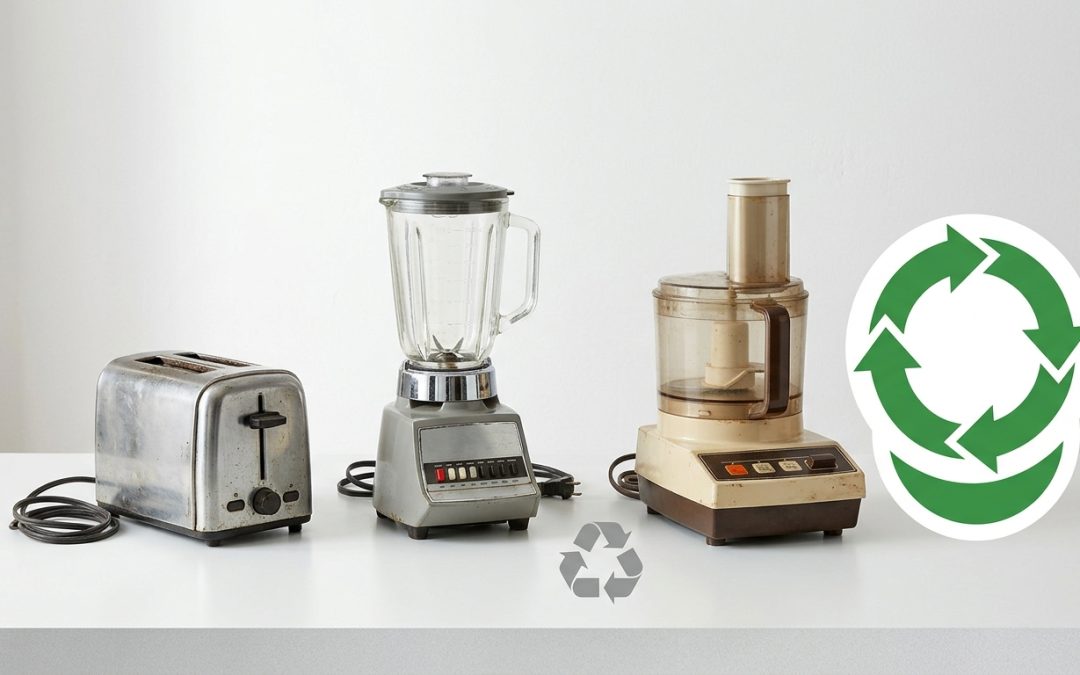
Your Kitchen Is Full of E-Waste You Probably Haven’t Thought About
When people think of e-waste, they picture computers, phones, and televisions. But walk into any Australian kitchen and you’ll find a collection of electronic devices that will eventually need responsible disposal. Toasters, kettles, blenders, coffee machines, microwaves, food processors, and electric scales are all classified as e-waste when they reach end of life, and they all need to be kept out of general rubbish bins.
Kitchen electronics are often the forgotten category of e-waste. They break, get replaced, and the old one gets shoved under the sink or put out with the rubbish. But these devices contain metals, plastics, electronic components, and sometimes hazardous materials that should be recycled properly.
What Counts as Kitchen E-Waste
If it plugs in or uses a battery, it’s e-waste. The list of kitchen electronics is longer than most people realise:
Toasters, kettles, and sandwich presses. Microwave ovens. Blenders, food processors, and stick blenders. Coffee machines and espresso makers. Electric frypans, slow cookers, and rice cookers. Dishwashers. Refrigerators and freezers. Stand mixers. Electric can openers, knife sharpeners, and bread makers. Air fryers and deep fryers. Kitchen scales (if electronic). Even simple items like electric salt and pepper grinders count.
All of these contain a combination of metals (steel, aluminium, copper wiring), plastics, electronic circuit boards, and in some cases heating elements and motors. Refrigerators and freezers additionally contain refrigerant gases that need specialist handling to prevent them from damaging the ozone layer.
Why Kitchen E-Waste Shouldn’t Go in the Bin
In Victoria, it’s been illegal to put e-waste in general rubbish since July 2019. But even beyond legal requirements, there are solid practical reasons to recycle kitchen electronics rather than binning them.
Most kitchen appliances are primarily made of steel and aluminium, both of which are infinitely recyclable and highly valuable as secondary materials. The copper wiring inside motors and heating elements is another valuable recoverable resource. Even the plastics in many appliances can be recycled into new products.
On the hazardous side, circuit boards in smart appliances contain small amounts of lead solder and other problematic materials. Older microwaves may contain capacitors with hazardous substances. And as mentioned, fridges and freezers contain refrigerant gases that are potent greenhouse gases if released to the atmosphere.
- Steel and iron (body, frame, internal structure) – fully recyclable
- Copper (wiring, motor windings, heating elements) – fully recyclable
- Aluminium (housings, heat sinks) – fully recyclable
- Plastics (handles, housings, buttons) – recyclable by type
- Glass (microwave doors, blender jugs) – recyclable
- Electronic components (circuit boards, controls) – precious metal recovery
How to Dispose of Small Kitchen Appliances
Small appliances like toasters, kettles, blenders, and coffee machines are the easiest kitchen e-waste to deal with. Most council transfer stations and e-waste drop-off points accept small appliances at no charge.
Before dropping them off, empty any water or food residue. Give the item a quick clean if it’s particularly dirty, as recycling facilities appreciate receiving items that aren’t covered in old food. Remove any detachable glass or ceramic components if possible, as these are recycled through different streams.
Some councils offer kerbside e-waste collection on designated days. Check your local council’s website or contact them to find out what services are available in your area. Many also have permanent drop-off points at transfer stations that accept e-waste year-round.
How to Dispose of Large Kitchen Appliances
Refrigerators, freezers, dishwashers, and ovens fall into the large appliance category. These are more complex to dispose of due to their size and, in the case of fridges and freezers, the refrigerant gases they contain.
Never attempt to remove refrigerant yourself. This must be done by licensed technicians using proper recovery equipment. Releasing refrigerants to the atmosphere is both illegal under the Ozone Protection and Synthetic Greenhouse Gas Management Act and environmentally damaging.
Options for large appliance disposal include council hard rubbish collection (most councils offer this periodically or on-request), appliance retailers who may offer removal of old units when delivering new ones, scrap metal recyclers who accept large appliances and handle them appropriately, and dedicated e-waste recycling services for business quantities.
If a large appliance still works, consider selling or donating it. Working fridges and dishwashers have decent resale value on marketplace platforms, and many charities accept functional whitegoods.
Can Kitchen Appliances Be Repaired Instead?
Before recycling, it’s worth asking whether an appliance can be repaired. Repair is always better than recycling from an environmental perspective, and many common appliance faults are straightforward to fix.
Common repairable faults include frayed power cords (cheap and easy to replace), blown thermal fuses in toasters and kettles, worn seals in blenders and food processors, descaling issues in coffee machines, and clogged filters in dishwashers and rangehoods.
Australia’s growing repair cafe movement provides free community repair sessions where volunteers help fix small appliances. These are worth looking into before writing off a device that might just need a simple fix.
That said, some repairs aren’t worth the cost or effort. If the repair cost exceeds half the replacement cost, or if the appliance uses significantly more energy than a modern equivalent, replacement and recycling may be the better environmental choice.
Smart Kitchen Appliances Need Data Consideration
An increasing number of kitchen appliances now connect to Wi-Fi and store data. Smart fridges, connected coffee machines, and app-controlled ovens may store your Wi-Fi passwords, account credentials, and usage data.
Before disposing of any smart kitchen appliance, perform a factory reset to remove your network credentials and any stored personal information. Check the manufacturer’s instructions for the specific reset procedure, as it varies between brands and models.
This might seem excessive for a coffee machine, but any device connected to your home network has your Wi-Fi password stored in it. That password gives access to your entire home network, which in turn could provide access to other connected devices.
Reducing Kitchen E-Waste in the First Place
The best e-waste is the e-waste that never gets created. A few purchasing and maintenance habits can significantly reduce how often you need to replace kitchen electronics.
Buy quality over price for items you use daily. A $15 toaster that lasts two years costs more over time than a $60 toaster that lasts ten, and generates five times the waste. Look for products with longer warranties, as this often correlates with build quality. Maintain appliances according to manufacturer instructions, descaling coffee machines, cleaning filters, and not overloading motors. Avoid buying single-purpose gadgets that seem appealing but get used twice and then take up space until they become e-waste.
Your kitchen is a microcosm of the broader e-waste challenge. By being thoughtful about what you buy, maintaining what you have, repairing when possible, and recycling responsibly when something truly reaches end of life, you can significantly reduce your household’s contribution to Australia’s growing e-waste problem.
For more on responsible disposal of all types of electronics, see our complete guide to e-waste recycling in Australia.
EWV helps Victorian businesses manage e-waste and IT asset disposal compliantly and sustainably — including collection, certified data destruction, and recycling. Contact us for a free quote.