
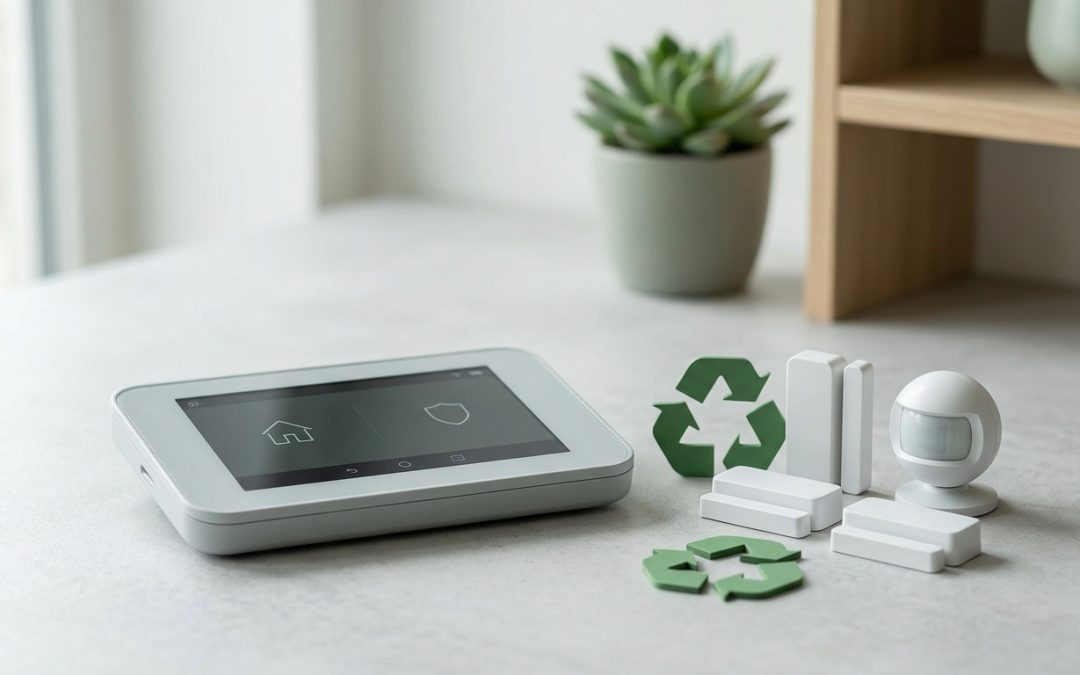
Security Systems Become E-Waste Too
Home security systems don’t last forever. Technology moves on, companies discontinue support, and what was cutting-edge five years ago becomes obsolete. Whether you’re upgrading to a newer system, moving house, or simply removing a system you no longer use, old security equipment needs proper disposal just like any other electronic device. The difference is that security systems often contain sensitive data and components spread across multiple locations in your home.
From cameras and sensors to control panels and backup batteries, a home security system can involve a surprising amount of electronic equipment that all needs to be handled correctly.
What’s in a Typical Home Security System
A standard home security setup contains more components than most people realise:
The central control panel is the brain of the system, usually mounted in a cupboard or utility area. It contains a circuit board, a backup battery (typically a sealed lead-acid battery), and often a cellular or Wi-Fi module for communicating with the monitoring service.
Cameras, whether wired or wireless, contain circuit boards, image sensors, and in many cases local storage (SD cards or internal memory) that may hold recorded footage. Motion sensors mounted around the house contain small circuit boards and batteries. Door and window sensors each contain a small circuit board and a battery. Keypads near entry points have circuit boards and sometimes backup batteries. Sirens contain speakers, circuit boards, and sometimes their own backup batteries. And if you have a video doorbell, that contains a camera, microphone, speaker, Wi-Fi module, and battery.
- Central control panel (with backup battery)
- Indoor and outdoor cameras
- Motion sensors (PIR detectors)
- Door/window contact sensors
- Keypads
- Siren/alarm units
- Video doorbells
- SD cards and local storage devices
- Power supplies and transformers
- Cabling (if hardwired system)
Data Security Comes First
Security systems are, by nature, designed to capture and store sensitive information. Before removing or disposing of any component, make sure your personal data is properly handled.
Cameras may have recorded footage stored locally on SD cards or internal memory. Remove all SD cards and either keep them, format them, or physically destroy them. If cameras have internal storage, perform a factory reset before disposal.
The control panel stores your security codes, user profiles, Wi-Fi credentials, and system configuration data. Factory reset the panel according to the manufacturer’s instructions. If you can’t reset it (because you’ve lost the master code, for example), note this for whoever processes the e-waste so the storage can be properly destroyed.
Cloud-connected systems store data with the service provider. Log into your account and delete stored footage, deactivate the system, and remove the property from your account. Also revoke any shared access if other family members or a monitoring service had access to the system.
If your system was monitored by a security company, contact them to formally cancel the service and confirm that your account data will be handled according to their privacy policy.
Removing the System Safely
If you installed the system yourself, you can usually remove it yourself. Wireless systems are straightforward: remove sensors from walls (most use adhesive pads or small screws), take down cameras, and unplug the control panel.
For hardwired systems, the process is more involved. Disconnect power to the system at the switchboard before working on any wired components. If cabling runs through walls, you may need to decide whether to remove the cables or leave them in place (in a rental, check with your landlord).
Be careful with backup batteries. Control panels and some sensors contain sealed lead-acid or lithium batteries that can be hazardous if mishandled. Don’t puncture, crush, or short-circuit batteries during removal.
If the system was professionally installed, consider having the same company or a qualified technician remove it, particularly if it involves mains-wired components or complex cabling.
Handling the Batteries
Security systems are notable for the number of batteries they contain. A typical system might have a dozen or more batteries across all its components, and each type needs appropriate disposal.
The control panel backup battery is usually a sealed lead-acid (SLA) battery, similar to a small car battery. These contain lead and sulfuric acid and must go to a battery recycler or hazardous waste collection point. Most council transfer stations accept SLA batteries.
Sensor and keypad batteries are typically lithium coin cells (CR123A, CR2, or similar) or AA/AAA lithium batteries. These should go through dedicated battery recycling programs like B-cycle, available at supermarkets and hardware stores.
Camera batteries, particularly in wireless cameras and video doorbells, are usually lithium-ion rechargeable cells. Handle these carefully, tape the contacts, and take them to a battery recycling point.
Can Any Components Be Reused or Sold?
If your security system components are still functional and relatively current, they may have resale value or be useful to others.
Popular smart security brands like Ring, Arlo, Eufy, and Google Nest retain reasonable resale value on marketplace platforms. Individual cameras, video doorbells, and sensors from these systems can be sold separately. Make sure everything is factory reset and deregistered from your account before selling.
Older proprietary systems from traditional security companies typically have less resale value because they may require specific monitoring services or are locked to particular providers. However, some components like generic motion sensors and sirens may be useful to hobbyists or DIY security enthusiasts.
Working components can also be donated to community organisations. Some neighbourhood watch groups, community gardens, or small not-for-profits could benefit from basic security equipment.
Recycling What Can’t Be Reused
For components that are too old, broken, or proprietary to reuse, proper e-waste recycling is the responsible path.
Take all electronic components (control panels, cameras, sensors, keypads, sirens) to your local council e-waste drop-off point. These facilities are equipped to handle the mix of metals, plastics, and electronic boards found in security equipment.
Batteries go separately through battery recycling channels as described above. Cabling, if you’ve removed it, can go to scrap metal recyclers (copper cabling) or e-waste recycling (data cables with connectors).
Mounting hardware (brackets, screws, adhesive pads) that doesn’t contain electronic components can generally go in regular waste or metal recycling as appropriate.
Smart Security Systems and Account Cleanup
If your system was a smart/connected system, there’s digital cleanup to do beyond the physical devices.
Delete the app from your phone and any family members’ phones. Log into the manufacturer’s website and delete your account or remove the property and all devices. Review what permissions the security app had on your phone (location access, camera, microphone, contacts) and revoke them. If you used IFTTT, Alexa routines, or Google Home automations linked to the security system, remove those integrations.
Check whether the system used a dedicated SIM card for cellular backup communication. If so, cancel the SIM plan to avoid ongoing charges.
- Remove and format or destroy all SD cards
- Factory reset all cameras, control panel, and smart devices
- Delete cloud-stored footage and deactivate online accounts
- Cancel monitoring service and SIM card if applicable
- Remove all batteries and sort by type for separate recycling
- Take electronic components to e-waste recycling
- Remove security app and revoke phone permissions
- Delete any linked automations (Alexa, Google Home, IFTTT)
A home security system collects some of the most sensitive data imaginable: footage of your home, your comings and goings, your access codes, and your personal routines. Taking the time to properly decommission and dispose of it protects your privacy long after the system stops protecting your home. For more on responsible electronics disposal, see our complete guide to e-waste recycling in Australia.
EWV helps Victorian businesses manage e-waste and IT asset disposal compliantly and sustainably — including collection, certified data destruction, and recycling. Contact us for a free quote.