
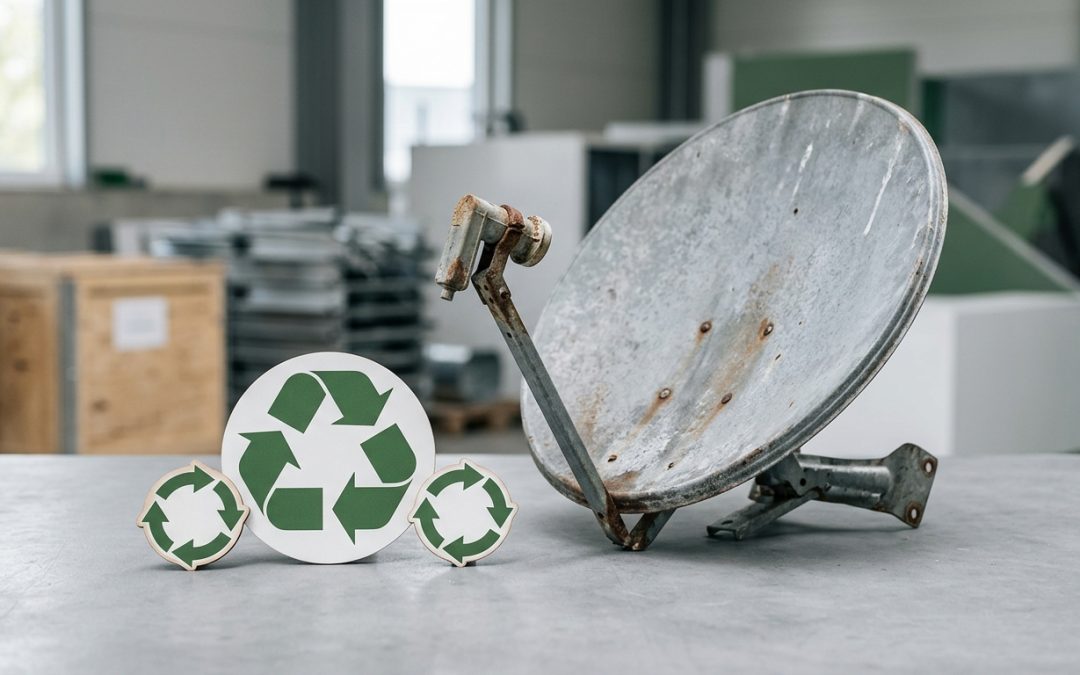
Satellite Dishes: The Forgotten E-Waste on Your Roof
Across Australia, thousands of old satellite dishes sit bolted to roofs, walls, and posts long after they’ve stopped being used. The switch to streaming services, changes in broadcast technology, and moves to NBN have left many households with redundant satellite equipment they’re not sure what to do with. That old Foxtel or free-to-air satellite dish is recyclable, and removing it improves both the appearance of your home and your roof’s condition.
Satellite dishes might not be the first thing that comes to mind when you think of e-waste, but they contain electronic components and materials that should be recycled rather than dumped.
What’s Actually in a Satellite Dish
A satellite dish setup consists of several components, each with different recycling pathways:
The dish itself is typically made of steel or aluminium, both of which are fully recyclable metals with strong demand in the scrap metal market. Larger dishes are more likely to be aluminium (lighter for roof mounting), while smaller dishes may be steel.
The LNB (Low Noise Block downconverter) is the small electronic unit mounted on an arm at the front of the dish. It contains a circuit board, metal housing, and electronic components. This is the e-waste component of the setup.
The mounting bracket is usually galvanised steel, fully recyclable through scrap metal channels. Coaxial cable runs from the dish to the set-top box inside, containing copper conductor and aluminium shielding, both recoverable metals.
The set-top box or satellite receiver inside the house is a standard piece of electronic equipment containing a circuit board, power supply, hard drive (in PVR models), and a metal/plastic housing.
Removing the Dish Safely
Safety is the primary concern when removing a satellite dish, particularly if it’s mounted on a roof. Falls from roofs are one of the most common causes of serious injury in Australian homes, and the risk isn’t worth taking if you’re not comfortable with heights or don’t have proper equipment.
If the dish is roof-mounted, consider hiring a professional to remove it. An antenna installer, handyperson, or roofer can safely remove the dish, seal the mounting holes to prevent leaks, and bring the equipment down safely. The cost is typically $100-200, which is modest insurance against a fall.
If the dish is wall-mounted or on a ground-level pole, removal is more straightforward. You’ll typically need a socket set or spanners to undo the mounting bolts, a screwdriver for the LNB and cable connections, and wire cutters for the coaxial cable.
After removing a roof-mounted dish, seal the bolt holes with appropriate roofing sealant or have them properly patched. Open bolt holes in roofing are an invitation for leaks and water damage.
Separating Components for Recycling
Once the dish is down, separating the components ensures each material goes to the most appropriate recycling stream.
The dish and mounting bracket are scrap metal. If they’re steel, a magnet will stick to them. If aluminium, it won’t. Either way, scrap metal recyclers accept both and will often pay a small amount for larger quantities. Some council transfer stations also have dedicated metal recycling areas.
The LNB and set-top box are e-waste. Take these to your council’s e-waste drop-off point or an e-waste recycling facility. The circuit boards inside contain small amounts of recoverable metals.
Coaxial cable contains copper and aluminium, making it worth recycling through scrap metal or e-waste channels. If you have a long run of cable (several metres or more), scrap metal recyclers may accept it. For shorter lengths, include it with your e-waste drop-off.
- Dish + mounting bracket: Scrap metal recycler or council metal recycling
- LNB unit: E-waste recycling drop-off
- Set-top box/receiver: E-waste recycling drop-off
- Coaxial cable: Scrap metal or e-waste recycling
- Remote control: E-waste recycling (remove batteries first)
- Batteries from remote: Battery recycling (B-cycle or similar)
Data on Your Set-Top Box
If your satellite receiver is a PVR (Personal Video Recorder) with a built-in hard drive, it contains recorded content and potentially account information. While recorded TV shows aren’t sensitive in the way that financial data is, your Foxtel or streaming account credentials may be stored on the device.
Before recycling the set-top box, perform a factory reset through the settings menu if the device still powers on. If it doesn’t, the hard drive can be removed and either wiped using a computer or physically destroyed. For most home users, a factory reset of the device is sufficient.
If the set-top box was provided by a pay TV service like Foxtel, check whether you need to return it. Some service agreements require equipment to be returned when you cancel. Contact the provider to confirm before recycling their hardware.
Can the Dish Be Repurposed?
Before recycling, consider whether the dish itself could serve another purpose. Old satellite dishes have a surprisingly active second life in creative repurposing projects.
Common repurposing ideas include using the dish as a fire pit base or portable BBQ reflector (the parabolic shape is useful for heat reflection), converting it into a bird bath by mounting it on a post and sealing any holes, using it as a garden feature or planter, repurposing it as a Wi-Fi signal booster or directional antenna (the parabolic shape focuses radio signals), and artists and makers sometimes use dishes as raw material for sculptures or installations.
If repurposing interests you, remove the LNB and any electronic components for recycling and keep just the metal dish for your project.
Foxtel and Pay TV Equipment Returns
If your satellite system was part of a Foxtel or similar pay TV subscription, check your contract terms regarding equipment ownership. In many cases, the set-top box (iQ unit) remains Foxtel’s property and must be returned when you cancel.
Foxtel typically provides return instructions when you cancel your service, including a prepaid shipping label for the set-top box. The satellite dish itself is usually yours to keep (or recycle), as it’s permanently mounted to your property.
Don’t assume you own the equipment just because it’s been on your property for years. Check with the provider before recycling anything that might have been leased or loaned.
Council and Scrap Metal Options
For the metal components, scrap metal recyclers are often the best option as they may pay you for the material. Aluminium dishes in particular have decent scrap value. Call ahead to confirm they accept satellite dish components and ask about current scrap prices.
Council transfer stations and resource recovery centres accept both the metal components (through their scrap metal area) and the electronic components (through their e-waste collection). This is a convenient one-stop option if you want to drop everything off at once.
If you’re having the dish professionally removed, ask the installer if they handle recycling. Many antenna and satellite installers have relationships with scrap metal recyclers and will take the old equipment with them, saving you the trip.
For renters, check with your landlord before removing a satellite dish. Even if it’s not in use, it may be considered a fixture of the property. If the landlord wants it removed, clarify who is responsible for the cost and disposal.
Satellite dishes are a simple recycling job once they’re off the roof. The metal is valuable, the electronics are manageable, and clearing the old dish from your property is a small but satisfying step toward dealing with the e-waste most people overlook. For more on recycling all types of electronics, see our complete guide to e-waste recycling in Australia.
EWV helps Victorian businesses manage e-waste and IT asset disposal compliantly and sustainably — including collection, certified data destruction, and recycling. Contact us for a free quote.