
The Data-Dense Reality of Modern Vehicles
Modern vehicles, particularly electric vehicles (EVs), are among the most data-intensive consumer products ever manufactured. A contemporary EV contains dozens of electronic control units (ECUs), multiple cameras, radar and lidar sensors, connectivity modules, infotainment systems, and in many cases, advanced driver assistance systems that generate and store terabytes of data over the vehicle’s lifetime. When these vehicles reach end of life or change ownership, the data they contain presents disposal challenges that the automotive and recycling industries are only beginning to address.
The shift to electric vehicles is accelerating this trend. EVs typically have more sophisticated electronics than their internal combustion counterparts, with battery management systems, charging history logs, energy management software, and over-the-air update capabilities that create additional data repositories. As the first generation of mass-market EVs begins reaching end of life, the industry needs to establish data destruction practices for a category of electronic waste that barely existed a decade ago.
Types of Data Stored in Vehicles
Infotainment systems are the most obvious data repository. These systems store synced phone contacts, call histories, text messages, navigation destinations (including home and work addresses), saved Wi-Fi networks and passwords, streaming service credentials, and voice command histories. Some systems record and store voice data from in-cabin microphones.
Telematics and connectivity modules transmit and store location data, driving patterns, speed histories, and vehicle diagnostic information. For connected vehicles with manufacturer telematics services, this data may include detailed trip logs spanning the entire ownership period.
Advanced driver assistance systems (ADAS) and autonomous driving features record camera footage, sensor data, and driving behaviour information. Tesla vehicles, for example, continuously record and may transmit cabin and exterior camera footage. Other manufacturers have similar data collection capabilities integrated into their ADAS platforms.
Battery management systems in EVs store detailed charging and discharging histories, temperature profiles, cell-level performance data, and degradation curves. While this data is primarily technical, it can reveal usage patterns, charging locations, and potentially the owner’s daily routines.
Garage door opener codes, home automation integrations, and stored access credentials for connected home systems may also reside in vehicle electronics, creating a security risk that extends beyond the vehicle itself.
EV-Specific Disposal Considerations
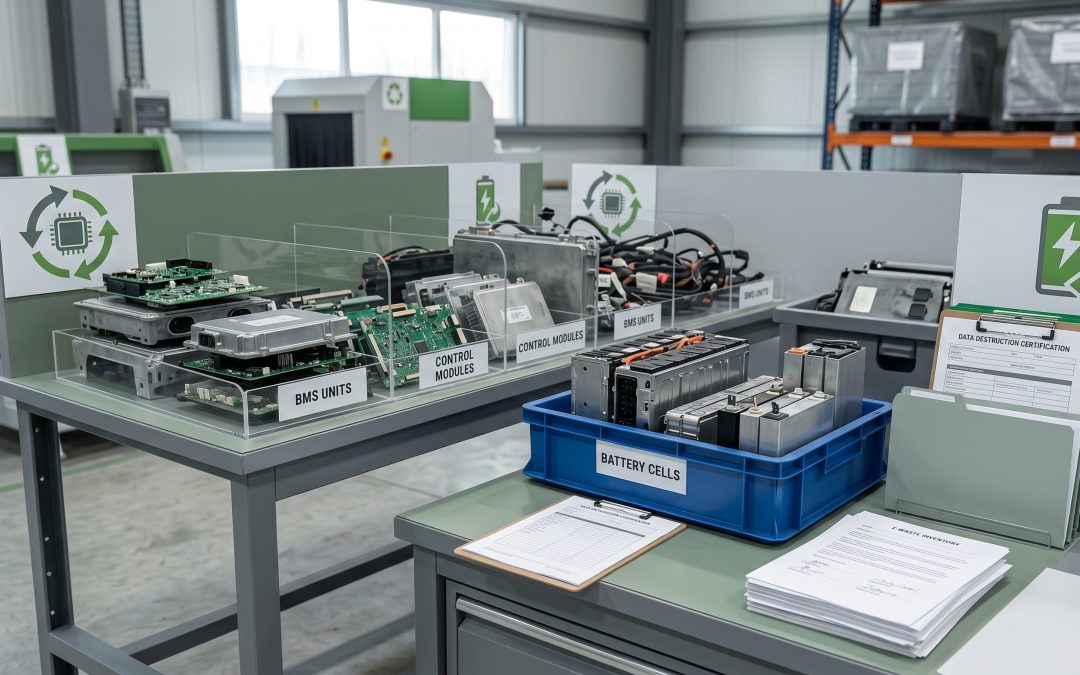
EV batteries contain battery management system (BMS) electronics with embedded storage. When EV batteries are removed for second-life applications (such as stationary energy storage) or recycling, the BMS data should be cleared. A battery pack entering a second-life application with its original BMS data intact carries the previous owner’s usage history into a new context.
Charging history data reveals not just when and where the vehicle was charged, but potentially the owner’s home address (from home charging records), workplace location (from regular daytime charging), and travel patterns. This data exists both in the vehicle’s systems and potentially in the charging network’s records.
Over-the-air (OTA) update systems maintain logs of every software update received by the vehicle. These logs include timestamps and potentially network information that could be used to track the vehicle’s location history through the update servers it connected to.
Vehicle-to-grid (V2G) and smart charging systems store information about the home or business energy system they are connected to, including electricity tariff information, consumption patterns, and potentially grid credentials.
End-of-Life Vehicle Processing
The traditional automotive recycling industry focuses on material recovery: draining fluids, removing hazardous components, crushing the body, and shredding for metal recovery. Electronic data destruction is not part of the standard end-of-life vehicle (ELV) processing workflow. As vehicles become increasingly electronic, this gap needs to be addressed.
For vehicles being sold or traded in, owners should perform a factory reset of the infotainment system, unpair all Bluetooth devices, delete stored contacts and navigation history, deauthorise any connected services, and remove the vehicle from any manufacturer accounts or apps.
For vehicles going to wreckers or recyclers, the electronic modules containing data should ideally be removed and destroyed separately before the vehicle enters the standard dismantling process. In practice, this rarely happens, and data-bearing modules may end up being sold as spare parts with their data intact.
Regulatory Landscape
The Australian Privacy Act applies to personal information stored in vehicles just as it does to data on any other device. However, there is currently no specific automotive data destruction standard in Australia, creating a regulatory gap that the industry is gradually recognising.
The EU has taken the lead on automotive data regulation with proposals for specific rules around vehicle-generated data. As these regulations develop internationally, Australian standards are likely to follow, and organisations involved in automotive electronics disposal should anticipate increasing regulatory attention.
Victoria’s e-waste regulations apply to the electronic components of vehicles, though the application to integrated automotive electronics is not always straightforward. As EVs age and enter the waste stream in larger numbers, clearer guidance on the handling of automotive electronic waste is expected.
Looking Ahead
The volume of data-rich automotive electronics entering the waste stream will grow dramatically as the first generation of connected vehicles and mass-market EVs reaches end of life. The automotive industry, recyclers, and ITAD providers need to develop specialised capabilities for automotive electronic data destruction. For fleet operators managing the disposal of company vehicles, including data clearing in the vehicle decommissioning process is becoming as important as any other aspect of responsible asset management.
EWV helps Victorian businesses manage e-waste and IT asset disposal compliantly and sustainably — including collection, certified data destruction, and recycling. Contact us for a free quote.