
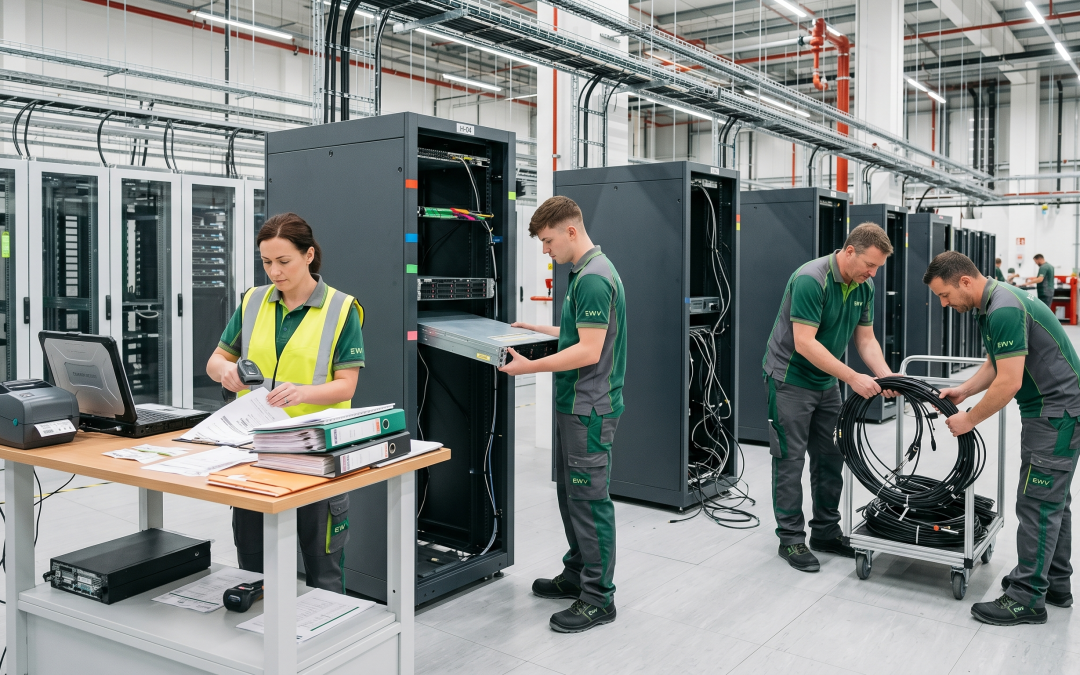
Decommissioning a data centre is one of the largest and most complex ITAD projects an organisation can undertake. Whether driven by cloud migration, facility consolidation, lease expiration, or a merger, a data centre decommission involves hundreds or thousands of devices, significant data security requirements, substantial value recovery potential, and tight timelines. A structured approach is essential to manage the scale and complexity.
Scope and Scale
A typical data centre decommission involves multiple categories of equipment. Compute infrastructure includes rack-mounted servers, blade servers and chassis, and high-performance computing nodes. Storage systems include SAN arrays, NAS appliances, tape libraries, and backup appliances. Networking covers core and access switches, routers, firewalls, load balancers, and wireless controllers. Power and cooling includes UPS systems, PDUs, CRAC units, and in-row cooling. Infrastructure covers racks, cabling (copper and fibre), patch panels, and cable management. And supporting systems include KVM switches, environmental sensors, access control systems, CCTV, and fire suppression.
The total number of individual devices can easily reach into the thousands for a medium-sized facility. Each one needs to be inventoried, assessed, processed, and documented.
Project Planning
Data centre decommissioning projects benefit from formal project management. Establish a project team with representation from IT operations, information security, facilities, procurement, and finance. Develop a detailed project plan with milestones, dependencies, and clear ownership for each workstream.
Key planning considerations include the timeline and any hard deadlines (lease expiration dates are particularly important), the decommissioning sequence (which systems come out first, which last), dependencies between systems that affect the order of removal, data migration verification requirements before equipment can be released, building access and logistics constraints (loading dock capacity, elevator size, floor load limits), and coordination with other projects happening simultaneously.
Engage your ITAD provider during the planning phase, not after equipment has been removed. They can advise on logistics, provide value assessments, and plan their processing capacity to match your decommissioning schedule.
Inventory and Assessment
A comprehensive inventory is the foundation of the decommissioning project. Walk every row of every rack and document every device. Capture serial numbers, asset tags, make, model, configuration details, and condition. Note the rack location and connectivity of each device.
Assess each device for data sensitivity. Servers and storage obviously require data destruction, but do not overlook network equipment (which may contain configuration data and credentials), management consoles, and even smart PDUs with network interfaces.
Simultaneously assess devices for value recovery potential. Recent-generation enterprise equipment in good condition can command significant prices on secondary markets. Your ITAD provider can help estimate potential returns based on the inventory data.
Data Destruction Strategy
Data destruction for a data centre decommission needs to be planned carefully given the volume and diversity of storage media involved. Hard drives across dozens of server types and storage arrays need to be sanitised. SSDs require different sanitisation approaches than spinning disks. Tape media from backup libraries needs degaussing or physical destruction. Embedded storage in network devices and management systems needs to be addressed.
For high-security environments, consider on-site data destruction to eliminate transport risk for the most sensitive systems. Portable drive shredders and degaussing equipment can be brought to the data centre, allowing drives to be destroyed before they leave the facility. Lower-sensitivity equipment can be transported to the ITAD provider’s facility for processing.
Follow established standards like NIST 800-88 and ensure every data-bearing device is individually documented with its destruction method and outcome.
Physical Removal Logistics
Removing equipment from a data centre is a physical challenge that requires careful planning. Heavy servers and UPS systems may require specialised handling equipment. Raised floor environments need care to avoid damage during removal. Cabling removal can be time-consuming and needs to be coordinated with the decommissioning sequence. Building management may restrict removal activities to certain hours. And disposal of non-IT items (racks, cabling, raised floor tiles, cooling equipment) may require different recycling streams.
Work with your ITAD provider and any required logistics partners to plan the physical removal in detail. A well-organised removal proceeds rack by rack, with each rack’s contents documented, disconnected, packed, and removed before moving to the next.
Value Recovery at Scale
Data centre decommissions often present the best opportunities for value recovery due to the concentration of enterprise-grade equipment. Servers, storage arrays, and networking equipment from major manufacturers can retain significant value, especially if they are within two to three product generations of current models.
The volume itself can be an advantage in remarketing. Large batches of consistent equipment are attractive to wholesale buyers and can command better per-unit prices than one-off sales. Your ITAD provider’s remarketing capability and market access directly affects the returns you receive.
Environmental Compliance
Data centres contain concentrated volumes of environmentally sensitive materials. Lead-acid batteries from UPS systems require specialist recycling. Refrigerants in cooling systems must be properly recovered. Electronic components across all device categories fall under e-waste regulations. And hazardous materials in older equipment (mercury switches, certain capacitors) need appropriate handling.
A good ITAD provider manages all of these environmental streams as part of a comprehensive decommissioning service, ensuring compliance with all applicable regulations.
Documentation and Closeout
At project completion, compile comprehensive documentation including the full reconciliation of all equipment against destruction certificates and processing reports, environmental impact summary (weight recycled, landfill diverted, CO2e avoided), financial summary (processing costs, value recovery, net cost or revenue), and lessons learned for future projects. This documentation serves compliance, financial, and operational improvement purposes and should be retained according to your organisation’s records management policy.
EWV handles IT asset disposition (ITAD) end-to-end for Victorian businesses — from collection and data destruction through to certified recycling or refurbishment for resale. Get in touch for a tailored ITAD quote.