
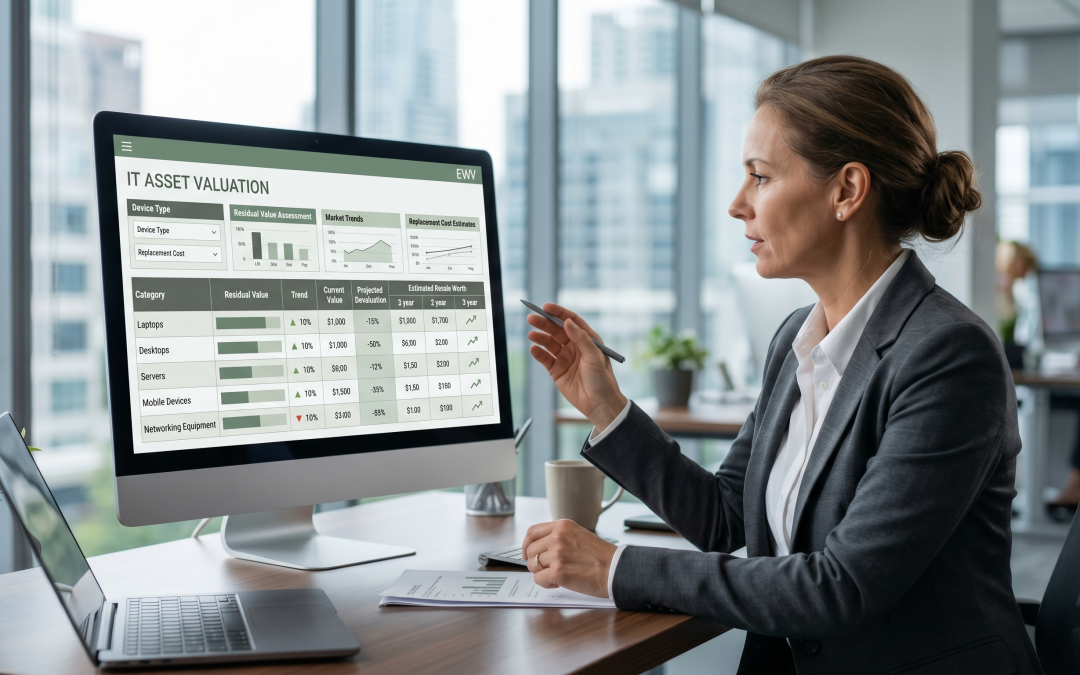
One of the most common questions organisations ask when planning IT disposal is what their old equipment is worth. The answer varies enormously depending on the type of equipment, its age, condition, and current market demand. Understanding the factors that drive secondary market value helps you set realistic expectations and make better decisions about when and how to dispose of your IT assets.
The Factors That Determine Value
Several interconnected factors determine what retired IT equipment can fetch on the secondary market. Age is the single biggest factor. IT equipment depreciates rapidly, with most devices losing 30-50% of their value in the first year after purchase and continuing to decline steeply thereafter. A laptop purchased for $2,000 might be worth $800-1,000 after one year, $400-600 after two years, and $150-300 after three years.
Brand and model significantly affect value retention. Business-grade equipment from major manufacturers like Dell, HP, Lenovo, and Apple holds value better than consumer-grade or lesser-known brands. Apple products tend to retain the highest percentage of their original value, driven by strong demand in secondary markets.
Specification matters within a brand. Higher-spec configurations (more RAM, faster processors, larger SSDs) command premium prices on the secondary market, just as they do when new. However, the premium for higher specs decreases as equipment ages.
Condition has a direct impact on value. A device in Grade A condition (minimal signs of use) might sell for 20-30% more than the same model in Grade C condition (functional but visibly worn). Cosmetic damage, missing components, and battery health all affect grading and pricing.
Typical Values by Equipment Category
Business laptops represent the strongest value recovery category for most organisations. One to two year old business ultrabooks from major brands typically return 35-50% of their purchase price. Three year old laptops return 15-30%. Beyond four years, values drop to 5-15% or less depending on specification and condition.
Desktop computers generally return less than laptops because secondary market demand for desktops is lower. Expect roughly 50-70% of equivalent laptop values for desktops of the same age and specification tier.
Servers and enterprise equipment follow different dynamics. Enterprise servers from the last two generations can hold substantial value, particularly in popular configurations. The value depends heavily on processor generation, memory capacity, and storage configuration. Some enterprise equipment actually holds value longer than consumer and business devices because of longer support lifecycles and more specialised use cases.
Mobile devices, particularly iPhones, retain value remarkably well. A one year old iPhone typically returns 50-65% of its purchase price. iPads and Android devices retain less but can still generate meaningful returns when relatively recent.
Monitors are generally low value in secondary markets unless they are high-resolution professional displays. Standard business monitors more than two to three years old may have minimal resale value.
Networking equipment from enterprise brands (Cisco, Juniper, HPE Aruba) can retain surprising value, particularly core infrastructure that remains within the manufacturer’s support lifecycle.
Market Dynamics
Secondary market prices fluctuate based on supply and demand. New product launches from major manufacturers temporarily depress the value of previous-generation equipment as buyers shift their attention to newer models. Conversely, supply chain disruptions that limit new equipment availability can boost demand and prices for used equipment.
Seasonal patterns also affect pricing. Demand for refurbished equipment often increases at the start of academic years (as schools and students purchase) and during Q4 (as businesses make year-end purchases). These patterns can influence the optimal timing for remarketing.
Your ITAD provider should have current market intelligence and be able to advise on the best timing for remarketing based on current conditions.
Getting Accurate Valuations
For a reliable estimate of your equipment’s value, provide your ITAD provider with a detailed inventory including make, model, specification (processor, RAM, storage), age, quantity, and general condition. The more detail you provide, the more accurate the estimate will be.
Be cautious of valuations that seem unusually high. Some providers offer optimistic estimates to win business, only to adjust the actual returns downward when equipment is received and assessed. Ask for the methodology behind any valuation and whether the estimate is a guaranteed minimum or an indicative range.
Maximising Your Returns
Several practical steps maximise the value you recover from old equipment. Dispose of equipment promptly rather than stockpiling it. Include original accessories (chargers, docking stations, styluses) as they add value. Maintain equipment in good condition during its active life. Provide accurate, detailed inventory information to your ITAD provider. And choose a provider with strong remarketing capabilities and established secondary market channels.
When Value Recovery Is Not the Priority
For some equipment, value recovery should not be the primary consideration. Devices containing the most sensitive data may warrant physical destruction regardless of resale value. Very old equipment with minimal market value may not justify the effort of individual testing and grading. And equipment in poor condition may be more efficiently directed to recycling rather than attempting remarketing. A good ITAD program balances value recovery with security, compliance, and environmental objectives, optimising across all four rather than maximising any single one.
EWV helps Victorian businesses manage e-waste and IT asset disposal compliantly and sustainably — including collection, certified data destruction, and recycling. Contact us for a free quote.