
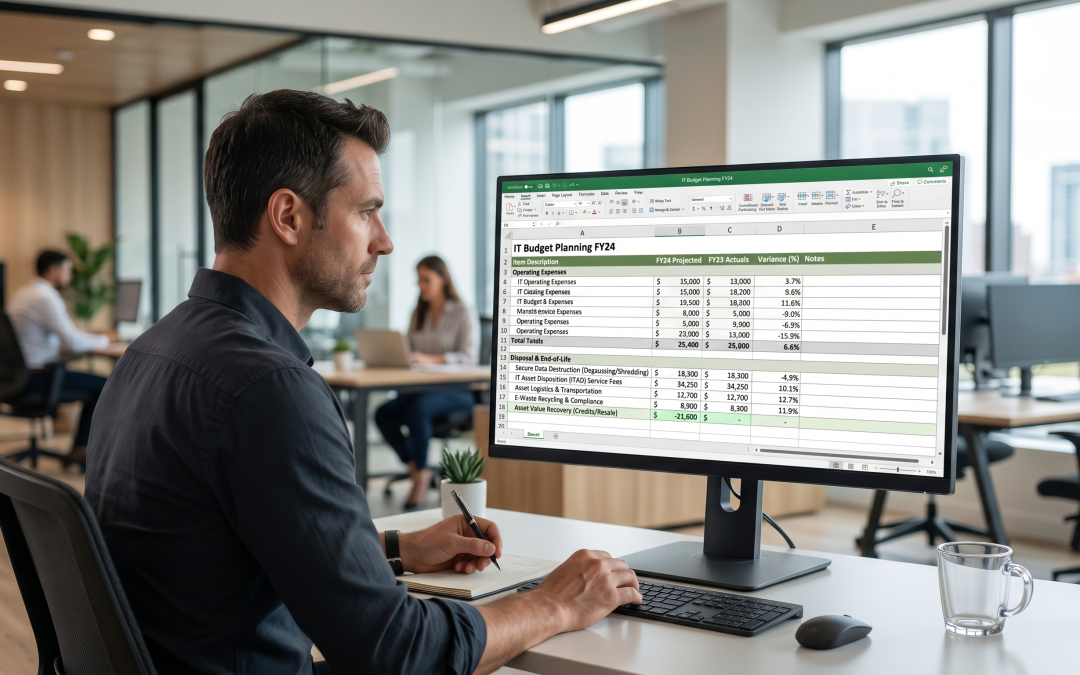
An IT disposal budget that only accounts for collection and recycling fees is missing most of the picture. A complete disposal budget captures all the costs associated with end-of-life management while also accounting for value recovery that offsets those costs. Getting the budget right means your ITAD program is properly funded, free from surprises, and able to demonstrate its financial value to the organisation.
Direct Processing Costs
The most visible budget line is what you pay your ITAD provider. This typically includes collection and transport fees (per-pickup, per-kilometre, or bundled into per-device rates), data destruction charges (per-device, often varying by destruction method), processing and recycling fees for non-reusable equipment, and any premium services such as on-site destruction, witnessed destruction, or expedited processing.
Get detailed quotes from your provider based on expected volumes and equipment types. Bundled pricing may be simpler but make sure you understand what is included and what attracts additional charges.
Internal Labour Costs
Staff time devoted to ITAD activities represents a real cost that belongs in the budget. Key internal activities include asset auditing and inventory preparation before each disposal cycle, coordinating collections with the ITAD provider and internal stakeholders, reviewing and filing documentation (destruction certificates, processing reports), managing the provider relationship (regular reviews, SLA monitoring), and reconciling disposal records against the asset register.
Estimate the hours required for each activity and apply the appropriate labour cost. For a mid-sized organisation with quarterly disposal cycles, internal labour might total 80-120 hours per year across IT, security, and administration staff.
One-Off and Project Costs
Beyond routine disposal, budget for one-off activities that arise during the year. These might include clearing an accumulated stockpile of old equipment (if this has not been done recently), supporting office moves or renovations that generate disposal needs, handling data centre or server room decommissions, processing equipment from organisational changes (mergers, restructures, office closures), and implementing new tracking or documentation systems for the ITAD program.
These project costs can be significant and are often unplanned. Setting aside a contingency budget of 15-25% above routine disposal costs helps absorb one-off needs without disrupting the program.
Value Recovery Offset
Value recovery from remarketing should be included in the budget as a cost offset, reducing the net disposal cost. However, budget conservatively. Estimate value recovery based on the lowest reasonable expectation rather than the optimistic scenario. This protects against market fluctuations, equipment condition variances, and the possibility that some devices expected to be remarketed will instead require recycling.
Track value recovery as a separate line item rather than netting it against processing costs. This provides better visibility into both the cost and revenue sides of the program and makes it easier to evaluate your ITAD provider’s remarketing performance.
Compliance and Documentation Costs
Maintaining compliance with environmental and data protection regulations has associated costs that should be budgeted. These include maintaining and updating your ITAD policy documentation, training staff on disposal procedures, conducting or commissioning audits of your disposal processes, and storing and managing disposal records for the required retention period.
While individually modest, these costs are ongoing and should not be overlooked.
Insurance and Risk Management
Review whether your disposal activities require additional insurance coverage or adjustments to existing policies. Budget for any additional premiums for coverage during the disposal process, annual reviews of your risk profile related to IT disposal, and any third-party assessments or audits required by your insurer.
Technology and Tools
Depending on the scale of your program, you may need technology to support disposal management. Budget items might include asset tracking software or licences, barcode scanners or RFID readers for inventory management, data wiping software if you perform any sanitisation in-house, and access to your ITAD provider’s online portal or reporting platform (if charged separately).
Budget Review and Adjustment
Review your disposal budget quarterly against actual costs and value recovery. Adjust for changes in disposal volumes, market conditions affecting value recovery, new projects or organisational changes generating additional disposal needs, and provider pricing changes. An annual budget review aligned with your broader IT planning process ensures the disposal budget remains accurate and reflects the organisation’s evolving needs.
EWV helps Victorian businesses manage e-waste and IT asset disposal compliantly and sustainably — including collection, certified data destruction, and recycling. Contact us for a free quote.