
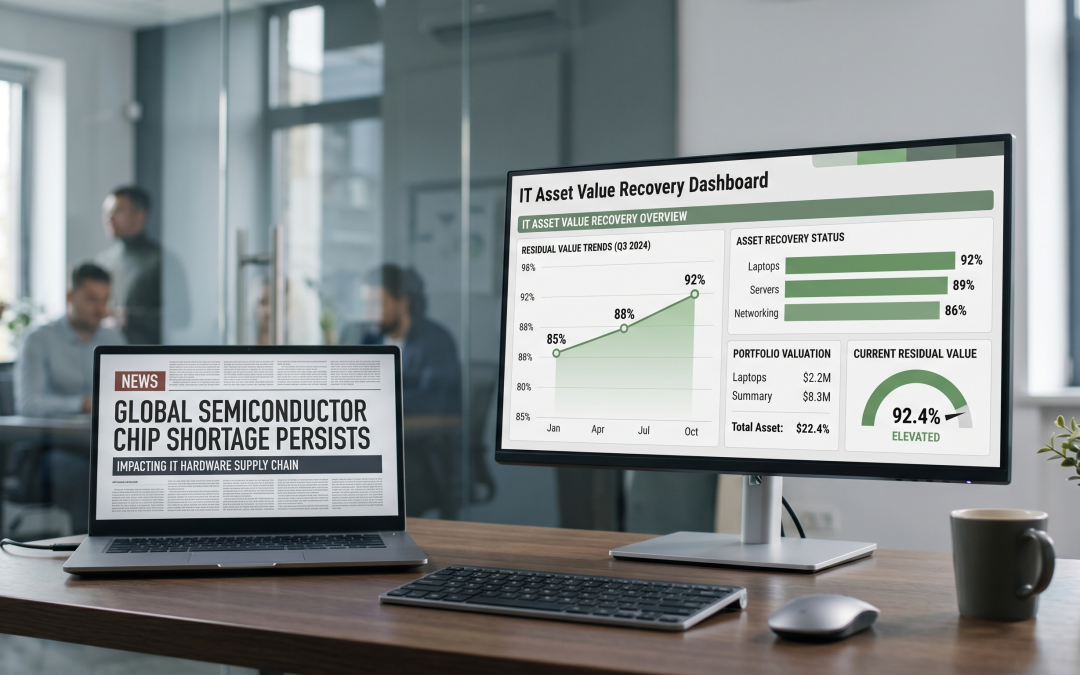
The global semiconductor supply chain has experienced unprecedented disruption in recent years, and the ripple effects have fundamentally changed the economics of IT asset disposition. Chip shortages have driven up the value of used IT equipment, altered procurement strategies, and created both opportunities and challenges for organisations managing their IT asset lifecycle.
Understanding how chip shortages affect IT asset values is essential for anyone involved in procurement, finance, or IT asset management.
How Chip Shortages Drive Up Used Equipment Values
The relationship between chip shortages and used equipment values is straightforward. When new equipment becomes scarce or delivery times extend to months or even years, organisations turn to the secondary market. Increased demand for used equipment pushes prices up, sometimes dramatically.
During peak shortage periods, used enterprise laptops have sold for 30 to 50 percent more than their pre-shortage values. Servers with specific configurations have commanded even higher premiums when new equivalents had 6 to 12 month lead times. Networking equipment, storage arrays, and specialised hardware have all seen similar value increases when new supply was constrained.
This dynamic creates a significant opportunity for organisations that have IT asset disposition programs with the flexibility to capitalise on market conditions. Equipment that might have been recycled or sold for minimal returns under normal conditions can generate substantial revenue when supply constraints push secondary market prices higher.
The Supply Chain Context
Semiconductor shortages have affected virtually every category of IT equipment. The causes have been varied, including pandemic-related factory shutdowns, extreme weather events disrupting production, geopolitical tensions affecting trade flows, and surging demand driven by remote work, digital transformation, and emerging technologies like AI.
While the most acute shortages have eased since their peak, the semiconductor supply chain remains vulnerable to disruption. Industry analysts expect periodic shortages to continue as demand for chips grows faster than manufacturing capacity, particularly for advanced node processors and specialised components.
For ITAD planning purposes, this means elevated used equipment values are likely to recur. Organisations that build flexibility into their disposition programs can take advantage of these periods, while those locked into rigid disposal schedules may miss opportunities.
Impact on Different Equipment Categories
Chip shortages do not affect all equipment equally. Understanding which categories are most sensitive to supply constraints helps organisations prioritise their disposition strategy.
Servers and data centre equipment have been among the most affected categories. Enterprise servers often use specialised processors, memory, and storage controllers that have limited secondary sources. When new servers face extended lead times, organisations extend the life of existing equipment or turn to the used market, driving up values significantly.
Enterprise laptops and workstations see strong value uplift during shortages because they are essential for daily operations. Organisations that cannot wait months for new devices will pay premium prices for used equipment that can be deployed quickly. Models from major manufacturers with strong reliability records command the highest premiums.
Networking equipment is particularly sensitive to chip shortages because many networking components use specialised ASICs that are produced by a small number of foundries. When these chips are in short supply, even relatively old networking equipment can retain or increase in value.
Monitors and peripherals are generally less affected because they use more commodity components. However, specific categories like high-resolution professional displays or specialised input devices can see value increases when supply is constrained.
Strategic Implications for ITAD Programs
Chip shortages have several strategic implications for how organisations manage their IT asset lifecycle.
Timing flexibility becomes critical. Organisations that can accelerate or defer dispositions based on market conditions will consistently outperform those that follow fixed schedules. Building this flexibility into your ITAD program requires good asset tracking, regular market monitoring, and contractual arrangements with your ITAD provider that allow for variable timing.
Life extension competes with disposition. When new equipment is hard to get, extending the life of existing assets becomes more attractive. This can reduce the volume of equipment entering the disposition pipeline, but it also means that equipment which does reach end of life may be older and less valuable. Balancing life extension against value recovery requires careful analysis of total cost of ownership.
Internal redeployment gains priority. Before equipment enters the external remarketing pipeline, organisations should evaluate whether it can be redeployed internally. During shortages, a three-year-old laptop that would normally be disposed of might be perfectly adequate for a different role within the organisation, saving the cost and delay of procuring a new device.
Component harvesting increases in value. When complete systems are scarce, individual components like memory modules, processors, and storage drives can command premium prices. ITAD programs that include component-level assessment and harvesting can capture additional value that would be lost in whole-unit processing.
Financial Planning Considerations
Chip shortages make ITAD financial planning both more important and more complex. When equipment values are volatile, budget projections need to account for a range of scenarios rather than assuming stable pricing.
Consider building your ITAD budget with baseline, upside, and downside scenarios. The baseline assumes normal market conditions. The upside scenario reflects elevated values during supply constraints. The downside accounts for market oversupply or economic downturn. This approach gives finance teams a realistic range of expected outcomes.
For organisations that generate significant ITAD revenue, chip shortage periods can create a meaningful financial windfall. It is worth having a plan for how to deploy that additional revenue, whether it funds accelerated equipment refresh, sustainability initiatives, or other priorities.
Risk Management
While chip shortages create opportunities for higher value recovery, they also introduce risks that need to be managed.
Market timing risk is real. Trying to perfectly time dispositions to peak pricing is difficult and can lead to extended stockpiling that defeats the purpose. A better approach is to maintain a regular disposition cadence but build in flexibility to accelerate processing when market conditions are favourable.
Counterparty risk increases during supply shortages. Buyers in the secondary market may be more willing to cut corners on data destruction or environmental compliance when equipment is scarce. Ensure your ITAD provider maintains rigorous standards regardless of market conditions.
Regulatory risk remains constant. The temptation to prioritise value recovery over proper disposal processes is real during periods of high equipment values, but the regulatory requirements around data destruction, environmental compliance, and chain of custody do not change with market conditions.
EWV helps Victorian businesses manage e-waste and IT asset disposal compliantly and sustainably — including collection, certified data destruction, and recycling. Contact us for a free quote.