
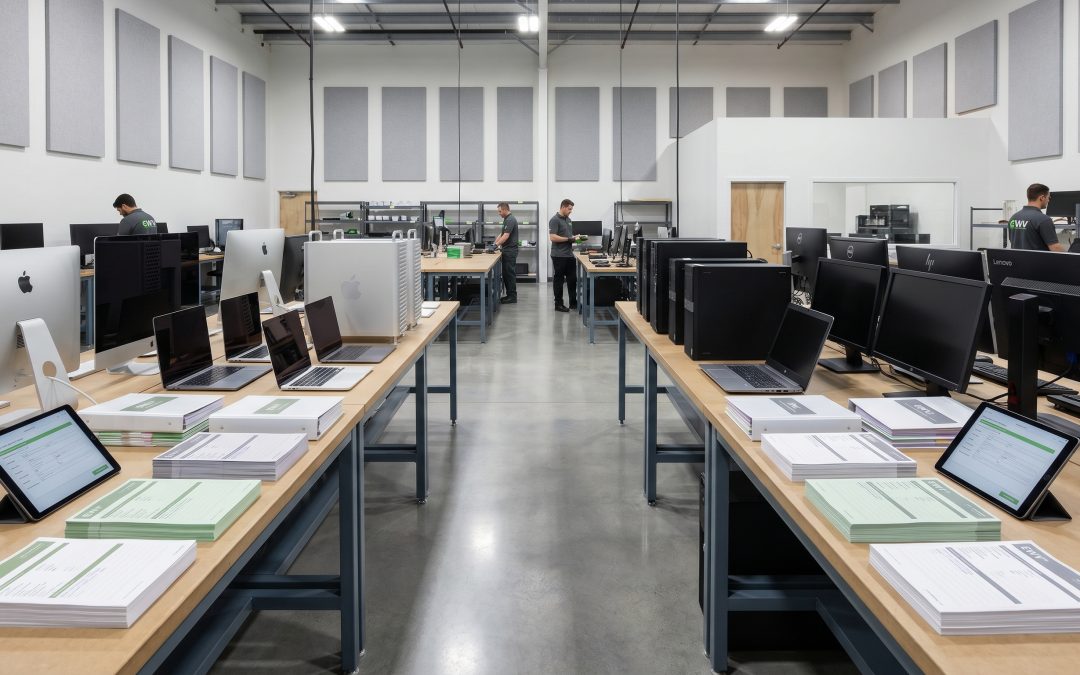
Mac and PC equipment follow different paths through the IT asset disposition process. The differences in hardware architecture, security features, resale markets, and data destruction methods mean that organisations running mixed fleets need to understand how each platform is handled at end of life.
Resale Value Comparison
Apple equipment consistently retains stronger resale value than equivalent PC hardware. A three-year-old MacBook Pro might retain 40 to 60 percent of its original purchase price, while a comparable Windows laptop typically retains 20 to 35 percent. This difference is driven by Apple’s brand premium, strong consumer demand for used Macs, slower perceived obsolescence, and the durability of Apple’s aluminium construction.
For organisations with significant Mac fleets, this value retention represents a substantial financial opportunity. A company disposing of 100 MacBook Pros could generate significantly more revenue than the same number of comparable Windows laptops. This should factor into lifecycle cost calculations when deciding between platforms at procurement time.
iMacs and Mac Pros also retain strong value, particularly high-specification models used for creative and professional work. Mac mini units hold value well relative to their original cost. Even older Mac equipment that is no longer suitable for business use often has a healthy consumer market.
Data Destruction Differences
Mac and PC equipment require different approaches to data destruction, particularly with modern hardware.
Apple T2 and M-series chips: Modern Macs with Apple silicon (M1, M2, M3, M4) or Intel Macs with the T2 security chip use hardware encryption by default. The storage is encrypted with a key tied to the security chip. Erasing the Mac through Recovery Mode destroys the encryption key, rendering the data on the drive cryptographically inaccessible. This is an effective and fast sanitisation method, but it requires the device to be functional and accessible (not locked with an unknown password or Activation Lock).
Activation Lock: Macs with Apple silicon or T2 chips have Activation Lock, which ties the device to an Apple ID. If the device is not properly signed out of the previous user’s Apple ID before disposition, it may be locked and unusable, dramatically reducing its resale value. Ensure that MDM removal and Apple ID sign-out are part of your decommissioning process before devices enter the ITAD pipeline.
Windows PCs: Standard Windows PCs use software-based sanitisation tools that overwrite the drive contents. BitLocker-encrypted drives can be sanitised by destroying the encryption keys and then overwriting the drive. For PCs with standard SATA or NVMe drives, NIST 800-88 compliant wiping tools are well-established and effective.
Hardware Considerations
Modern Macs with Apple silicon have soldered storage that cannot be physically removed from the logic board. This means you cannot simply remove and shred the SSD while keeping the rest of the machine for resale. The entire logic board would need to be destroyed, which eliminates the machine’s value. For Macs, cryptographic erasure is therefore the preferred destruction method when the device is destined for remarketing.
Most Windows PCs have removable storage drives that can be physically extracted and shredded separately, allowing the rest of the machine to be remarketed with a replacement drive. This gives more flexibility in balancing data destruction with value recovery.
Remarketing Channels
Mac and PC equipment tend to flow through different secondary market channels. Used Macs have strong demand from consumers, creative professionals, students, and small businesses. The Apple-specific secondary market is well-established with dedicated resellers and online platforms. Used PCs tend to flow to business buyers, educational institutions, and developing markets. The PC secondary market is larger by volume but typically commands lower per-unit prices.
Work with an ITAD provider who has established channels for both platforms. A provider with expertise in the Apple secondary market can typically achieve better Mac resale prices than one who primarily handles PC equipment.
Mixed Fleet Management
Organisations running both Mac and PC equipment should ensure their ITAD processes accommodate the specific requirements of each platform. Key differences to manage include decommissioning procedures (MDM removal, Apple ID sign-out for Macs versus standard reimaging for PCs), data destruction methods (cryptographic erasure for Apple silicon versus software wiping for standard PCs), remarketing expectations (higher returns for Macs, different buyer channels), and accessory management (Mac-specific chargers, adapters, and peripherals have resale value).