
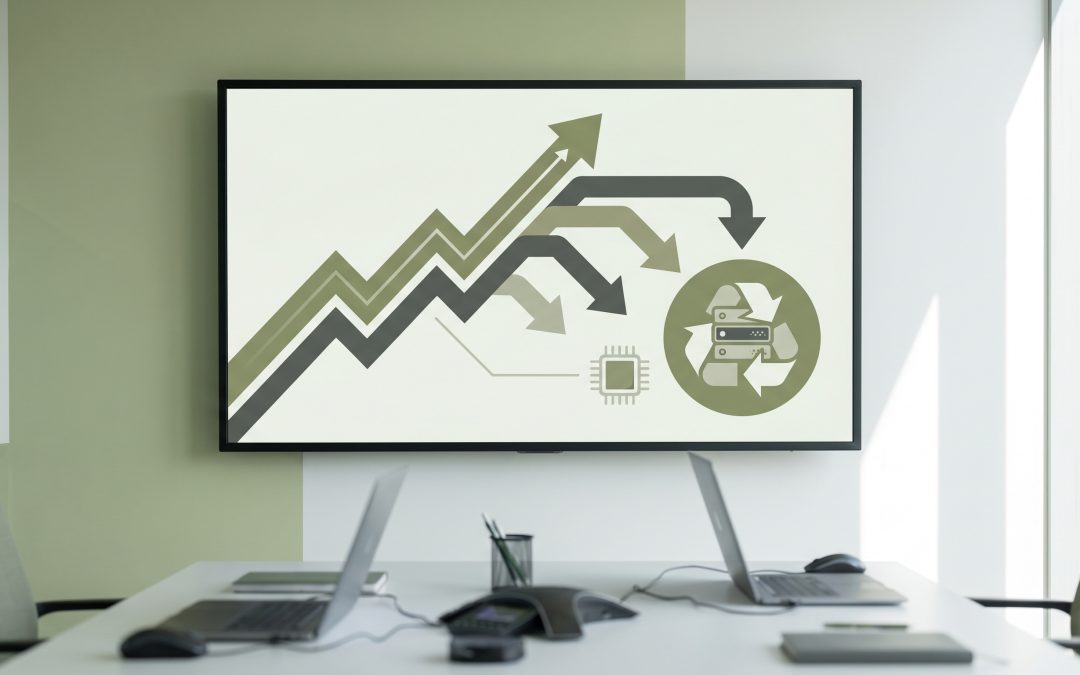
Science Based Targets (SBTs) give organisations a clearly defined pathway to reduce greenhouse gas emissions in line with what climate science says is necessary to limit global warming to 1.5 degrees Celsius above pre-industrial levels. The Science Based Targets initiative (SBTi) validates these targets, and a growing number of Australian businesses are committing to SBTs as part of their climate strategy. For organisations with significant IT equipment fleets, understanding how IT lifecycle decisions affect your ability to meet science-based targets is essential.
What Science Based Targets Require
SBTi requires organisations to set emissions reduction targets across Scopes 1, 2, and 3 that are consistent with the level of decarbonisation needed to meet the Paris Agreement goals. For most office-based businesses, Scope 3 emissions are the largest category, and purchased goods and services, which includes IT equipment, often represents a significant portion of Scope 3.
SBTi requires that organisations whose Scope 3 emissions represent 40 percent or more of total emissions set a Scope 3 target. Given that IT equipment typically has high embodied carbon and many businesses purchase substantial quantities each year, this threshold is commonly met.
IT Equipment in Your Emissions Baseline
Setting science-based targets starts with establishing an emissions baseline. For IT equipment, this means quantifying the embodied carbon in IT equipment purchased during the baseline year, the emissions from transporting and processing retired IT equipment, and the net carbon impact of your ITAD activities (accounting for emissions from processing offset by emissions avoided through refurbishment and materials recovery).
The embodied carbon in IT equipment is substantial. A typical business laptop carries around 300 to 400 kg of CO2e from manufacturing. A server can be several tonnes. For an organisation purchasing hundreds of devices annually, IT procurement can represent tens or hundreds of tonnes of Scope 3 emissions.
Reduction Levers in the IT Lifecycle
Once you have a baseline, you need a plan to reduce emissions in line with your target. The IT lifecycle offers several reduction levers.
Extending asset lifecycles is one of the most impactful actions. If you can extend the average laptop lifecycle from three years to five years, you reduce annual procurement emissions by roughly 40 percent for that asset category. This requires investing in more durable equipment upfront, maintaining it well during its useful life, and having refurbishment capabilities to address performance degradation.
Choosing lower-carbon equipment involves selecting manufacturers and models with lower embodied carbon, which requires obtaining lifecycle assessment data from suppliers. Some manufacturers now publish environmental product declarations that include carbon footprint data.
Maximising refurbishment and reuse means that every device refurbished and returned to productive use avoids the emissions that would have been generated by manufacturing a replacement. This is often the highest-impact action in the disposition phase of the IT lifecycle.
Improving recycling efficiency involves ensuring that non-reusable equipment is recycled through processes that maximise materials recovery, reducing the need for energy-intensive primary extraction. Working with certified recyclers who use energy-efficient processing methods also reduces the emissions associated with recycling itself.
Reducing transportation emissions can be achieved by optimising collection logistics, consolidating shipments, and choosing ITAD providers with facilities close to your operations.
The SBTi FLAG and ICT Sector Guidance
SBTi has developed sector-specific guidance for several industries. While there is not yet a specific ITAD sector pathway, the ICT sector guidance is relevant for technology companies, and the general corporate standard applies to all other sectors.
For organisations using the general corporate standard, IT-related Scope 3 reductions can be achieved through a combination of supplier engagement (working with equipment manufacturers to reduce embodied carbon) and demand-side action (reducing the volume of new equipment purchased through lifecycle extension and refurbishment).
Tracking Progress Against Targets
SBTi requires annual reporting against your targets. For IT-related emissions, this means maintaining year-on-year tracking of IT equipment procurement volumes and associated embodied carbon, average equipment lifecycle lengths by asset category, disposition method breakdown (refurbished, recycled, destroyed), CO2e avoided through refurbishment and reuse, and emissions from transportation and processing of retired equipment.
Your ITAD provider should be able to supply the disposition data you need, including CO2e avoidance figures and materials recovery data. Procurement data typically comes from your IT team and equipment suppliers.
Near-Term vs Long-Term Targets
SBTi distinguishes between near-term targets (typically 5 to 10 years) and long-term targets aligned with reaching net zero. For IT lifecycle management, near-term targets might focus on achievable actions like extending asset lifecycles by a specific percentage, increasing the refurbishment rate to a defined target, and switching to suppliers with verified lower embodied carbon.
Long-term targets might include more ambitious goals like achieving a fully circular IT equipment model where all retired assets are either refurbished or recycled with maximum materials recovery, working only with suppliers who have their own validated science-based targets, and achieving near-zero transportation emissions through electrified logistics.
Getting Started
If your organisation is considering committing to science-based targets, mapping your IT lifecycle emissions early is a practical first step. Understanding the magnitude of IT-related emissions helps you prioritise reduction actions and set realistic targets. For guidance on measuring these emissions, see our practical guide to Scope 3 emissions and IT equipment. For a broader perspective on how IT disposal fits into corporate sustainability strategy, our guide on corporate sustainability and responsible e-waste management provides a comprehensive framework.
]]>EWV handles IT asset disposition (ITAD) end-to-end for Victorian businesses — from collection and data destruction through to certified recycling or refurbishment for resale. Get in touch for a tailored ITAD quote.