
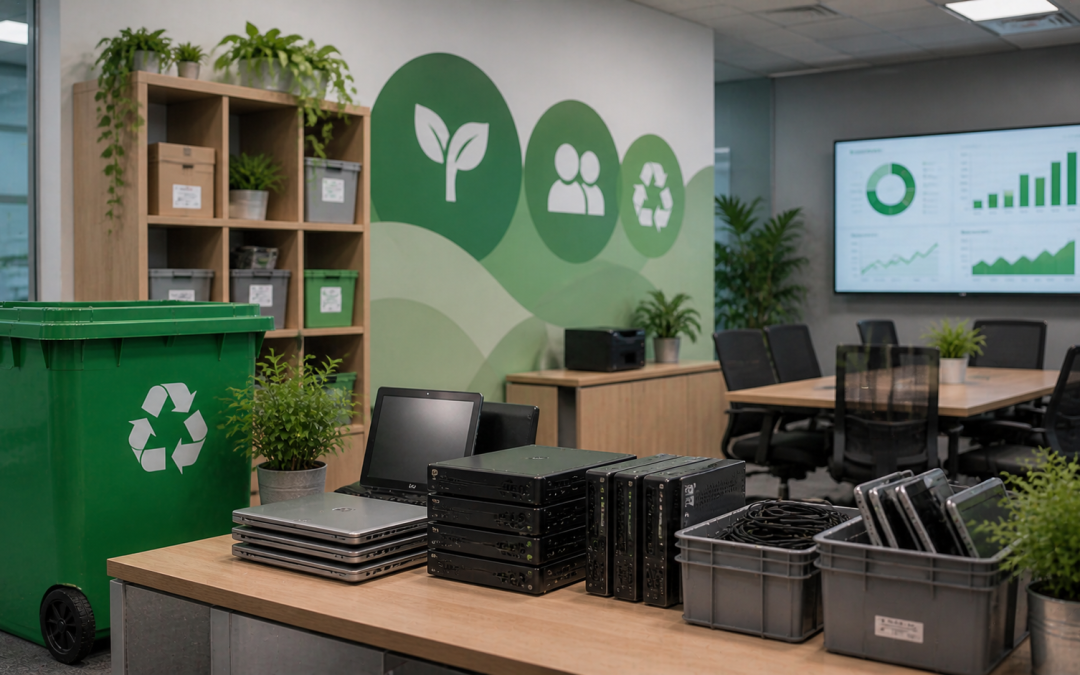
E-waste is often managed separately from other waste streams, handled by IT or facilities teams who may not coordinate closely with whoever oversees general waste management. This siloed approach misses opportunities for efficiency, creates gaps in reporting, and can result in electronic waste falling through the cracks. Integrating e-waste into your broader waste management strategy ensures it receives systematic attention while contributing to your overall waste reduction and sustainability goals.
Why Integration Matters
Most organisations manage several waste streams: general waste, recyclables, organic waste, hazardous waste, and electronic waste among them. When each stream is managed independently, you end up with fragmented contracts, inconsistent processes, duplicated administrative effort, and incomplete data. Bringing e-waste into your broader waste framework creates opportunities to consolidate vendor relationships, standardise reporting, share infrastructure, and present a unified picture of your organisation’s waste performance.
Integration also reduces the risk of e-waste being mishandled. When electronic waste management is nobody’s specific responsibility, or when it falls between IT and facilities management, equipment can end up in general waste bins, stored indefinitely in cupboards, or disposed of through informal channels that provide no environmental assurance or data destruction certification.
The Unique Characteristics of E-Waste
While e-waste should be part of your broader strategy, it has characteristics that require specific handling. Electronic equipment contains hazardous materials including lead, mercury, and cadmium that demand specialised processing. Data-bearing devices carry privacy and security obligations that general waste streams do not. Regulatory requirements in Victoria, specifically the e-waste landfill ban effective since July 2019, impose specific obligations that differ from those applying to other waste types.
Your integrated strategy needs to accommodate these unique requirements while still managing e-waste within a coherent overall framework. This means maintaining separate procedures for data destruction and hazardous material handling while sharing common infrastructure for collection, tracking, and reporting where possible.
Aligning with the Waste Hierarchy
Your broader waste strategy likely follows the waste hierarchy: avoid, reduce, reuse, recycle, recover, dispose. E-waste management maps neatly onto this framework. Avoiding unnecessary equipment purchases reduces the volume of future e-waste. Extending equipment lifecycles through maintenance and repair reduces the rate at which e-waste is generated. Refurbishment enables reuse. Material recovery serves recycling objectives. And certified processing ensures that disposal, when unavoidable, is done responsibly.
Framing e-waste within this familiar hierarchy helps waste management professionals and facilities teams understand how electronic waste fits within the broader picture, even if the specific processing methods differ from other waste streams.
Consolidated Reporting
One of the biggest benefits of integration is unified waste reporting. Instead of separate reports for general waste, recycling, and e-waste, you can present a comprehensive picture of your organisation’s waste performance in a single dashboard or report. This consolidated view makes it easier to track overall diversion rates, identify the relative contribution of each waste stream, and communicate performance to leadership and external stakeholders.
For sustainability reporting, a unified waste data set is significantly more useful than fragmented streams. ESG frameworks and reporting standards expect organisations to present waste data comprehensively, and integrated management makes this straightforward.
Shared Infrastructure
Some physical infrastructure can serve multiple waste streams. Collection points in common areas can include clearly labelled e-waste bins alongside general waste and recycling containers. Storage areas can accommodate e-waste alongside other segregated waste streams, provided security requirements for data-bearing devices are met. Communication materials about waste management can cover all streams together, reinforcing the message that responsible disposal applies to everything, not just paper and packaging.
Vendor Coordination
While e-waste processing requires specialist providers, coordinating your e-waste contracts with broader waste management contracts can create efficiencies. Some waste management companies offer integrated services that cover multiple streams. Even where separate providers are needed, coordinating collection schedules, consolidating administrative processes, and aligning contract terms simplifies management and may improve commercial outcomes.
Governance and Accountability
Clear governance is essential for integrated waste management. Define who is responsible for the overall waste strategy, who manages each specific stream, and how coordination between streams works. For e-waste, this typically means the sustainability or facilities manager owns the overall strategy while IT retains responsibility for data destruction and equipment-specific decisions.
Regular cross-functional meetings that bring together waste management, IT, procurement, and sustainability teams ensure everyone is aligned and issues are caught early.
For more on how e-waste management connects to broader environmental and sustainability goals, see our guide on corporate sustainability and responsible e-waste management.