
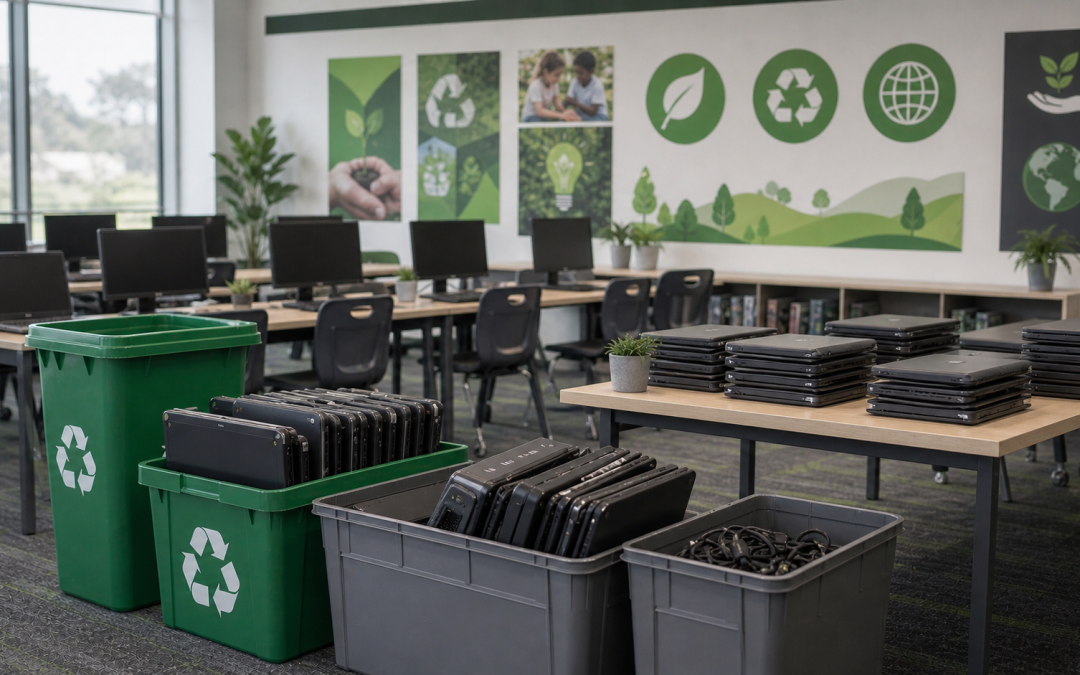
Local councils across Australia are under growing pressure to demonstrate ESG performance, from ratepayer expectations and state government targets to audit requirements and grant eligibility criteria. For many councils, e-waste management represents one of the fastest and most tangible ESG wins available, delivering measurable environmental outcomes, demonstrating community leadership, and generating data for reporting with relatively modest investment.
Why E-Waste Is a Natural Fit for Councils
Councils already manage waste for their communities. They operate transfer stations, run collection programs, and fund recycling services. E-waste is a natural extension of these existing capabilities. The infrastructure is partially in place, the community expects councils to provide solutions, and Victoria’s e-waste landfill ban since July 2019 creates a clear regulatory mandate to manage electronic waste properly.
What makes e-waste particularly attractive as an ESG initiative is its measurability. Every kilogram collected, every device diverted from landfill, every tonne of material recovered can be tracked and reported. Unlike some ESG metrics that require complex estimation, e-waste data is concrete and auditable.
Quick Win: Community Collection Programs
If your council does not already offer regular e-waste collection, establishing one is a straightforward ESG win. Options range from permanent drop-off points at transfer stations to periodic collection events at community venues. The key is making the service accessible and well-publicised so residents know it exists and find it convenient to use.
Community collection events generate impressive numbers for ESG reporting. A single well-promoted event can collect several tonnes of electronic equipment, engaging hundreds of residents and generating positive community sentiment alongside measurable environmental outcomes.
Internal IT Asset Management
Councils operate significant IT fleets themselves, from desktop computers and laptops to network equipment, printers, and the technology embedded in libraries, community centres, and customer service centres. How the council manages its own IT equipment at end of life is a direct ESG indicator.
Establishing a formal IT asset disposal program that includes certified data destruction, material recovery tracking, and CO2e avoidance reporting demonstrates leadership by example. It also generates specific, reportable metrics for the council’s own sustainability disclosures.
ESG Reporting Benefits
E-waste data feeds neatly into multiple ESG reporting categories. Environmental metrics include landfill diversion rates, material recovery volumes, and CO2e avoidance from recycling and refurbishment. Social metrics include community engagement through collection programs, education and awareness activities, and support for disadvantaged groups through device donation schemes. Governance metrics include regulatory compliance, data security through certified destruction, and transparent reporting practices.
This multi-dimensional contribution means e-waste program data can strengthen several sections of your ESG reporting rather than being confined to a single environmental line item.
Cost Considerations
E-waste programs can be structured to minimise net cost to council. Processing partnerships that include asset recovery revenue can offset collection and handling costs. Shared services arrangements with neighbouring councils can achieve economies of scale. State government grants and programs may provide funding for establishing or expanding e-waste services.
When presenting the business case to councillors and executives, frame e-waste management as a cost-effective way to meet multiple objectives simultaneously: regulatory compliance, community service, environmental outcomes, and ESG reporting, all from a single program.
Regional Collaboration
Many councils face similar e-waste challenges, and collaboration often makes sense. Regional waste groups, council alliances, and shared services arrangements can aggregate volumes to negotiate better processing rates, share best practices, and jointly fund educational materials. What one council cannot justify alone may be entirely feasible when shared across a regional group.
Education and Awareness
Councils are uniquely positioned to educate their communities about responsible e-waste management. Council newsletters, websites, social media channels, and community events reach audiences that commercial organisations cannot access as effectively. Educational programs about why e-waste matters, what can be recycled, and how to participate in council collection programs build community awareness while driving participation in your services.
Schools within the municipality are natural partners for educational programs. Interactive sessions about electronics, environmental impact, and recycling processes engage young people while building long-term community awareness.
For a broader perspective on how e-waste connects to sustainability reporting frameworks, see our guide on ESG reporting and e-waste for Australian businesses.
Getting Started
If your council wants to leverage e-waste for ESG performance, start with a clear assessment of what you are currently doing, what your community needs, and what is achievable within your budget and resources. Even modest programs, a single annual collection event or a permanent drop-off point at your transfer station, generate meaningful ESG data and community goodwill that you can build on over time.