
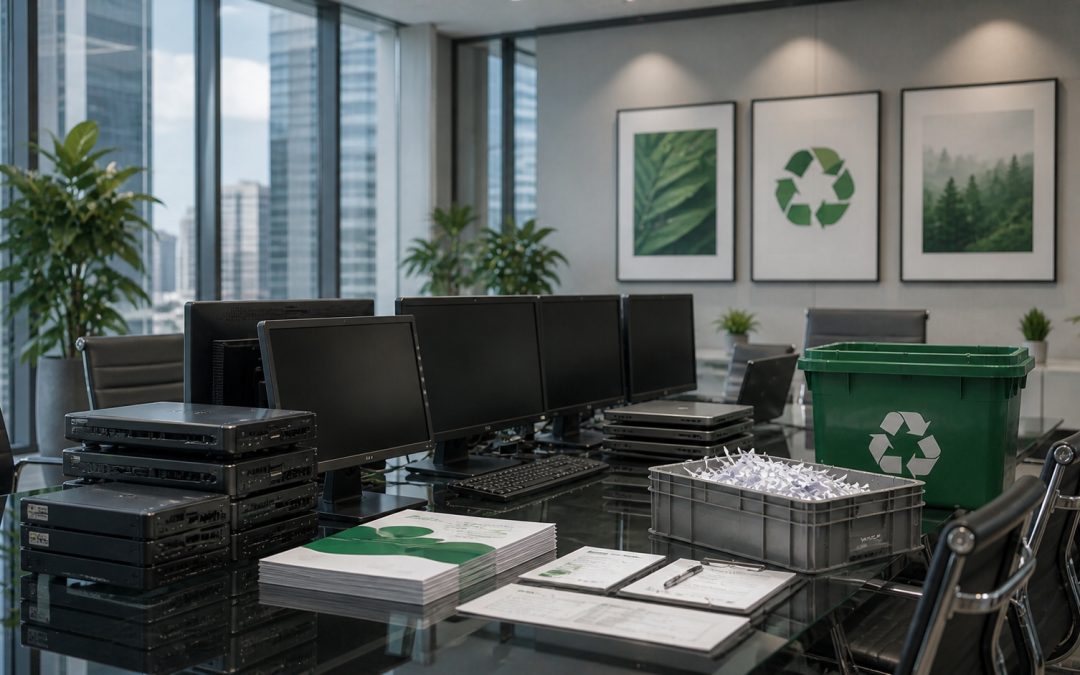
Schools and educational institutions have a unique dual role in sustainability. They are significant users of IT equipment, generating substantial e-waste volumes as device fleets are refreshed across classrooms, libraries, and administration areas. But they are also the places where the next generation forms their attitudes toward environmental responsibility. How a school manages its own technology waste sends a powerful message to students about whether sustainability principles are practiced or just taught.
The Scale of School E-Waste
Australian schools have undergone rapid digital transformation, with most now providing devices to students and staff at scale. A secondary school of 1,000 students might operate 800 to 1,200 devices including laptops, tablets, desktop computers, interactive whiteboards, and networking equipment. Primary schools, TAFEs, and universities have similarly large fleets.
These devices are often used in demanding environments by users who are not always careful with equipment. Student devices tend to have shorter useful lives than corporate equipment due to physical wear and the intensity of use. When refresh cycles arrive, schools face the challenge of disposing of large volumes of equipment responsibly while managing tight budgets and limited administrative resources.
The Educational Opportunity
E-waste management offers a natural cross-curricular learning opportunity. Science classes can explore the materials in electronic devices and their environmental impact. Geography lessons can examine global supply chains and the environmental justice issues around e-waste processing in developing countries. Mathematics classes can work with real data from the school’s own recycling program. And values education can use the school’s e-waste practices as a case study in institutional responsibility.
Student involvement in e-waste programs, whether through collection drives, awareness campaigns, or reporting on program outcomes, creates engaged, informed young people who carry these values into their adult lives.
Budget-Conscious Sustainability
Schools operate under tight financial constraints, and any e-waste program needs to work within this reality. The good news is that responsible e-waste management does not need to be expensive. Many certified processors offer free or low-cost collection for education sector clients, particularly when volumes justify the logistics. Equipment that retains residual value can generate revenue through asset recovery programs. And lifecycle extension strategies reduce both procurement costs and waste volumes.
Government grants and environmental programs sometimes provide funding specifically for school sustainability initiatives. Check with your state education department and local council for available support.
Data Security in Schools
School devices contain sensitive data including student records, assessment information, staff details, and potentially health information. Privacy legislation applies to schools just as it does to businesses, and data breaches involving student information carry significant legal and reputational consequences.
Any e-waste program for schools must include certified data destruction as a core component. This means wiping or physically destroying all data-bearing devices before they leave school custody, with documentation that provides an audit trail for compliance purposes.
Practical Program Design
A practical school e-waste program includes a central collection point, ideally in the IT department or a secure storage area, where end-of-life devices are gathered. Establish a regular schedule for processing collected equipment through a certified provider. Track what is collected, how it is processed, and what outcomes are achieved. Share results with the school community through newsletters, assemblies, and classroom integration.
Keep the administrative burden light. Schools do not have dedicated sustainability staff, so processes need to be simple enough for IT technicians and administrative staff to manage alongside their existing responsibilities.
Inter-School Collaboration
Individual schools may not generate sufficient e-waste volumes to justify dedicated processing arrangements. Collaboration across school clusters, regions, or sectors can aggregate volumes and create more efficient processing arrangements. Catholic and independent school systems often coordinate IT procurement and disposal across their networks, achieving better outcomes through collective action.
State education departments can facilitate coordination between government schools, establishing standard processes and preferred provider arrangements that simplify e-waste management for individual schools.
Reporting and Recognition
Track and celebrate your school’s e-waste achievements. Environmental metrics like kilograms diverted from landfill and devices refurbished for continued use make great content for school newsletters, annual reports, and award applications. Programs like ResourceSmart Schools in Victoria recognise environmental achievement in educational settings and provide frameworks that help schools structure their sustainability efforts.
For a broader perspective on how sustainability reporting works across sectors, see our guide on corporate sustainability and responsible e-waste management.
Leading by Example
When a school manages its e-waste responsibly, visibly, and with student involvement, it demonstrates that sustainability is not just a topic for classroom discussion. It is a practice embedded in how the institution operates. That example is worth more than any textbook lesson.