
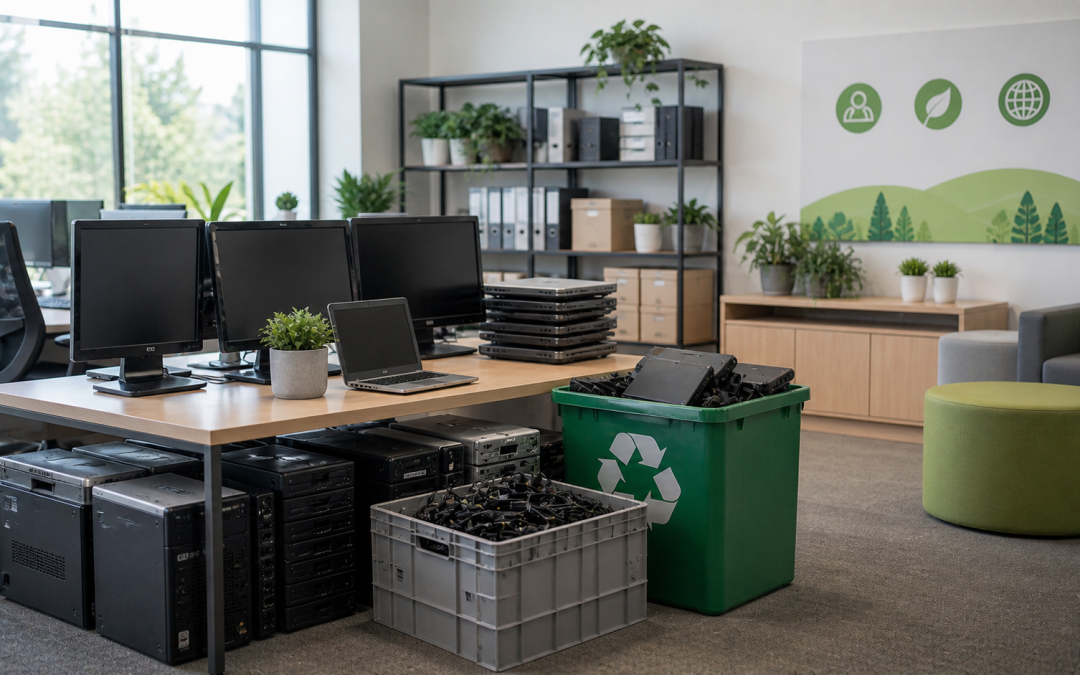
Startups have a unique advantage when it comes to ESG: they can build sustainable practices into their operations from the beginning rather than retrofitting them into established processes. For early-stage companies, responsible IT management might seem like a low priority compared to product development and growth. But the habits you form early shape your environmental footprint for years to come, and investors are paying attention to ESG credentials earlier in the funding cycle than ever before.
Why Startups Should Care Early
Venture capital and institutional investors increasingly evaluate ESG factors when making funding decisions. A startup that can demonstrate environmental awareness from its earliest stages signals the kind of thoughtful management that investors value. This does not mean you need a full sustainability department on day one. It means making sensible decisions about equipment procurement, lifecycle management, and disposal that show you are thinking beyond the immediate sprint.
Early-stage companies also set cultural norms that persist as they scale. A startup that treats e-waste responsibly when it has 20 employees will find it much easier to maintain those practices at 200 or 2,000 than one that tries to introduce environmental discipline into an already-established culture of disposal indifference.
Practical Steps for Small Teams
You do not need elaborate programs or dedicated staff to manage e-waste responsibly in a startup. Start with basics: keep an inventory of your equipment, even a simple spreadsheet. When devices reach end of life, send them to a certified processor rather than putting them in general waste. Ensure data is wiped from any device before it leaves your possession.
For startups in Victoria, the e-waste landfill ban that took effect in July 2019 means you cannot legally dispose of electronic equipment in general waste regardless of your company size. Compliance is not optional, but it is straightforward when you plan for it.
Refurbished Equipment as a Smart Choice
Startups watching every dollar should seriously consider certified refurbished equipment. Refurbished laptops and monitors typically cost 30 to 60 percent less than new equivalents while providing entirely adequate performance for most business tasks. This is not about compromise. Modern refurbishment processes restore equipment to near-new condition with meaningful warranty coverage.
Choosing refurbished equipment also makes a genuine environmental statement. The embodied carbon saved by avoiding new manufacturing is substantial, and it gives you a sustainability story to tell investors, customers, and potential employees from the very beginning.
Cloud and Equipment Decisions
Startups that rely heavily on cloud infrastructure have a smaller direct e-waste footprint than those running on-premises servers. But they still operate laptops, monitors, and peripherals that need end-of-life management. And the cloud providers they use have their own massive equipment lifecycle challenges that feed into Scope 3 reporting.
When choosing cloud providers, consider their environmental credentials alongside performance and price. Major cloud providers publish sustainability reports detailing their data centre efficiency and equipment lifecycle practices. This data may become relevant to your own ESG reporting as you scale.
Scaling Sustainably
As your startup grows, your e-waste volumes will increase. The practices you establish early, tracking equipment, using certified processors, maintaining data destruction records, scale naturally with the business. Companies that wait until they are large to think about e-waste management face a much harder task of changing established habits and filling historical data gaps.
Build environmental considerations into your procurement policy early, even if that policy is informal. Specify minimum environmental standards for equipment purchases, prefer suppliers with take-back programs, and factor total cost of ownership including disposal into purchasing decisions.
The Investor Conversation
When presenting to investors, your environmental practices can be woven naturally into your operational narrative. You do not need a dedicated ESG slide in your pitch deck at seed stage. But being able to answer questions about your environmental approach with specific examples, such as refurbished equipment choices, certified disposal, and carbon-aware procurement, demonstrates the operational maturity that investors look for.
As you progress through funding rounds, ESG expectations increase. Series B and beyond typically involves institutional investors with formal ESG assessment processes. Having a track record of responsible practice, even at small scale, is far more convincing than hastily assembled policies.
For more on how ESG reporting works as organisations grow, see our guide on ESG reporting and e-waste for Australian businesses.