
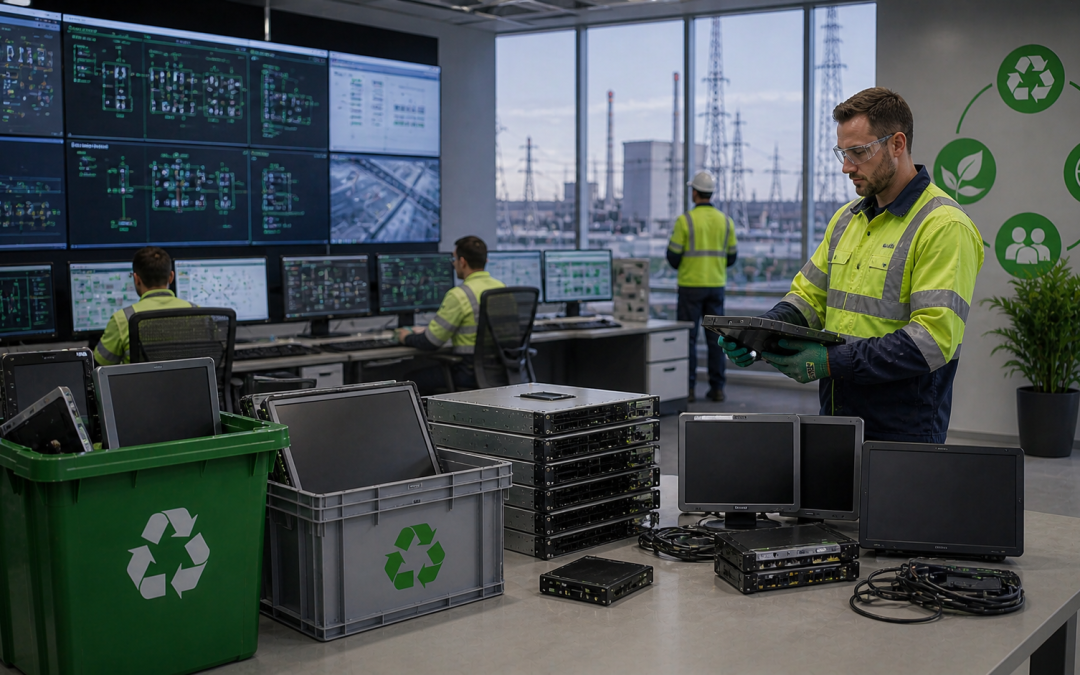
Energy utilities operate some of the most critical infrastructure in the country, and the technology underpinning power generation, transmission, distribution, and retail is both extensive and specialised. For energy companies already navigating the complexities of ESG reporting around emissions, renewable transitions, and community impact, IT equipment lifecycle management offers an additional, highly measurable avenue for demonstrating environmental responsibility.
The Utility Technology Landscape
Energy utilities operate technology across dramatically different environments. Generation facilities use industrial control systems, SCADA equipment, and monitoring technology that operates in harsh conditions. Transmission and distribution networks employ remote monitoring devices, smart grid equipment, and communication systems spread across vast geographic areas. Retail operations use customer management systems, billing platforms, and standard corporate IT. Smart meter programs add millions of individual devices to the technology estate.
This diversity creates a complex e-waste stream that includes everything from ruggedised industrial equipment to standard office laptops, each with different lifecycle characteristics, disposal requirements, and material recovery potential.
Smart Meter Lifecycle
Smart meter rollouts represent one of the largest technology deployments in the energy sector. Victoria alone has deployed millions of smart meters, and these devices have finite operational lives. As first-generation meters reach end of life and are replaced with newer technology, the disposal volumes will be substantial.
Smart meters contain electronic components including circuit boards, communication modules, batteries, and LCD displays. Responsible disposal requires specialist processing to recover materials and manage any hazardous components. The scale of smart meter disposal makes it a strategically significant e-waste stream that utilities need to plan for well in advance.
Critical Infrastructure Data
Energy sector IT equipment handles data that relates to critical national infrastructure. Network topology information, generation capacity data, grid vulnerability assessments, and customer databases all require secure handling at every stage of the equipment lifecycle, including disposal.
The Australian Energy Sector Cyber Security Framework and Critical Infrastructure legislation impose specific obligations around information protection that extend to equipment disposal. Certified data destruction with documented evidence is not just good practice for utilities. It is a regulatory requirement.
Remote and Field Equipment
Much of the technology in energy networks is deployed in remote locations: substations, transmission towers, pumping stations, and generation sites across regional and rural areas. Collecting end-of-life equipment from these dispersed locations requires planned logistics and coordination with field operations teams.
Incorporate technology collection into routine maintenance schedules and site visits to avoid dedicated collection trips that add cost and carbon. When field crews visit remote sites for maintenance, they can bring back decommissioned equipment for central processing.
The Energy Transition Connection
As the energy sector transitions from fossil fuels to renewables, significant volumes of technology from decommissioned facilities will need disposal. Control systems from closing power stations, monitoring equipment from repurposed sites, and IT infrastructure that supported legacy operations all become e-waste. Planning for this technology transition alongside the broader energy transition ensures environmental responsibility extends to every aspect of facility closure.
ESG Reporting for Utilities
Energy utilities are among the most heavily scrutinised sectors for ESG performance. Adding IT equipment lifecycle data to your existing environmental reporting demonstrates comprehensive attention to environmental management beyond the primary focus on generation emissions and renewable transitions.
Report specific metrics: total technology equipment recycled, material recovery rates from different equipment categories, smart meter recycling volumes and outcomes, and CO2e avoided through responsible processing. These data points complement your primary environmental narrative.
For more on ESG reporting frameworks, see our guide on ESG reporting and e-waste for Australian businesses.