
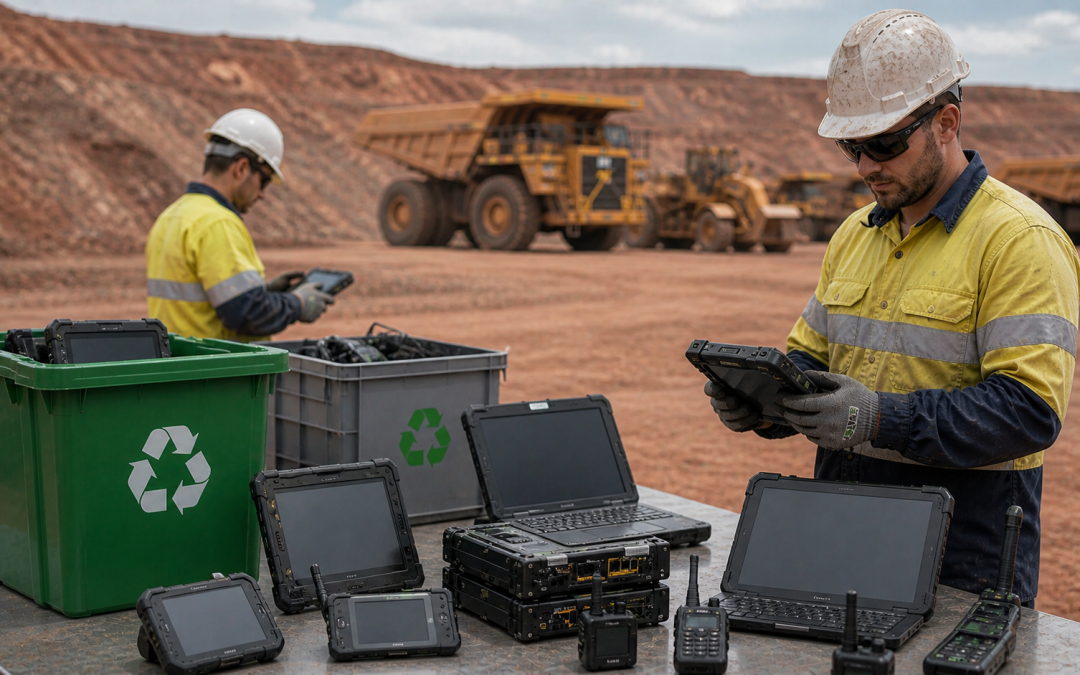
Mining operations deploy technology in some of the most extreme environments on earth. From autonomous haul trucks and drilling control systems to remote monitoring networks and on-site administration, the technology footprint of a modern mine is substantial. For mining companies under intense ESG scrutiny from investors, regulators, and communities, responsible technology disposal on site and at mine closure represents an important but frequently overlooked component of environmental management.
Technology in Mining Operations
A typical mine site operates a wide range of technology. Autonomous and semi-autonomous vehicle systems use sophisticated computing equipment. Drilling and blasting operations rely on precision monitoring and control systems. Environmental monitoring networks deploy sensors across the site and surrounding areas. Communication systems connect above-ground and underground operations. On-site offices and accommodation run standard IT infrastructure for administration and planning.
Much of this equipment operates in conditions of extreme dust, vibration, temperature variation, and physical impact. Equipment lifecycles in mining environments are often shorter than in less demanding settings, generating a steady flow of devices requiring disposal.
Remote Location Challenges
Many Australian mines are located in remote areas, far from urban processing facilities. This creates logistical challenges for e-waste disposal. Transporting decommissioned equipment to certified processors involves significant distances and cost. Storage on site while awaiting collection needs to be managed to prevent environmental contamination from damaged or degrading electronics.
Plan e-waste logistics into your supply chain. Just as you plan inbound freight for equipment and supplies, plan outbound logistics for end-of-life technology. Consolidating e-waste shipments with other outbound freight reduces cost and environmental impact.
Mine Closure and Rehabilitation
Mine closure generates significant e-waste volumes as an entire site’s technology infrastructure is decommissioned simultaneously. Control systems, monitoring networks, communication equipment, and administrative IT all become waste at the same time. Closure plans should include specific provisions for technology disposal, with budgets allocated and processing arrangements confirmed well before closure begins.
Under mine rehabilitation requirements, the site must be left in an acceptable environmental condition. Leaving electronic waste buried or improperly disposed of on site would constitute a rehabilitation failure. All technology must be removed and processed through appropriate channels.
Environmental Monitoring Equipment
Mining operations deploy extensive environmental monitoring networks covering air quality, water quality, noise levels, ground stability, and biodiversity. These networks use electronic sensors, data loggers, communication devices, and solar power systems that all eventually require replacement and disposal.
The irony of environmental monitoring equipment becoming environmental waste is not lost on stakeholders. Ensure that the disposal of monitoring equipment is handled as responsibly as the monitoring data it produces. Track and report the recycling outcomes to demonstrate complete environmental lifecycle management.
ESG Reporting in Mining
Mining companies face some of the most comprehensive ESG reporting requirements of any sector. Investors, regulators, and community stakeholders expect detailed environmental data across all operational aspects. Adding IT asset management metrics to your environmental reporting demonstrates thoroughness and attention to impacts beyond the most visible mining activities.
For mining companies reporting under frameworks like GRI, SASB, or TCFD, e-waste data fills a gap in the waste management category that is often overlooked in favour of tailings and overburden data. Including technology disposal alongside these larger waste streams shows comprehensive environmental management.
Contractor and Supplier Coordination
Many mining operations use contractor-owned technology alongside company equipment. Clarify responsibility for e-waste disposal in contractor agreements. Specify whether contractors are responsible for removing their equipment at contract end and what environmental standards apply to that disposal.
Equipment suppliers who offer leasing or equipment-as-a-service arrangements should include end-of-life management in their service. This shifts disposal responsibility to the supplier and ensures specialist processing.
For more on ESG reporting frameworks, see our guide on ESG reporting and e-waste for Australian businesses.