
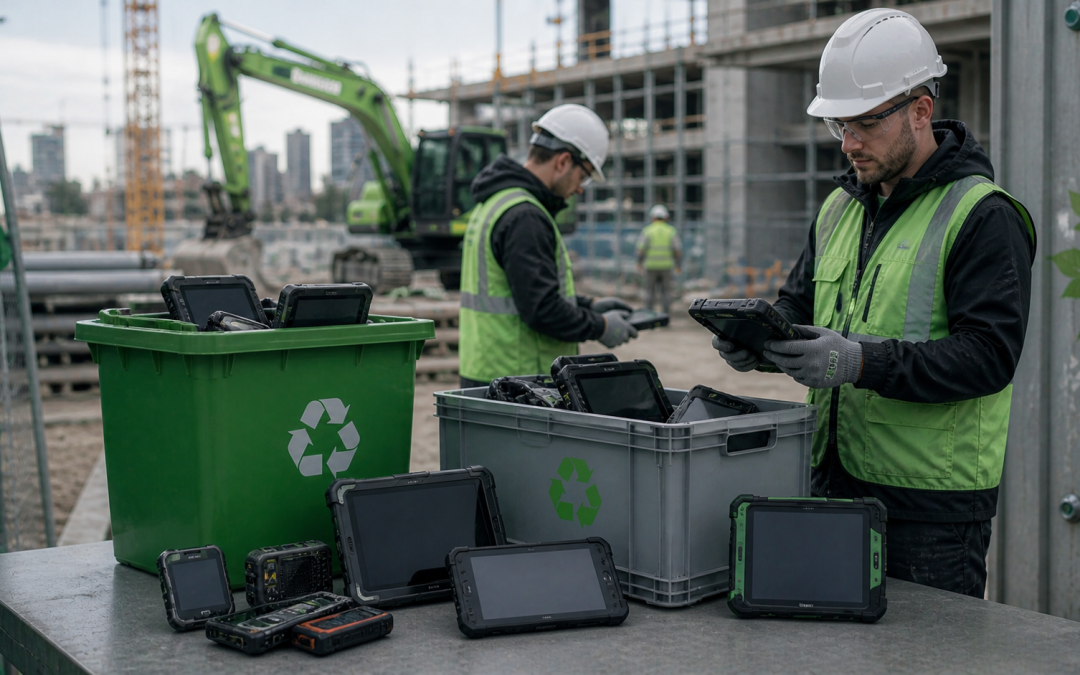
Construction sites are increasingly technology-dependent, with project management tablets, surveying equipment, monitoring sensors, site cameras, and communication systems operating across active building projects. When projects finish and sites are demobilised, this technology needs to go somewhere. For construction companies building ESG programs, responsible site technology disposal offers a practical and measurable environmental contribution alongside the more visible sustainability focus on materials, waste, and energy.
Technology on Construction Sites
Modern construction relies on a wide range of technology. Project managers and engineers use ruggedised tablets and laptops for plans, scheduling, and compliance documentation. Surveying teams operate GPS equipment, total stations, and laser scanning systems. Environmental monitoring uses dust sensors, noise meters, and water quality monitors. Site security relies on cameras, access control systems, and alarm equipment. Communication networks include two-way radios, temporary Wi-Fi infrastructure, and satellite communications on remote sites.
Much of this equipment is deployed temporarily for the duration of a project and then moved to the next site, but devices that fail or become obsolete during a project need disposal rather than redeployment.
Project-Based Lifecycle
Construction technology follows a project-based lifecycle rather than the calendar-based refresh cycles of office environments. Equipment is allocated to a project, used intensively for months or years, and then assessed for redeployment or disposal. This project rhythm creates irregular e-waste flows that require flexible management approaches.
End-of-project demobilisation is the critical moment for e-waste management. Include technology asset recovery in your site demobilisation checklists and procedures. Every device deployed to a project should be accounted for at completion, either returned to the equipment pool, sent for repair, or directed to certified disposal.
Harsh Environment Impact
Construction environments are punishing for technology. Dust, vibration, moisture, extreme temperatures, and physical impact all accelerate equipment degradation. Ruggedised devices mitigate these effects but do not eliminate them. The result is that construction technology often reaches end of life through physical damage rather than obsolescence.
Damaged equipment may not be suitable for refurbishment but still contains valuable materials including precious metals, copper, and recoverable plastics. Ensure your disposal partner can process damaged and non-functional devices for material recovery, not just working equipment for refurbishment.
Subcontractor Coordination
Construction projects involve numerous subcontractors, each bringing their own technology to site. Main contractors should consider including e-waste management requirements in subcontractor agreements, specifying that all electronic equipment must be removed from site at project completion and disposed of responsibly.
Providing a shared e-waste collection point on site for all contractors simplifies compliance and ensures that no equipment is left behind or disposed of improperly. This centralised approach also generates site-level data that supports ESG reporting for the overall project.
Green Building and Infrastructure Standards
Projects targeting Green Star ratings or Infrastructure Sustainability ratings include construction waste management criteria that can encompass e-waste. Demonstrating responsible disposal of all waste streams, including electronic equipment, contributes to project sustainability certification.
For developers and builders competing on sustainability credentials, comprehensive waste management including e-waste is a differentiator. Clients commissioning green buildings expect the construction process itself to reflect environmental values, not just the finished product.
Data on Construction Technology
Construction technology carries project data that may be commercially sensitive or subject to contractual confidentiality. Plans, engineering specifications, cost data, and client information all reside on site devices. Data destruction should be part of your disposal process, with certification maintained as part of project closeout records.
Reporting Construction E-Waste
Track e-waste volumes by project and aggregate across your business for corporate ESG reporting. Key metrics include total technology equipment processed, material recovery rates, and diversion from landfill. This data complements your reporting on construction waste, energy consumption, and other environmental indicators.
For more on ESG reporting, see our guide on ESG reporting and e-waste for Australian businesses.