
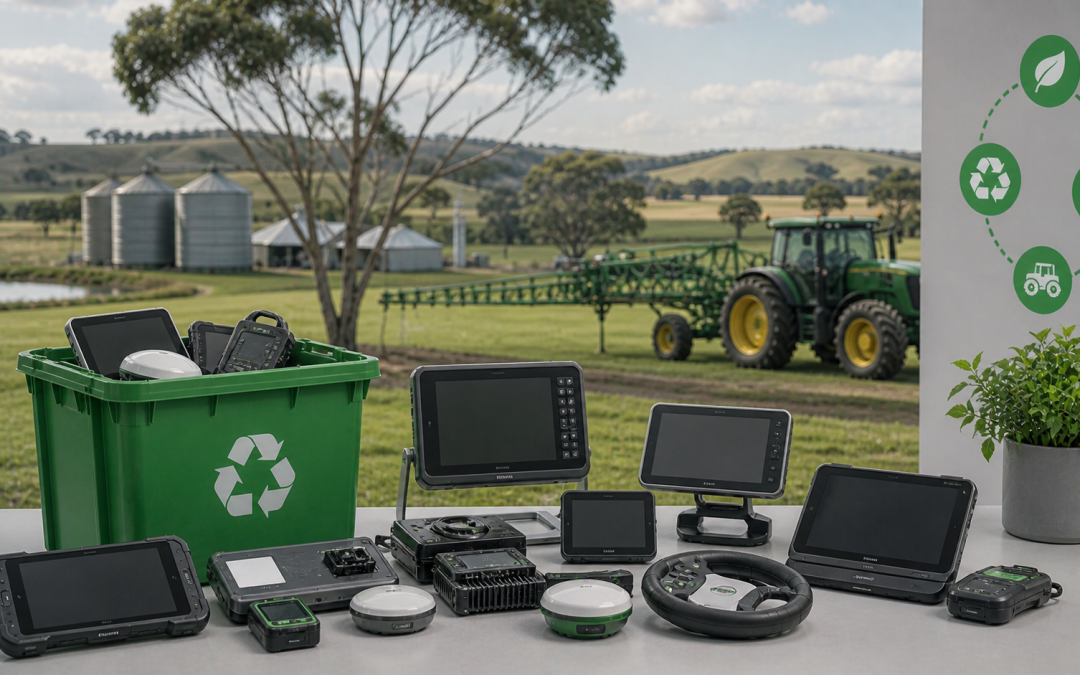
Australian agriculture is increasingly technology-driven, with precision farming, automated irrigation, drone monitoring, and livestock tracking systems becoming standard across the sector. As this technology reaches end of life, farmers face disposal challenges that differ significantly from urban businesses. For agricultural operations building ESG credentials, whether to meet supply chain requirements, access green financing, or satisfy market expectations, responsible technology management offers a practical and measurable sustainability component.
Technology on the Modern Farm
Precision agriculture has transformed Australian farming. GPS guidance systems direct planting and harvesting equipment. Soil moisture sensors and weather stations inform irrigation decisions. Drone technology monitors crop health and livestock. Automated feeding and milking systems reduce labour and improve consistency. And farm office technology manages financial, compliance, and logistics operations.
Each of these technology categories generates e-waste when systems are upgraded or fail. The diversity of equipment, from ruggedised field sensors to standard office computers, creates a varied disposal challenge that requires different approaches for different device types.
Rural Disposal Challenges
The most significant barrier to responsible e-waste management on farms is geography. Many agricultural properties are located hours from the nearest certified processing facility. Collection services that work for metropolitan businesses are not available in remote areas. And the volumes from individual farms are often too small to justify dedicated collection logistics.
Solutions include consolidating e-waste from multiple properties through agricultural cooperatives or regional farming groups, coordinating with local councils who may run periodic e-waste collection events, and timing disposal to coincide with trips to regional centres where drop-off facilities exist.
Precision Agriculture Equipment
Precision agriculture devices often contain GPS modules, communication components, and computing hardware that represent genuine material value. Sensors deployed across fields and orchards contain electronic components including batteries, circuit boards, and communication modules that should not be discarded in general waste or, worse, left in the field.
When upgrading precision agriculture systems, factor end-of-life management into the project plan. Collect all sensors, modules, and controllers being replaced and direct them to appropriate recycling rather than leaving them scattered across the property.
Supply Chain ESG Requirements
Major food retailers, processors, and exporters are increasingly incorporating ESG criteria into their supplier assessments. Farmers who can demonstrate comprehensive environmental management, including responsible technology disposal, may gain preferred supplier status or access to premium supply chains.
Export markets in particular are moving toward stricter sustainability requirements. European and Asian buyers are implementing supply chain due diligence that extends to on-farm environmental practices. While technology disposal may seem like a small detail, it contributes to the overall picture of environmental management that these assessments evaluate.
Water Quality Protection
Electronic waste left exposed on farmland poses specific environmental risks. Battery leakage can contaminate soil and groundwater. Heavy metals from circuit boards can leach into water systems. For farms near waterways or in catchment areas, these risks have implications beyond the property boundary.
Proper storage and disposal of farm technology protects the natural resources that agricultural operations depend on. Clean water, healthy soil, and functioning ecosystems are not just environmental goods. They are productive assets that farmers have a direct interest in protecting.
Practical Steps for Farmers
Start with awareness: identify all the technology on your property that will eventually need disposal. Create a designated storage area for end-of-life equipment. Research your options for disposal, whether through local council programs, regional collection events, or processing services that cover your area. When volumes justify it, arrange collection through a certified processor.
Document what you dispose of and how. This data supports any ESG reporting you need to do and provides evidence of responsible practices for supply chain assessments.
For more on sustainability reporting relevant to primary industries, see our guide on corporate sustainability and responsible e-waste management.