
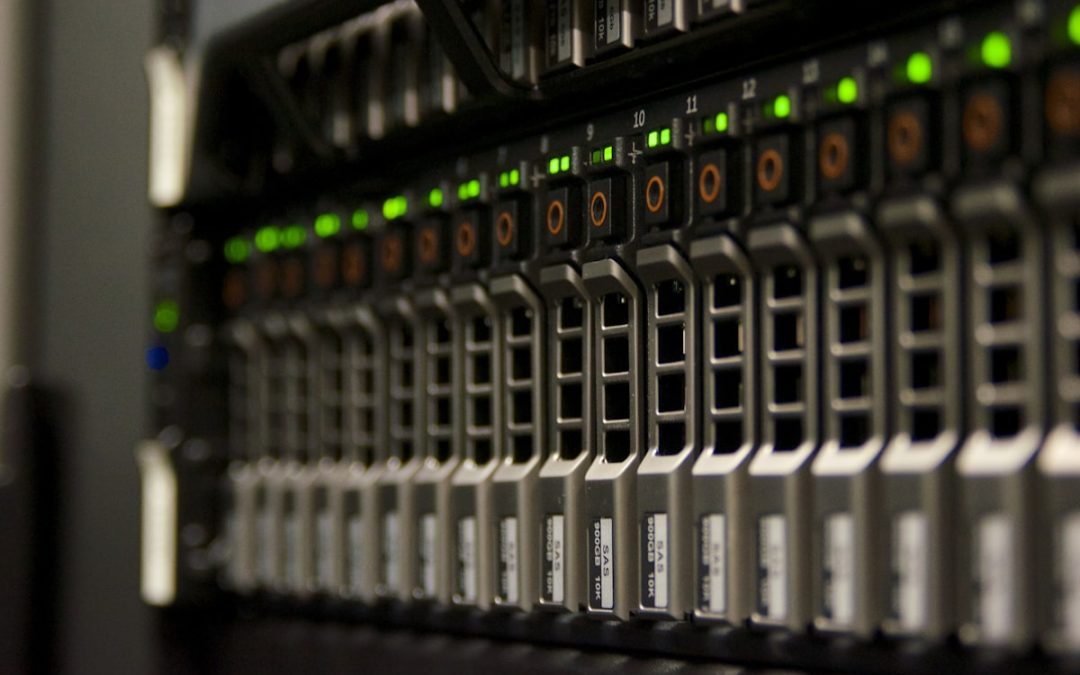
Australian businesses are upgrading to AI infrastructure at a pace the e-waste industry has never seen. The hardware coming out the other end of those upgrades is piling up. And most organisations have no plan for it.
An analysis covered by Re-Teck in May 2026 puts the scale of the shift in plain terms: AI server refresh cycles are now running at 18 to 36 months, down from the five-to-seven year cycles most IT asset disposal programs were built around. A separate study published in Nature Computational Science estimates that aggressive adoption of large language models will generate 2.5 million tonnes of e-waste per year globally by 2030.
The first wave of GPU-dense AI servers deployed in 2022 and 2023 is entering end-of-life right now. The data stored on those drives does not erase itself.
Source: Re-Teck, “AI Servers Reshape ITAD Sector, Recyclers Brace for New Wave,” May 2026 (re-teck.com)
Faster cycles, higher risk
When hardware turned over every five years, organisations had time to build a proper decommissioning process. At 18-month cycles, that runway disappears. More devices retiring faster means more pressure to find disposal partners quickly, more temptation to cut corners, and more surface area for data to leave the building unwiped.
Under Australia’s Privacy Act 1988 and the Notifiable Data Breaches scheme, a failure to properly destroy data on retired equipment is not just a policy problem. It is a reportable event. The regulator does not accept “we assumed it was handled” as a defence.
What compliant data destruction actually requires
Deleting files is not data destruction. A factory reset is not data destruction. NIST 800-88 Rev. 2 is the international benchmark for media sanitisation. It covers overwrite methods for hard drives, cryptographic erasure for SSDs, and physical destruction for devices that cannot be reliably wiped by software means.
A compliant disposal process produces a certificate for every device, tied to a serial number, that states which sanitisation method was applied. If your provider cannot hand you that documentation, the process is not complete.
The Victorian regulatory layer
Victoria’s e-waste landfill ban, which came into effect on 1 July 2019, prohibits computers, monitors, and IT equipment from going to landfill. That includes the servers, switches, and workstations your AI upgrade is displacing.
The applicable Australian standard for collection and processing of end-of-life electronics is AS/NZS 5377. On the environmental management side, ISO 14001 sets the framework for how responsible processors should operate. ISO 27001 covers the information security management practices that protect your data through the disposal chain.
Chain of custody is not a formality
When you hand hardware to a disposal provider, you should know exactly what happens to it. A proper ITAD process gives you a collection manifest listing every device by serial number, a data destruction certificate for each one, and documentation of where the materials went: refurbishment, component recovery, or downstream smelting.
AI accelerators contain gold, silver, palladium, and rare earth elements. Those materials have real recovery value. ITAD market analysis shows that high-value GPU systems can lose 40% of their recoverable worth within 60 days of a retirement decision. Getting the process right is not just about compliance. It can measurably offset program costs.
How EWV handles this
Electronic Waste Victoria provides secure e-waste collection and processing for businesses across Victoria. Our operations align with AS/NZS 5377 and NIST 800-88 Rev. 2 for data destruction. Our environmental and information security practices align with ISO 14001 and ISO 27001 frameworks. We provide CircularTrack reporting so you can document material recovery outcomes and CO2e offsets for your ESG disclosures. Full certification is on our roadmap.
If your organisation is mid-cycle on an AI infrastructure upgrade, the time to lock in a disposal partner is before the hardware comes out, not after.
Talk to Electronic Waste Victoria about your decommissioning requirements.