
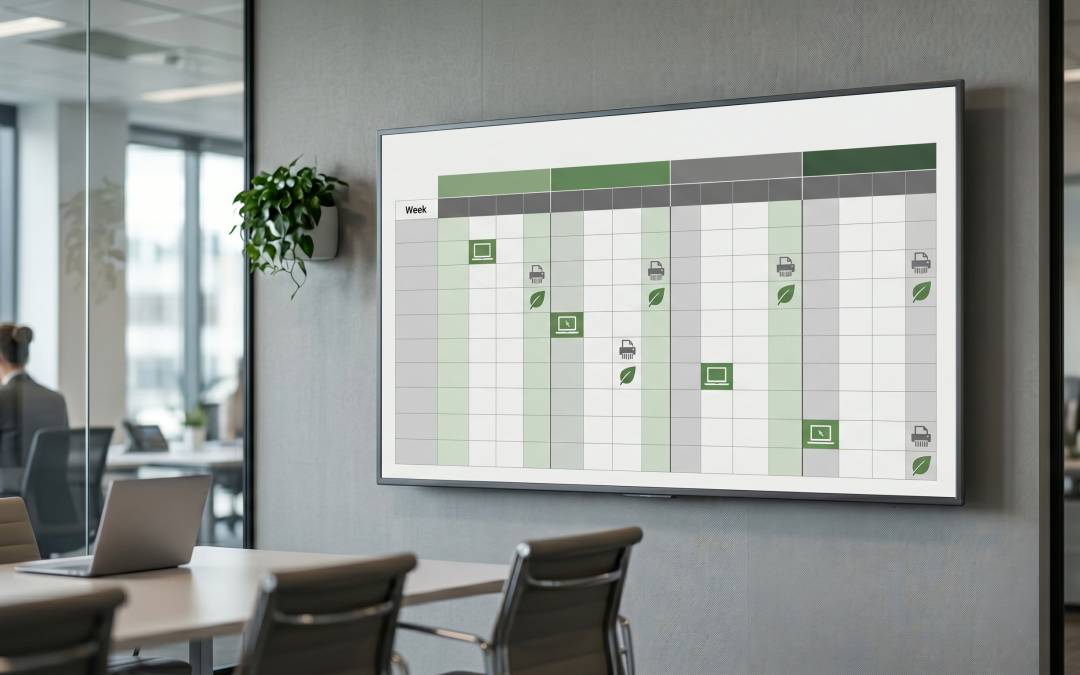
Treating IT asset disposition as a year-round program rather than an occasional clean-up produces better outcomes across every measure: security, cost, environmental performance, and operational efficiency. An annual ITAD calendar aligns disposal activities with your organisation’s natural business rhythms, avoids the chaos of ad hoc collections, and ensures nothing falls through the cracks.
Why Annual Planning Matters
Without a planned schedule, ITAD tends to happen reactively. Equipment accumulates in storage until someone decides it needs to go, at which point the organisation scrambles to arrange collection, often at the worst possible time. This reactive approach leads to stockpiling (with associated security risks from unsecured stored equipment), rush fees for urgent collections, missed opportunities for value recovery as equipment ages, compliance gaps from inconsistent processes, and year-end budget surprises.
An annual plan replaces this scramble with predictable, manageable activities spread across the year.
Building Your ITAD Calendar
Start by mapping your organisation’s key dates and cycles. Equipment refresh cycles are the most obvious driver. If your organisation refreshes laptops every three years, you know roughly when the next wave of retired equipment will arrive. Office moves, renovations, and lease expirations generate one-off disposal needs that should be anticipated well in advance.
Budget cycles matter too. Align major ITAD activities with your financial year so that costs (and value recovery revenue) land in the right period. Many organisations find that scheduling their primary disposal activity in the first half of the financial year gives time to address any issues before year-end reporting.
Quarterly Framework
A quarterly approach works well for most organisations. In Q1, conduct a planning and audit phase. Review your asset register to identify equipment approaching end of life. Update your data classification for devices flagged for disposal. Review your ITAD provider contract and SLAs. Set budget and volume expectations for the year ahead. Address any carryover items from the previous year.
In Q2, run your primary disposal cycle. Execute the main collection and processing activity for equipment identified in Q1. This is typically the largest disposal event of the year, aligned with refresh cycles and budget availability. Track processing in real time against agreed SLAs and KPIs.
In Q3, focus on mid-year review and secondary processing. Review KPI data from Q2 processing. Address any ad hoc disposals that have accumulated. Process equipment from any office moves or project completions. Reconcile asset registers against disposal documentation.
In Q4, handle year-end wrap-up and planning. Complete any remaining disposals before year-end. Compile annual ITAD program report with financial, security, and environmental metrics. Begin planning for the next year’s program. Negotiate or renew ITAD provider contracts as needed.
Monthly Activities
Within the quarterly framework, certain activities should happen monthly regardless of whether a major disposal cycle is underway. These include reviewing any equipment that has been flagged for disposal and ensuring it is stored securely, processing individual or small-batch disposals from employee departures or equipment failures, monitoring your ITAD provider’s reporting and certificate delivery, and updating the asset register with any equipment changes.
These monthly housekeeping tasks prevent the accumulation of unsecured equipment and keep your records current.
Aligning with Organisational Events
Certain organisational events create natural ITAD opportunities that should be built into your calendar. Technology refresh projects are the most obvious, but also consider office relocations and fit-outs (which often reveal forgotten equipment), mergers and acquisitions (which create equipment consolidation needs), end of financial year (when asset write-offs may need to be completed), and compliance audit preparation (when documentation needs to be current).
Coordinating ITAD activities with these events reduces double-handling and captures disposal needs that might otherwise be missed.
Budgeting Across the Year
Your annual ITAD plan should include a detailed budget that covers collection and transport costs, processing and data destruction fees, any on-site destruction requirements, expected value recovery revenue, internal staff time for coordination and oversight, and contingency for unplanned disposals.
Spreading costs across quarters avoids large one-off expenses that can disrupt departmental budgets. If your ITAD program generates value recovery revenue, factor this into the budget as a cost offset, but be conservative in your estimates.
Stakeholder Communication
Share your annual ITAD calendar with all relevant stakeholders. IT managers need to know when to prepare equipment for collection. Facilities teams need to allocate staging areas and loading dock access. Security needs to know when external providers will be on-site. Finance needs to plan for costs and revenue. And department heads need to coordinate equipment returns from their teams.
A brief annual briefing at the start of the year, supplemented with reminders before each major activity, ensures everyone is prepared and the program runs smoothly.
Continuous Improvement
Use each year’s data to improve the next year’s plan. Review what went well and what caused problems. Adjust timing if certain quarters were overloaded. Refine your volume estimates based on actual experience. Update your ITAD policy to address any gaps identified during the year. The goal is a program that becomes more efficient and effective with each annual cycle.
EWV handles IT asset disposition (ITAD) end-to-end for Victorian businesses — from collection and data destruction through to certified recycling or refurbishment for resale. Get in touch for a tailored ITAD quote.