
The automotive industry is undergoing its most significant technology transformation in a century. Connected vehicles, electric powertrains, autonomous driving systems, and digital dealership operations are creating new categories of electronic equipment that will eventually need responsible disposal. For automotive manufacturers, dealers, and fleet operators building ESG programs, the technology embedded in modern vehicles and supporting infrastructure represents an emerging e-waste challenge that requires forward planning.
Technology in Modern Vehicles
A modern vehicle contains more computing power than the entire Apollo space program. Infotainment systems with touchscreens and processors, advanced driver assistance systems (ADAS) with cameras and radar modules, telematics units for connectivity and data transmission, electronic control units (ECUs) managing every vehicle subsystem, and battery management systems in electric vehicles all represent electronic components that eventually reach end of life.
When vehicles are scrapped or major systems are replaced during their operational life, these components enter the e-waste stream. The automotive industry is only beginning to grapple with the disposal implications of the technology density in contemporary vehicles.
Electric Vehicle Batteries
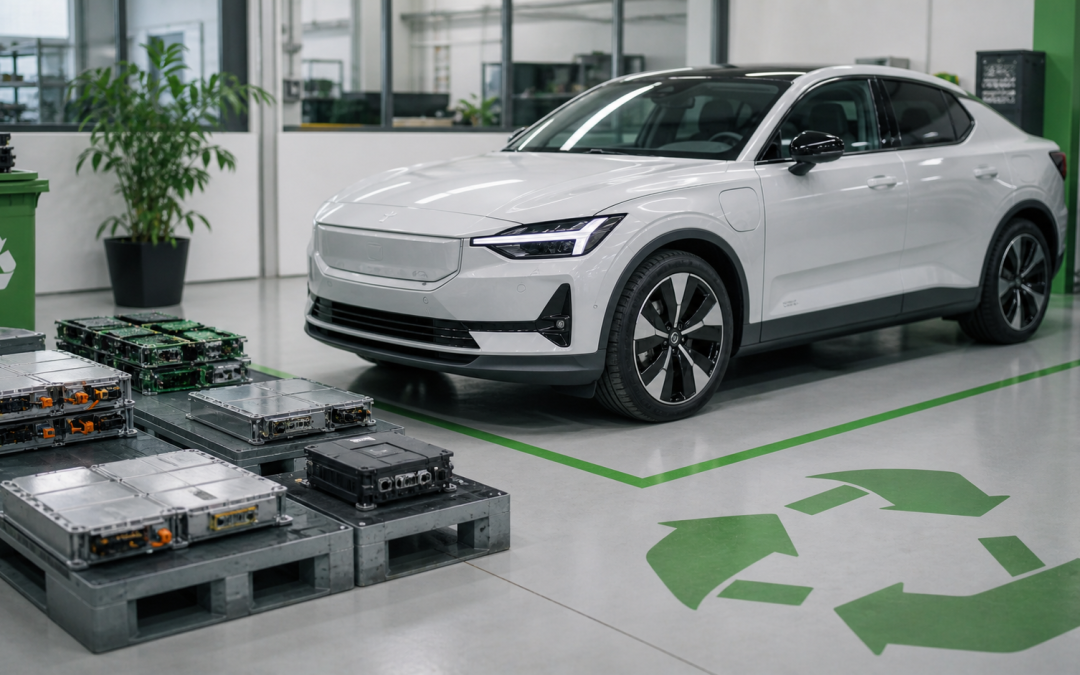
EV batteries deserve special attention because of their size, material value, and potential hazards. Lithium-ion battery packs contain cobalt, lithium, nickel, and manganese, all valuable materials with significant environmental costs of extraction. They also present safety challenges including thermal runaway risk if damaged or improperly handled.
The emerging EV battery recycling industry is developing processes to recover these materials, but capacity is still building. Second-life applications, where batteries that no longer meet automotive performance requirements are redeployed for stationary energy storage, extend useful life before eventual recycling becomes necessary.
Connected Vehicle Data
Connected vehicles collect and store extraordinary amounts of data. GPS location histories, driving behaviour patterns, voice commands, contact lists synced from phones, garage door codes, home addresses, and Wi-Fi network credentials all reside on vehicle systems. When vehicles change ownership or reach end of life, this personal data requires proper handling.
For fleet operators and rental companies, the data accumulated across their vehicle fleet is even more extensive, covering driver identification, route histories, maintenance records, and operational performance data. Ensuring vehicle systems are properly wiped before disposal or resale is a data governance requirement that many in the automotive industry are still coming to terms with.
Dealership Technology
Automotive dealerships operate significant IT estates including showroom display systems, diagnostic equipment, customer relationship management platforms, finance and insurance processing systems, and service workshop technology. As dealerships modernise, the disposal of legacy systems needs the same attention as any other commercial IT disposal.
Diagnostic equipment is particularly noteworthy because it connects to vehicle systems and may retain technical data about specific vehicles and their owners. Include diagnostic tools in your data destruction scope alongside standard office IT equipment.
Victoria’s automotive industry is concentrated in several key industrial precincts where dealerships and manufacturers are actively navigating these technology disposal requirements. EWV serves businesses across Dandenong South (3175), Altona North (3025), Laverton North (3026), Moorabbin (3189), Ringwood (3134), and Campbellfield (3061) — the clusters where Victoria’s automotive ecosystem is most active. For dealers and fleet operators in these areas, EWV provides scheduled, certified collection of decommissioned in-vehicle technology and back-office IT equipment, with full data destruction documentation to satisfy manufacturer compliance and regulatory requirements.
Manufacturing and Design
Automotive manufacturers operate sophisticated design, simulation, and manufacturing technology. CAD workstations, crash simulation systems, wind tunnel instrumentation, robotic production systems, and quality testing equipment all contain electronic components that require responsible disposal. The intellectual property contained in design and engineering systems makes secure data destruction essential.
Aftermarket and Parts
The automotive aftermarket generates e-waste through replaced vehicle components including ECUs, infotainment systems, instrument clusters, and sensor modules. Workshop practices for handling these replaced components vary widely. Establishing clear procedures for collecting and properly disposing of electronic components removed during service and repair operations is an ESG improvement opportunity for the entire automotive service sector.
ESG Reporting for Automotive
The automotive industry faces intensifying ESG scrutiny as it navigates the transition to electric and connected mobility. Adding IT and vehicle technology lifecycle data to your ESG reporting demonstrates comprehensive environmental management that extends beyond the headline focus on tailpipe emissions and EV adoption.
Report metrics including total electronic equipment and components processed, battery recycling and second-life volumes, material recovery rates, data destruction compliance, and CO2e avoided through responsible technology management.
For more on ESG reporting frameworks, see our guide on ESG reporting and e-waste for Australian businesses.